As an Amazon Associate, we earn from qualifying purchases. Some links on this site are affiliate links at no extra cost to you. Our recommendations are based on thorough research and editorial judgment.

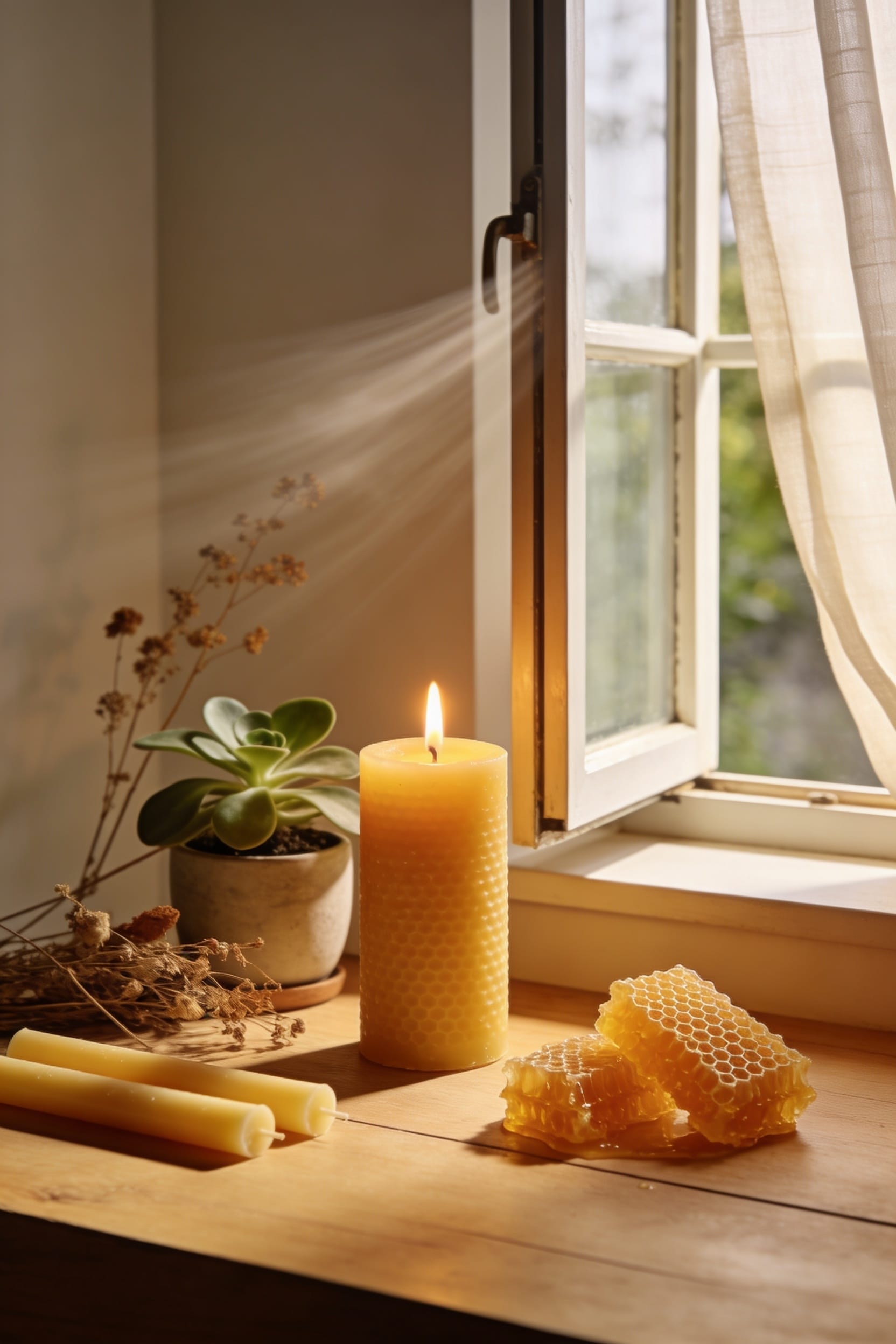
Beeswax Candles and Air Quality: What You Should Know

All right, here’s the thing: beeswax candles burn cleaner than paraffin and release fewer toxins, which sounds great until you learn they still produce soot and particulate matter. The negative ion air-purifying claims? Total marketing fiction. What you’re likely experiencing is relief from fewer synthetic irritants plus the calming ritual itself. Skip the hype and focus on real wins—trim wicks, crack a window, pair candles with actual HEPA filters. The specifics on maximizing your beeswax investment await below.
Key Takeaways
- Beeswax burns cleaner than paraffin, releasing fewer toxins like benzene and toluene.
- All burning candles produce particulate matter; negative ion purification claims lack scientific support.
- Natural honey scent causes fewer allergic reactions than synthetic fragrance chemicals in candles.
- Trim wicks to quarter-inch, ventilate spaces, and pair candles with HEPA filters for best results.
- Reported allergy improvements likely stem from reduced soot exposure and soothing ritual effects, not air purification.
What Beeswax Candles Do for Air Quality
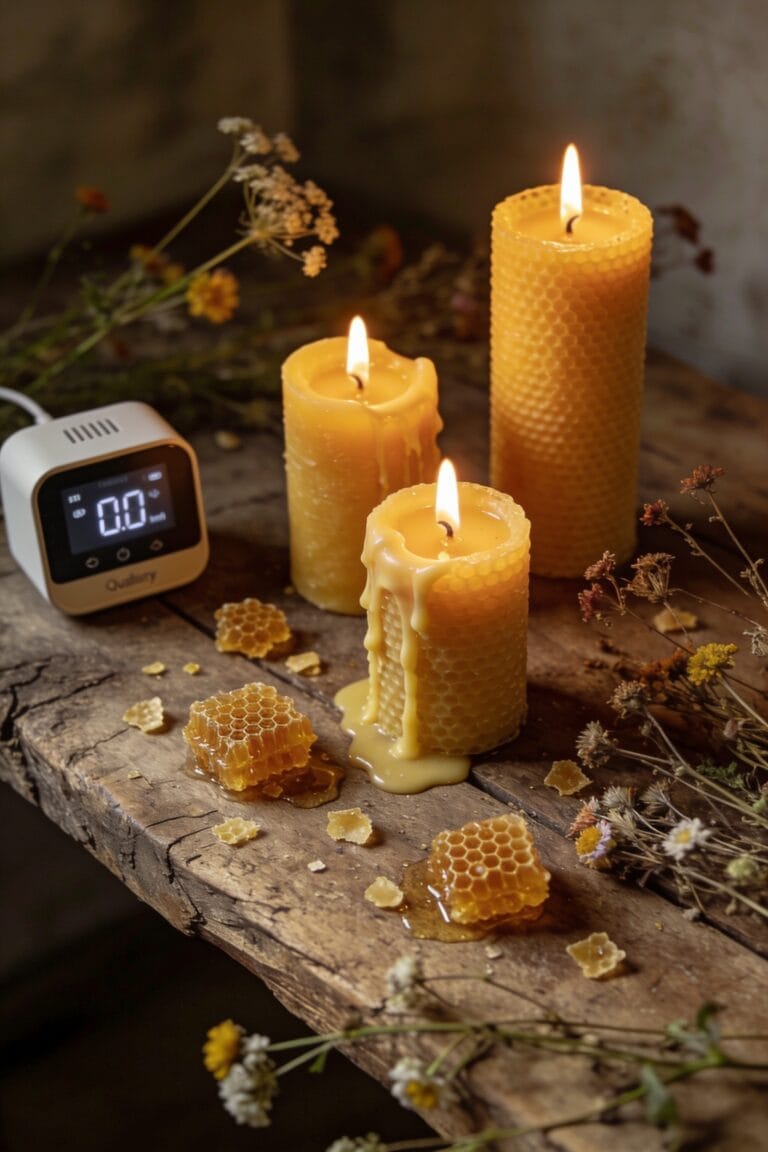
Look, I’ll level with you—beeswax candles have built themselves quite the reputation when it comes to air quality, and I’ve spent enough time sorting through the hype to give you the straight story. The negative ion claim? That’s mostly marketing. Beeswax doesn’t actually purify air the way people claim it does. What it does offer is cleaner combustion than paraffin—less soot, fewer synthetic toxins floating around your indoor ambiance. You’re still adding particulate matter when you burn any candle, including beeswax. But here’s where it wins: that natural honey aroma won’t aggravate allergies like fragrance chemicals do. Pair it with ventilation and HEPA filters for real results. Think of beeswax as the relatively cleaner option, not a miracle worker.
Recommended Products
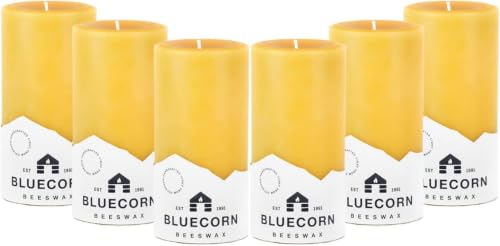
100% Pure Beeswax Candle: Hand-poured from naturally filtered beeswax for a rich, golden glow. These clean burning candles are free from paraffin, soy, and synthetic fragrances. Each 1-wick dripless pillar candle features natural cotton candle wicks and pure candle wax for a long-lasting burn and warm, cozy candle light.
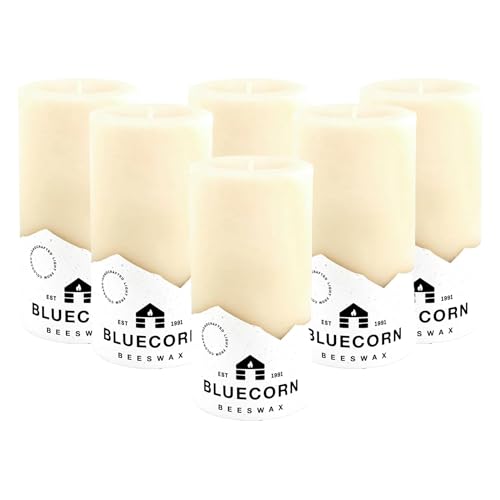
100% Pure Beeswax Candles — Non Toxic & Hypoallergenic: Hand-poured from naturally filtered beeswax for a truly unscented, hypoallergenic white beeswax candle. Each pure beeswax candle features a cotton wick for a clean, dripless burn, completely free from paraffin, soy and synthetic fragrances. A natural, non toxic candle alternative that adds warm, cozy candlelight to any setting.

Linen Pillar 4 Wick Super Candle Outdoor
Why Beeswax Burns Cleaner Than Paraffin (But Still Produces Soot)
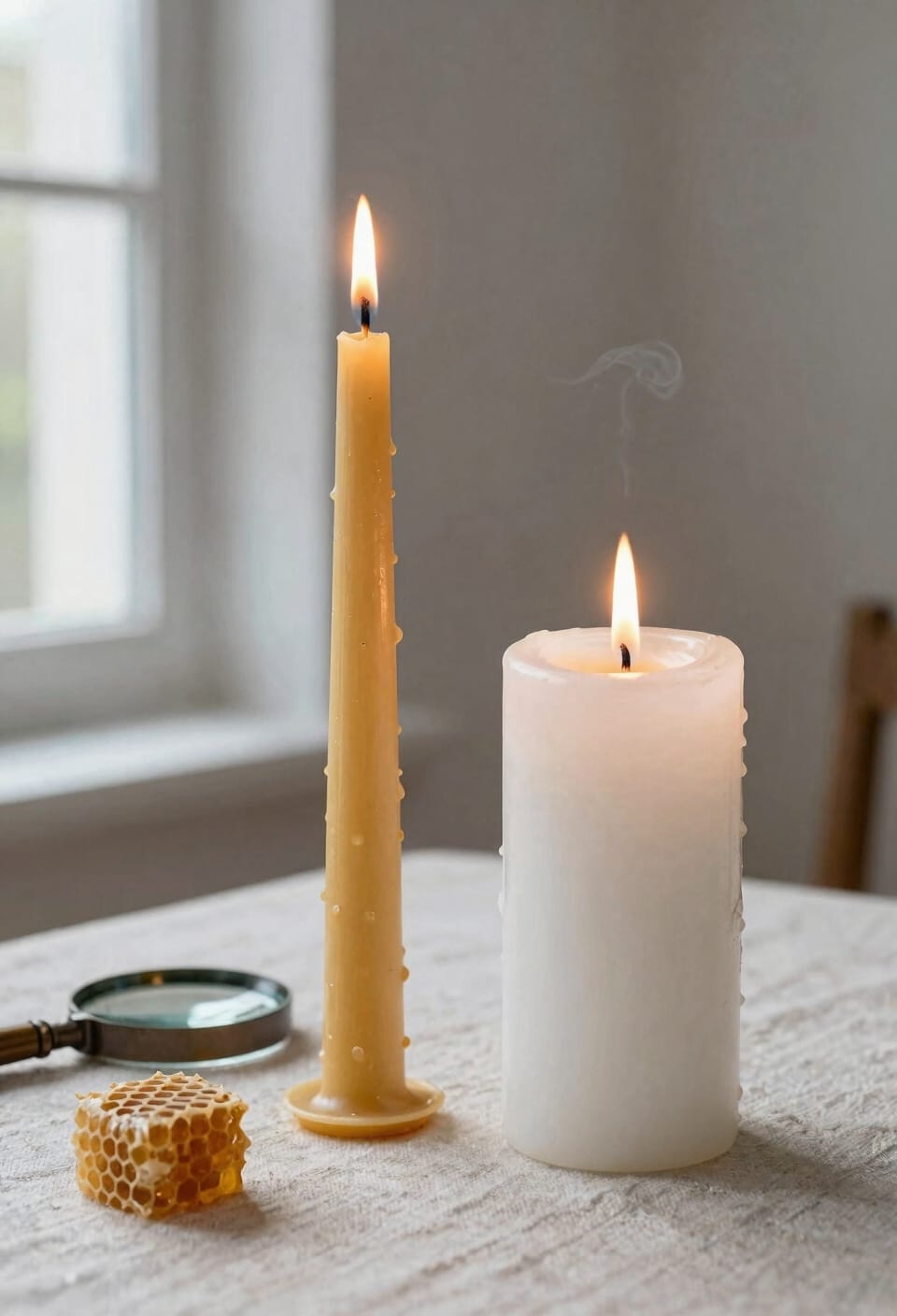
Now that we’ve established beeswax isn’t the air-purifying miracle worker marketing makes it out to be, let’s talk about why it still deserves real estate on your shelf—it actually does burn cleaner than paraffin, even if neither option gets you to zero soot. Beeswax’s higher flashpoint and natural wax composition mean it combusts more completely, releasing fewer toxins like benzene and toluene that paraffin pumps into your room. You’re still getting particulate matter, sure. But you’re getting less of it. The trade-off matters when you’re burning candles regularly. Beeswax burns longer too, which means fewer candles overall. It’s not perfect. Nothing is. But it’s genuinely the cleaner choice if you’ve got the budget for it.
Recommended Products

Religious Supply Center

Religious Supply Center

DIMENSIONS: 22cm x 5-6mm SKINNY (9" by 7/32 inch); Height: 22 cm (9 inches), thickness at base: 0.21 inch (5-6mm): 22cm x 7mm (9" by 5/16 inch); Height: 22 cm (9 inches), thickness at base: 0.28 inch (7mm); 27cm x 7mm (11" by 5/16 inch); Height: 27 cm (11 inches), thickness at base: 0.28 inch (7mm); 32cm x 7mm (13" by 5/16 inch); Height: 32 cm (13 inches), thickness at base: 0.28 inch (7mm);
The Negative Ion Claim: Not Backed by Science
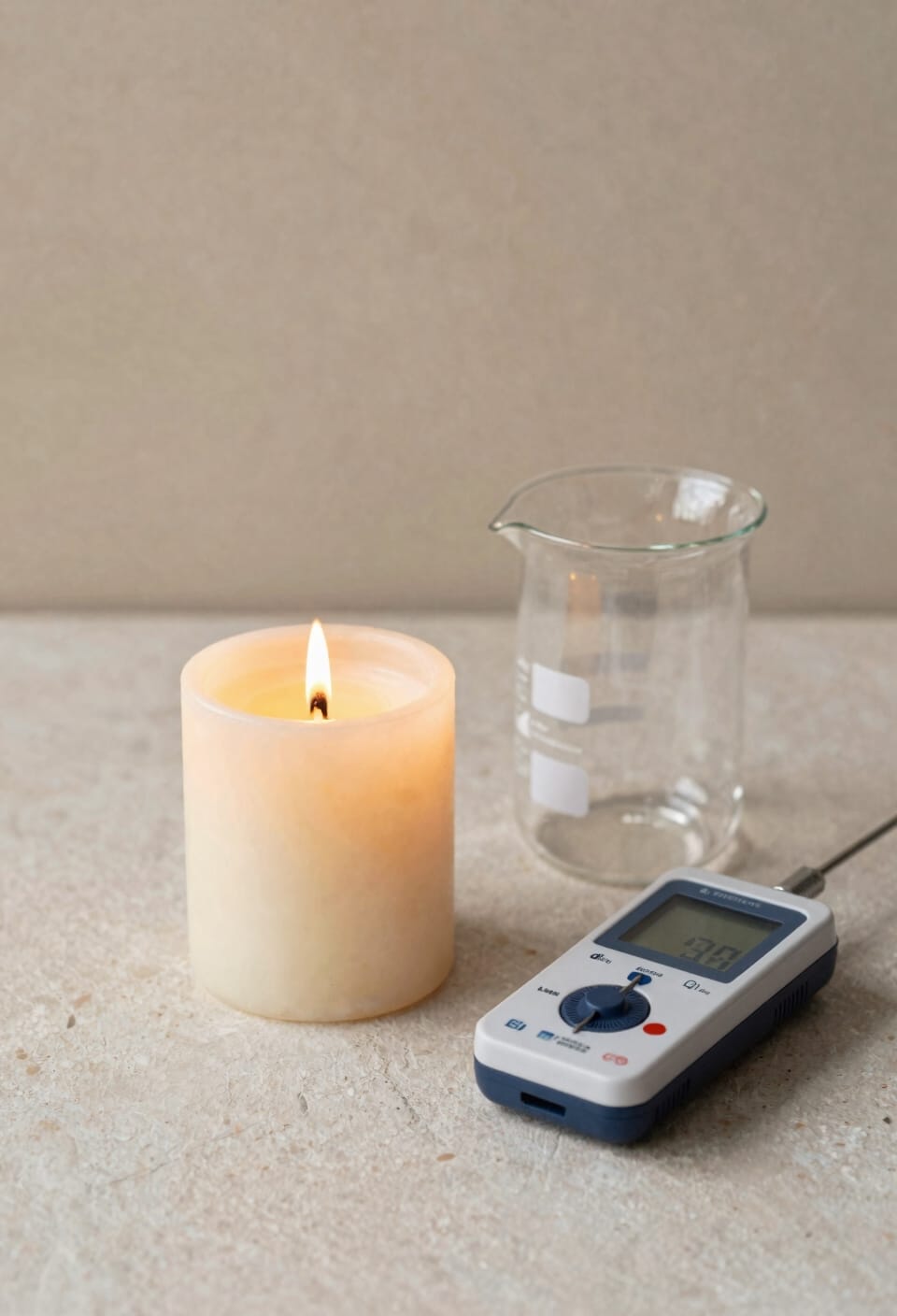
Now, I get it. Your room *feels* fresher when you light one. But that’s probably the pleasant scent and placebo effect working together, not ions magnetically pulling dust from your breathing zone. All candles add particulate matter to indoor air, regardless of what marketing claims. Focus instead on beeswax‘s genuine advantages: less soot than paraffin, longer burn times, and fewer synthetic toxins overall.
Recommended Products

BURNING TIME: 22cm (9 inches) SKINNY - approximately 1 hour; 22cm (9 inches) - approximately 1 - 1.5 hours; 27cm (11 inches) - approximately 1.5 - 2 hours; 32cm (13 inches) - approximately 2 hours; For maximum burn time place the candles in an area with minimal air movement. Avoid drafty areas such as near open windows, vents, or fans.

Religious Supply Center

If Negative Ions Are Fake, Why Do People Say Beeswax Helps Allergies?

Why do so many people swear their allergies improve when they burn beeswax, even though the negative ion thing doesn’t hold up scientifically? I think it comes down to a mix of sensory placebo and immune conditioning. When you burn beeswax instead of paraffin, you’re actually inhaling less soot and fewer synthetic toxins—that’s real. Your body notices the difference, even if negative ions aren’t doing the heavy lifting. There’s also the comfort factor: that natural honeyed scent, the steady flame, the ritual itself can genuinely calm your nervous system. Sometimes feeling better isn’t about air purification at all. It’s about removing irritants while adding something soothing. That’s worth something, even if it’s not the miracle cure marketing suggests.
Recommended Products

100% Pure Beeswax Votives: Hand-poured from naturally filtered beeswax, these small candles offer a warm, golden glow and clean, natural candlelight for cozy evenings, holiday gatherings, or everyday home decor

Natural Beeswax: Our beeswax pillar candles are carefully crafted from natural pure beeswax, offering a natural and sustainable lighting solution. Enjoy the warmth, golden glow and the subtle, natural honey scent that only real beeswax can provide.

100% beeswax candle made with a cotton wick and contain no lead or metal.
Maximize Air Quality With Beeswax Candles

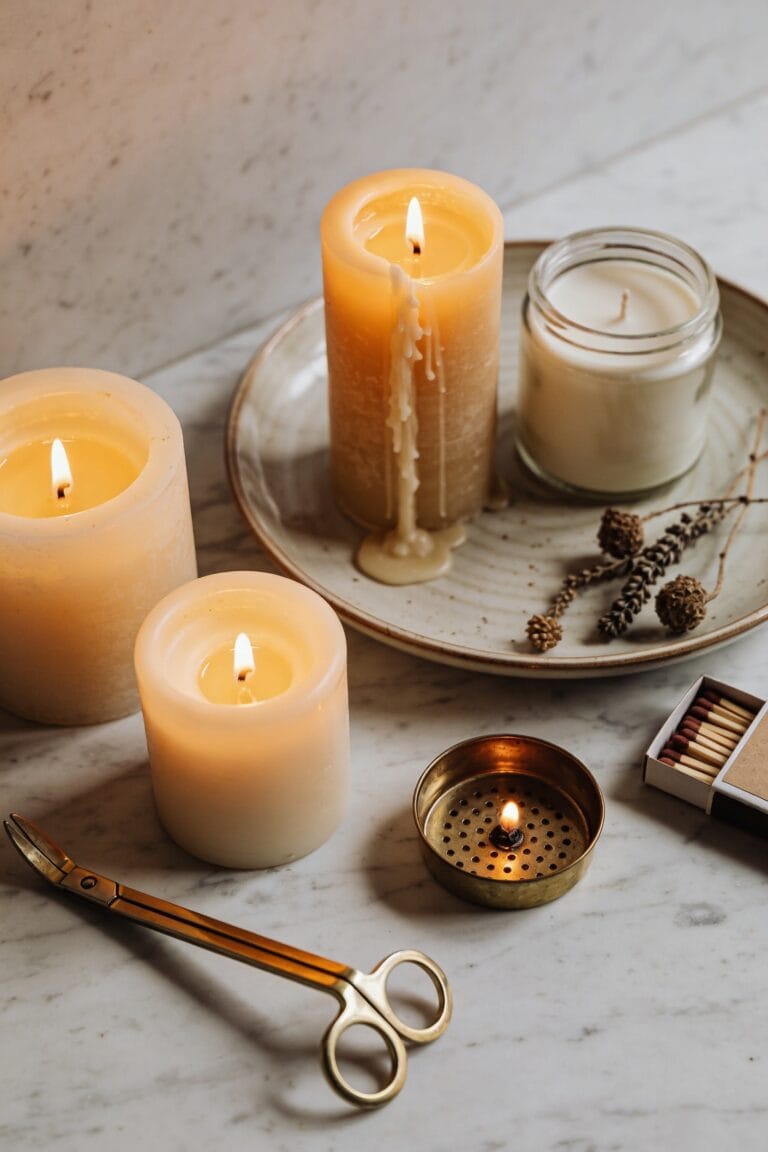
If you’re serious about getting the most out of beeswax candles—and I mean actually improving your indoor air rather than just feeling like you are—you’ve got to think strategically about placement, burn time, and what you’re pairing them with. Look, ventilation strategies matter more than the candle itself. Open a window or crack a door to keep airflow optimization working in your favor. Position beeswax candles away from walls to let air circulate freely around the flame. Trim that wick to a quarter-inch so you’re getting a cleaner burn with less soot. Honestly? Pair them with HEPA filters and houseplants for real results. The candle alone won’t purify anything, but done right, it becomes part of a smarter system.
Recommended Products

100% PURE USA BEESWAX – We use only domestically sourced beeswax with no additives, dyes, or artificial fragrances. Just pure, golden beeswax.

100% Pure Beeswax Candle: Hand-poured from naturally filtered beeswax for a rich, golden glow. These clean burning candles are free from paraffin, soy, and synthetic fragrances. Each 1-wick dripless pillar candle features natural cotton candle wicks and pure candle wax for a long-lasting burn and warm, cozy candle light.

🕯️ Natural Pure Beeswax & Smokeless Honey Scent Made of premium pure beeswax, the candle burns smokeless without irritating fumes and releases a mild sweet honey fragrance, creating a peaceful atmosphere for religious prayer.
Frequently Asked Questions
Do Beeswax Candles Produce More or Less Soot Than Soy Candles?
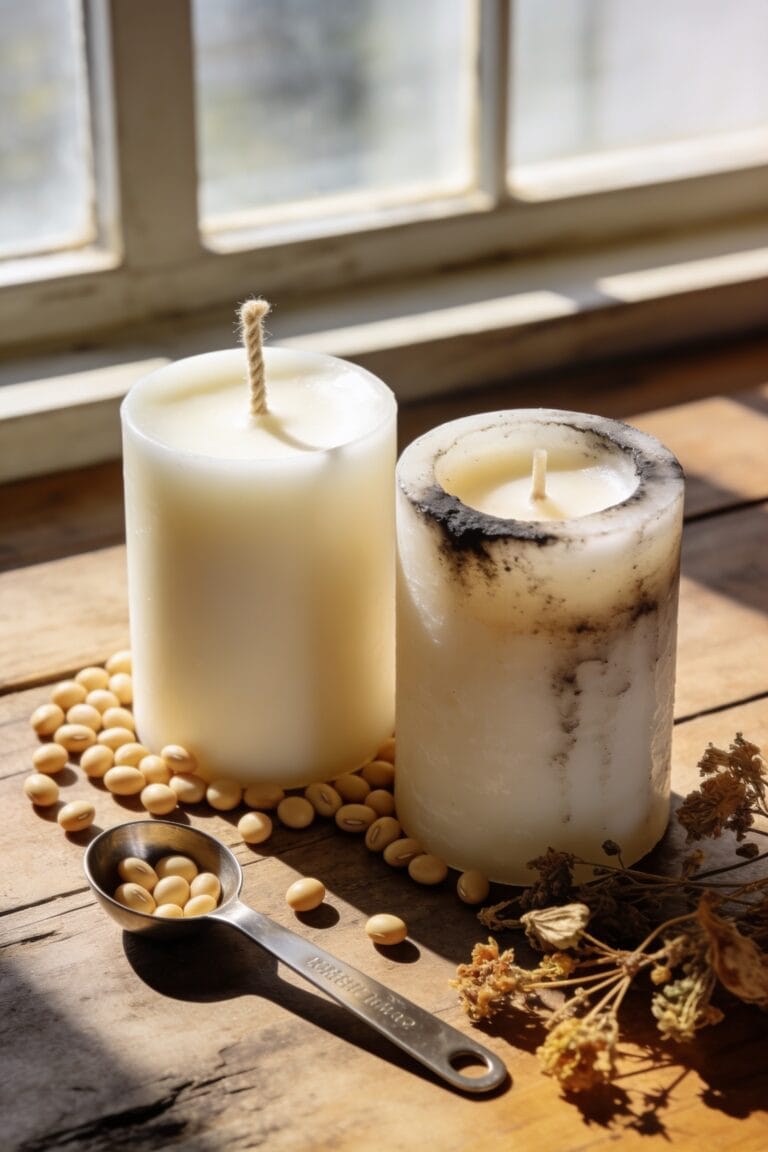
I’d say beeswax produces more soot than soy candles. Emission testing shows soy emits fewer VOCs, making it cleaner-burning overall. However, beeswax still outperforms paraffin markedly in soot comparison studies.
How Should I Trim My Beeswax Candle Wick for Optimal Burning?
I’d trim your wick to 1/4 inch for peak burning. Though beeswax candles won’t purify your air as marketing claims, proper wick maintenance prevents excess soot, ensuring cleaner, steadier flames and longer burn times.
Can Beeswax Candles Actually Trigger Asthma or Allergy Symptoms in Sensitive Individuals?
While beeswax candles are generally hypoallergenic and won’t trigger asthma like paraffin does, I’d still recommend testing them personally. They emit fewer particulates than synthetic candles, but individual sensitivity varies—some folks with pollen allergies find them soothing.
What Is the Melting Point of Beeswax Compared to Other Candle Waxes?
Beeswax melts at 62-65°C, making it superior in thermal behavior compared to paraffin and soy waxes. I’ve found this melting comparison means beeswax burns longer, steadier, with lower burn risk than alternatives.
Are Beeswax Candles Safe to Burn Around Pets and Children Daily?
I’d say beeswax candles are practically heaven-sent for families. They’re non-toxic labels certified and child-friendly, though supervision’s required. I find them pet-safe too, but ventilation and keeping flames away from curious noses matters most daily.
Conclusion
Look, I won’t pretend beeswax is a miracle cure—because it isn’t. But here’s the paradox: while the negative ion claims crumble under scrutiny, beeswax still outperforms paraffin in real, measurable ways. You’re getting cleaner burns, less soot buildup, and longer burn times. That’s not marketing magic; that’s chemistry. So burn them knowing what you’re actually getting.