As an Amazon Associate, we earn from qualifying purchases. Some links on this site are affiliate links at no extra cost to you. Our recommendations are based on thorough research and editorial judgment.

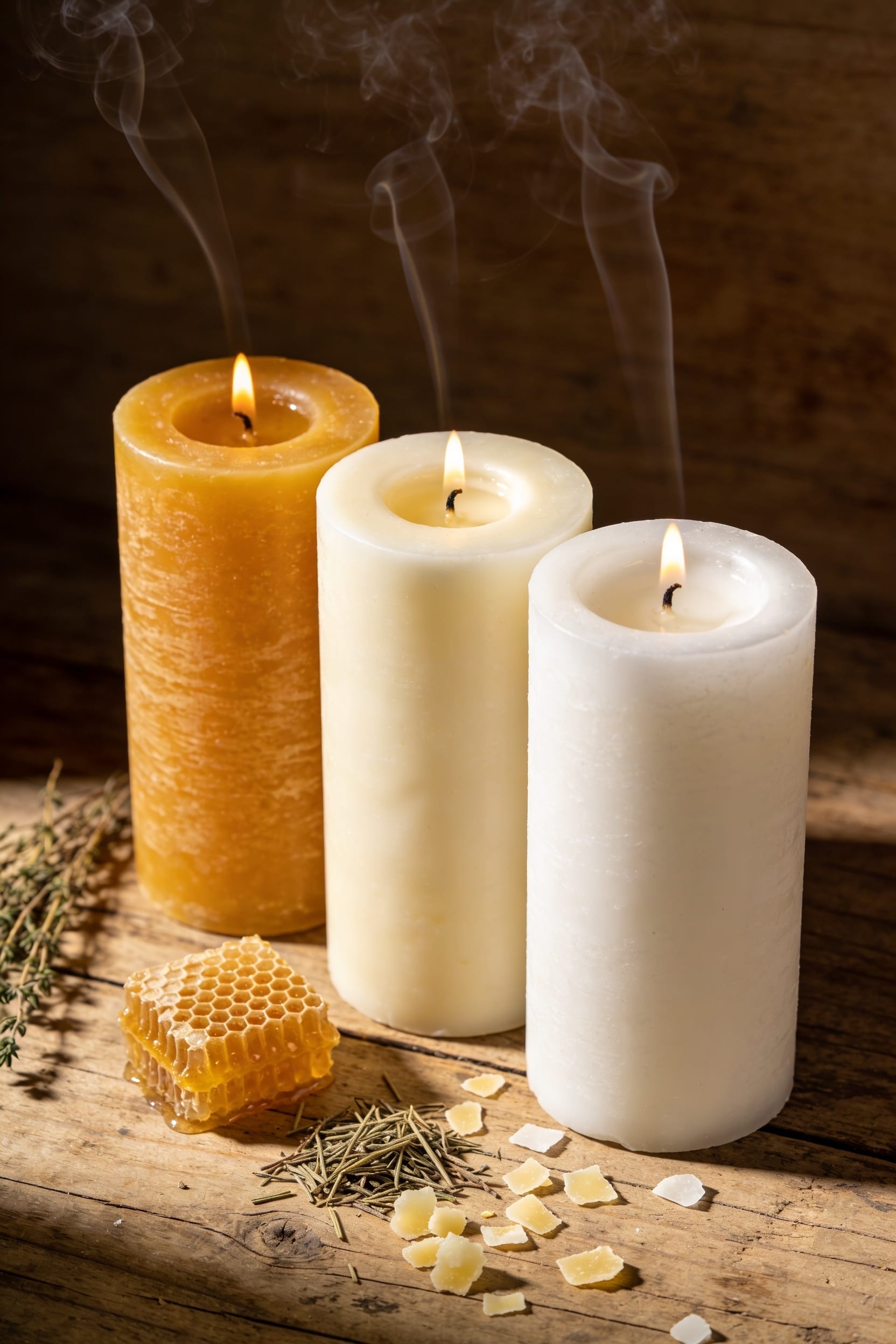
Are Beeswax Candles Better Than Soy or Paraffin?

Look, there’s no single winner here—it depends on what you’re actually prioritizing. Beeswax burns longest and purest, but costs more upfront. Soy offers solid middle-ground performance without breaking the bank. Paraffin throws scent hardest but burns fastest and releases toxins. I’ve wasted money on all three, and I’ve learned that cheaper initially often means replacing candles constantly. Your priorities—budget, longevity, air quality, scent intensity—determine which actually wins for you.
Key Takeaways
- Beeswax burns 50% longer than soy and offers natural honey scent with air-purifying properties through negative ion release.
- Paraffin delivers strongest scent throw but is petroleum-based, releasing harmful compounds like benzene and toluene into air.
- Beeswax costs more upfront but provides superior long-term value; paraffin’s cheapest price becomes costly with frequent replacements.
- Soy offers affordable upfront cost, reliable performance, and consistent scent throw with minimal maintenance requirements.
- Choice depends on priorities: beeswax for health and longevity, soy for affordability and reliability, paraffin for intense fragrance.
Choose Your Ideal Candle Wax: What Matters Most
How do you even choose between beeswax, soy, and paraffin when they’re all sitting there on the shelf looking basically identical? Look, it comes down to what matters most to you. Are you chasing that perfect room ambiance? Beeswax throws a gorgeous, natural honey scent and burns cleaner. Want minimal maintenance effort? Soy’s your friend—it’s affordable and performs reliably without the black soot marks paraffin leaves on your walls. Now, if you’re serious about scent throw, paraffin wins, but you’ll sacrifice air quality and replace candles constantly. I’ve learned the hard way that cheap paraffin isn’t worth the hassle. Think about your priorities: health, longevity, scent strength, or budget. Once you know what actually matters to you, the choice gets way easier.
Budget vs. Performance: Beeswax, Soy, and Paraffin Compared

When you’re standing in the candle aisle trying to figure out whether you’re throwing away money on beeswax or getting a legitimate bargain with soy, it helps to stop thinking about price alone and start thinking about what you’re actually getting for your cash. Beeswax carries a higher initial investment, but it burns 50% longer than soy, which means fewer replacements and lower maintenance costs over time. Soy offers affordability upfront with decent longevity and solid scent throw. Paraffin’s cheap, sure, but you’ll replace it constantly. I’ve learned the hard way that the cheapest option rarely feels smart six months in when you’re buying candles constantly.
Clean Air and Clean Conscience: Health and Environmental Trade-Offs
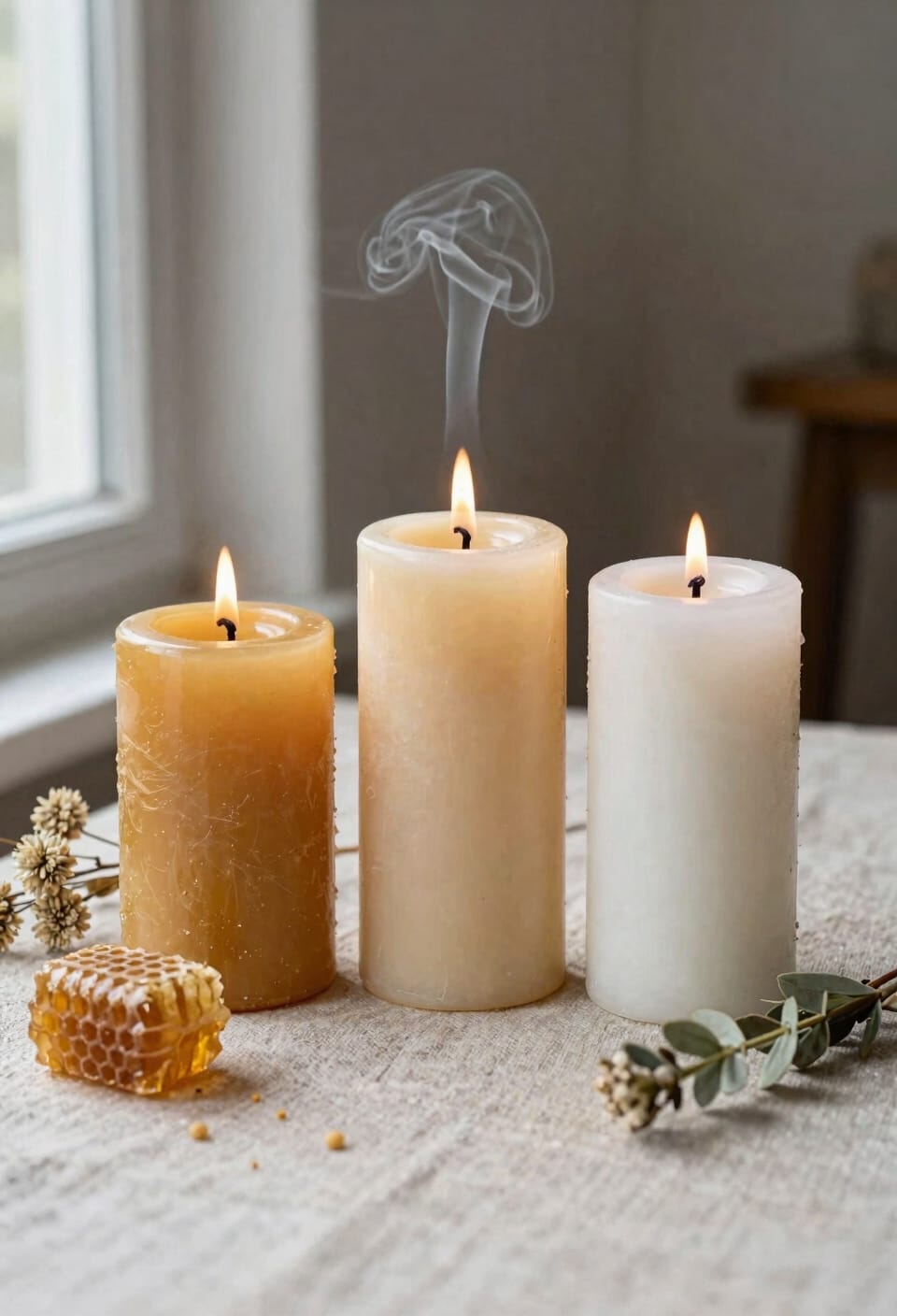
Because you’re literally breathing in whatever that candle releases into your air, the health and environmental side of this decision matters just as much as how long it burns or whether it smells amazing. Beeswax is 100% natural and actually purifies your air by releasing negative ions that neutralize pollutants—that’s air purification happening while you relax. Paraffin, though? It’s petroleum-based and releases harmful compounds like benzene and toluene. Soy sits in the middle: non-toxic but potentially involving pesticides. For ethical sourcing, beeswax wins through small-scale sustainable harvesting that supports beekeepers and pollination. Soy’s renewable but often linked to deforestation. Your choice here isn’t just about performance. It’s about what you’re comfortable inviting into your lungs and supporting with your money.
Burn Time and Longevity: Which Wax Actually Lasts
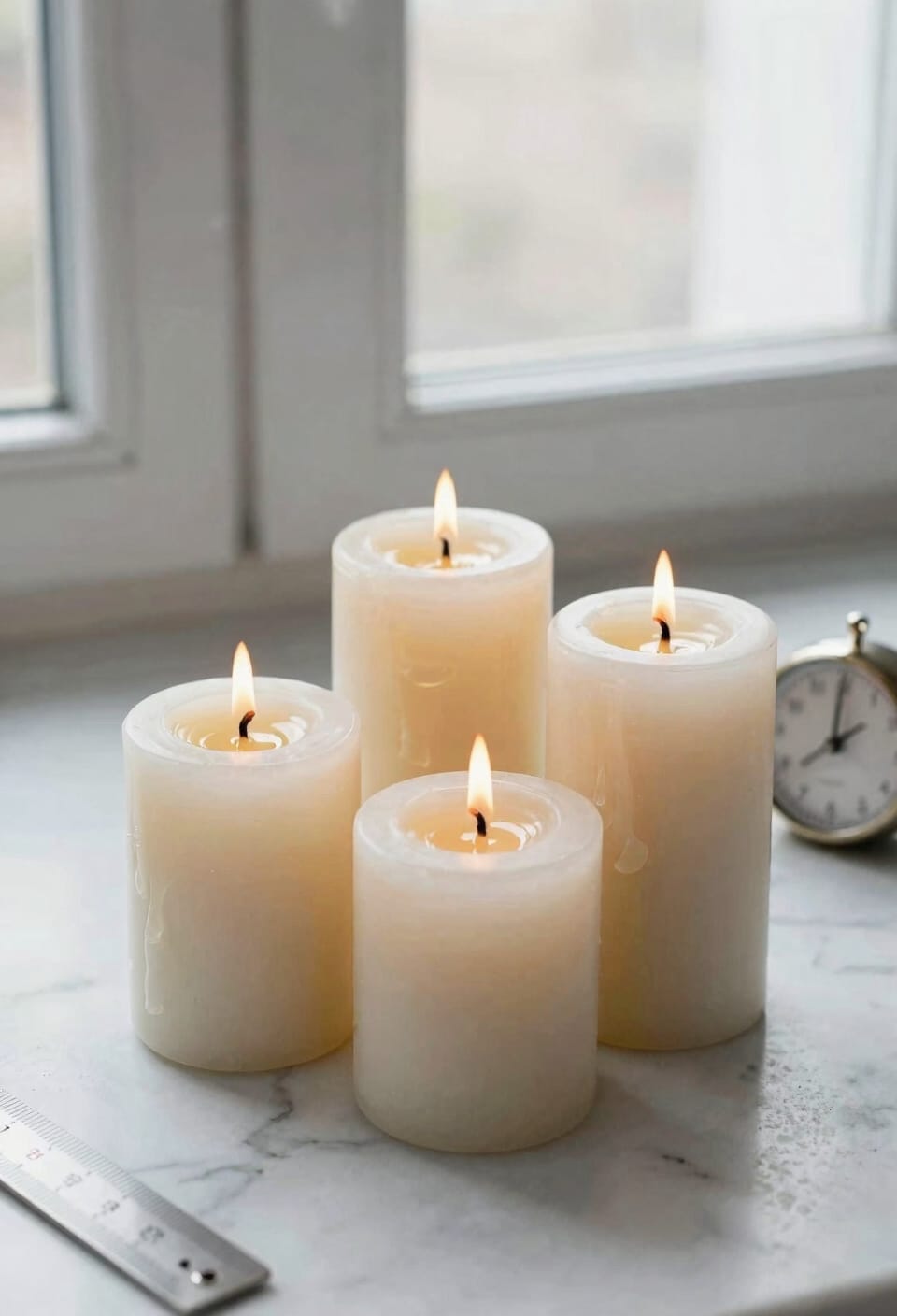
Now that you’ve settled on what you’re willing to breathe into your lungs, let’s talk about something equally practical: how long you’ll actually burn that candle before it’s gone.
Beeswax is your longer lasting champion here—we’re talking 50% more burn time than soy, thanks to its dense molecular structure and superior heat resistance. Soy comes next, burning slower than paraffin but not quite matching beeswax‘s endurance. Paraffin? It’ll burn through fastest, leaving you constantly replacing it.
The real kicker: wick sizing matters enormously for burn rate. A properly sized wick prevents tunneling and guarantees even melting. Beeswax’s longevity means better long-term value despite that higher upfront cost. You’re not just buying a candle—you’re buying fewer replacements overall.
Scent Throw and Natural Fragrance: Where Each Wax Excels

If you’ve ever lit a soy candle and wondered why you could barely smell it from across the room, while a paraffin one practically announced itself, you’ve run headfirst into the scent throw dilemma. Here’s the thing: paraffin wins the fragrance retention game, holding and releasing scents with aggressive intensity. Soy performs respectably, offering consistent throw that builds as the candle burns. Beeswax? It’s the wildcard. You won’t get much fragrance retention from added scents—beeswax limits their effectiveness compared to its competitors. But that’s not necessarily a loss. You’re getting beeswax’s natural honey notes instead, a subtle, authentic fragrance that needs no boosters. If you want powerhouse scent throw, soy or paraffin delivers. Want something gentler? Beeswax’s inherent character speaks for itself.
Which Wax Wins for Your Priorities?
So we’ve established that paraffin throws fragrance like it’s got something to prove, soy plays it steady, and beeswax does its own thing with natural honey notes—but here’s where it gets real: none of that matters if the candle doesn’t match what you actually want from a burning experience.
Ask yourself: Do you need serious room ambiance that fills your space immediately? Paraffin wins there. Want low-maintenance tips and extended burn time? Beeswax is your answer. Looking for gift suitability that works year-round? Soy’s versatility makes it reliable. Consider seasonal pairing too—beeswax’s honey warmth suits fall perfectly, while soy handles any vibe you’re chasing. The best wax isn’t objectively superior. It’s the one serving your actual priorities.
Frequently Asked Questions
Can Beeswax Candles Help Reduce Allergies and Asthma Symptoms?
Yes, I’ve found beeswax candles can help. They release negative ions that neutralize airborne irritants and allergens, offering respiratory relief. You’ll notice fewer allergy and asthma symptoms when burning them regularly.
How Does Beeswax Production Impact Bee Colonies and Their Survival?
I’d argue that sustainable beeswax harvesting shouldn’t harm colonies when done responsibly. Beekeepers maintain healthy colony dynamics by leaving sufficient honey stores and managing forage availability, ensuring bees survive and thrive while producing this natural wax.
Are Soy Candles Truly Sustainable Given Deforestation Concerns?
Like a forest losing its soul to progress, soy candles carry hidden costs. Soy sourcing drives deforestation and monoculture impacts. Complex supply chains mask land use damage, making sustainability claims questionable despite renewable appeal.
What Causes Black Marks on Walls From Paraffin Candles?
I’ll explain what causes those black marks. Paraffin candles produce sooty residue because they release toxins when burning. Poor ventilation effects compound this, trapping particles that settle on your walls and ceilings as dark stains.
Can You Mix Different Wax Types in a Single Candle?
Why’d you think combining waxes couldn’t work? I’d say you can mix them, though layer compatibility matters—different melting points affect performance. I’d prioritize scent diffusion when blending, as soy excels there while beeswax limits fragrance release.
Conclusion
Beeswax burns longest but costs most. Soy’s eco-friendly yet sometimes weak. Paraffin’s cheap and throws scent hard—just not clean. Here’s the real talk: your best candle isn’t about the wax type alone. It’s about matching what matters to you—budget, performance, health, conscience—with honest expectations. Pick one priority, find your wax, and stop second-guessing.