As an Amazon Associate, we earn from qualifying purchases. Some links on this site are affiliate links at no extra cost to you. Our recommendations are based on thorough research and editorial judgment.


Beeswax vs Soy Candles: Which Is Right for You?

Look, here’s what matters: beeswax burns roughly 30–50% longer than soy, which means better lifetime value despite the higher upfront cost. Soy throws fragrance harder across a room, while beeswax offers subtle honey undertones and burns virtually soot-free with air-purifying benefits. Sustainability’s complicated—soy’s renewable but drives deforestation; beeswax supports bee ecosystems. Your choice depends on what you prioritize: longevity and air quality, or maximum scent projection and environmental concerns. Stick around for the details that’ll actually help you decide.
Key Takeaways
- Beeswax burns 30–50% longer than soy, making it better for longevity despite higher upfront costs.
- Soy excels at fragrance retention, while beeswax offers subtle honey notes ideal for natural scent preferences.
- Beeswax burns soot-free and releases negative ions that may purify indoor air and improve respiratory health.
- Soy is renewable but linked to deforestation, while beeswax supports bee ecosystems as a sustainable byproduct.
- Choose beeswax for durability and air quality, or soy for strong scent throw and lower initial investment.
How Long Each Candle Burns
When you’re comparing candle waxes, burn time matters more than you’d think—especially if you’re dropping real money on something that’s supposed to last. A 100-gram beeswax candle burns roughly 29 hours, while soy manages about 18 hours. That’s a significant difference.
Here’s why: beeswax has a higher melting point—62 to 69°C compared to soy’s 45 to 60°C. That slower melt means a longer burn rate. Your wick size and melt pool depth matter too, along with your room size, but the wax itself does the heavy lifting.
Beeswax lasts 30 to 50% longer than soy. If longevity’s your priority and budget allows, beeswax wins. Soy’s still respectable though—you’re just buying more frequently.
Recommended Products

DIMENSIONS: 22cm x 5-6mm SKINNY (9" by 7/32 inch); Height: 22 cm (9 inches), thickness at base: 0.21 inch (5-6mm): 22cm x 7mm (9" by 5/16 inch); Height: 22 cm (9 inches), thickness at base: 0.28 inch (7mm); 27cm x 7mm (11" by 5/16 inch); Height: 27 cm (11 inches), thickness at base: 0.28 inch (7mm); 32cm x 7mm (13" by 5/16 inch); Height: 32 cm (13 inches), thickness at base: 0.28 inch (7mm);

100% Pure Beeswax Candle: Hand-poured from naturally filtered beeswax for a rich, golden glow. These clean burning candles are free from paraffin, soy, and synthetic fragrances. Each 1-wick dripless pillar candle features natural cotton candle wicks and pure candle wax for a long-lasting burn and warm, cozy candle light.

BURNING TIME: 22cm (9 inches) SKINNY - approximately 1 hour; For maximum burn time place the candles in an area with minimal air movement. Avoid drafty areas such as near open windows, vents, or fans.
Real Cost Differences: Budget and Longevity
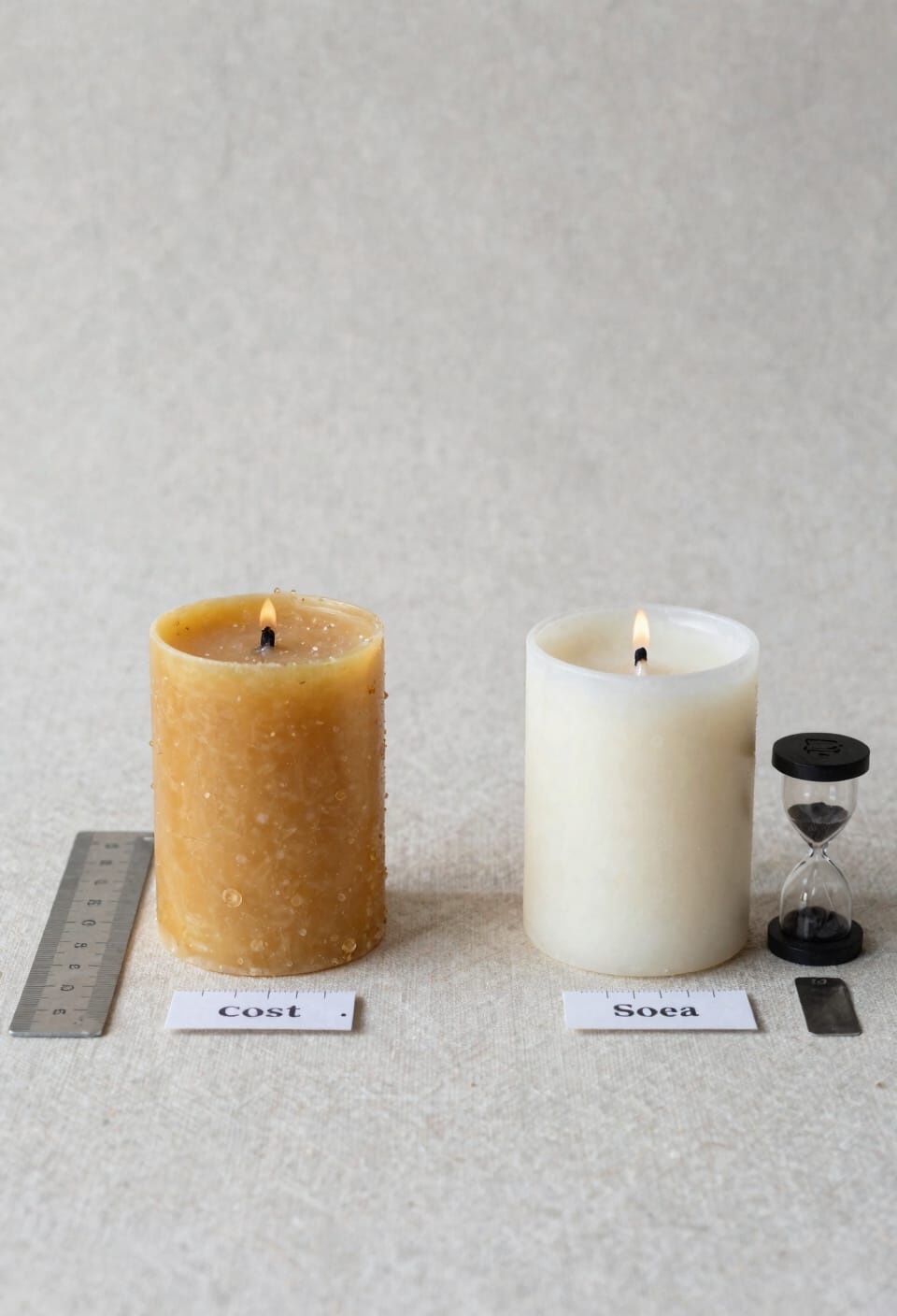
Now here’s where the burn time advantage gets real: beeswax costs considerably more upfront, but that 30 to 50% longer burn means you’re actually getting better value over time. Your initial investment might be double what you’d spend on soy, yeah. But here’s the thing—when you’re comparing lifetime cost, beeswax often wins. A 100g beeswax candle burns 29 hours versus soy’s 18 hours. You’re getting markedly more burn for your money. That higher melting point means the wax releases slower, stretching every dollar further. Soy’s cheaper at checkout, sure. But if you’re burning candles regularly, beeswax’s longevity means fewer replacements. Run the math on what you actually spend monthly, and the gap narrows considerably.
Scent Throw: Beeswax vs. Soy

If you’ve ever wondered why one candle fills your entire room with fragrance while another barely scents the corner it’s sitting in, you’re bumping into one of the biggest differences between beeswax and soy—and honestly, it’s where things get interesting because neither option is a slam dunk.
Soy candles excel at fragrance retention. They hold scent oils exceptionally well, giving you that consistent, throw-across-the-room performance most people want. Beeswax, meanwhile, has its own natural aroma—that honey-like quality—which actually limits how much artificial fragrance you can layer in. If you’re chasing maximum scent projection, soy’s your move. But if you prefer subtle, naturally sweet undertones, beeswax won’t disappoint. Ivory beeswax splits the difference, offering stronger throw than traditional beeswax while keeping that premium feel.
Recommended Products

SCENT - Feu de Bois evokes fresh pine falling on curls of sandalwood & rare Virginia cedarwood. Smoky leather accords, frankincense & nuances of vanilla are tranquil and comforting.

MASSIVE 8" × 14" LUXURY CANDLE – 300 OZ OF NATURAL COCONUT SOY WAX Make a statement with this Classic Big Ass Candle—our largest candle. This luxury candle delivers bold presence, elegant style, and room-filling fragrance. Perfect as a centerpiece for living rooms, great rooms, and upscale spaces.

UNIQUELY HANDMADE: Perfect for a relaxing ambiance! Each scented candle is crafted from real wood, providing a unique and sustainable touch. Heart shape elevates aesthetic!
What You’re Breathing: Air Quality and Health

Beyond what your nose picks up, there’s a whole other conversation happening inside your lungs—and this is where beeswax and soy actually diverge pretty sharply. Beeswax burns clean. I mean genuinely clean. It produces virtually no soot and actually releases negative ions that can help purify your indoor air. That’s a genuine health win if you’re sensitive to indoor pollutants or respiratory effects from candle smoke. Soy’s cleaner than paraffin, sure, but it doesn’t offer that air-purifying benefit. Lower-quality soy candles can even produce soot from additives, which defeats the purpose entirely. If you’re burning candles regularly and care about what you’re actually breathing, beeswax’s respiratory advantages make it worth the investment.
Recommended Products

100% PURE USA BEESWAX – We use only domestically sourced beeswax with no additives, dyes, or artificial fragrances. Just pure, golden beeswax.

100% Pure Beeswax Candle: Hand-poured from naturally filtered beeswax for a rich, golden glow. These clean burning candles are free from paraffin, soy, and synthetic fragrances. Each 1-wick dripless pillar candle features natural cotton candle wicks and pure candle wax for a long-lasting burn and warm, cozy candle light.

🕯️ Natural Pure Beeswax & Smokeless Honey Scent Made of premium pure beeswax, the candle burns smokeless without irritating fumes and releases a mild sweet honey fragrance, creating a peaceful atmosphere for religious prayer.
Which Is Greener: Sustainability and Ethics
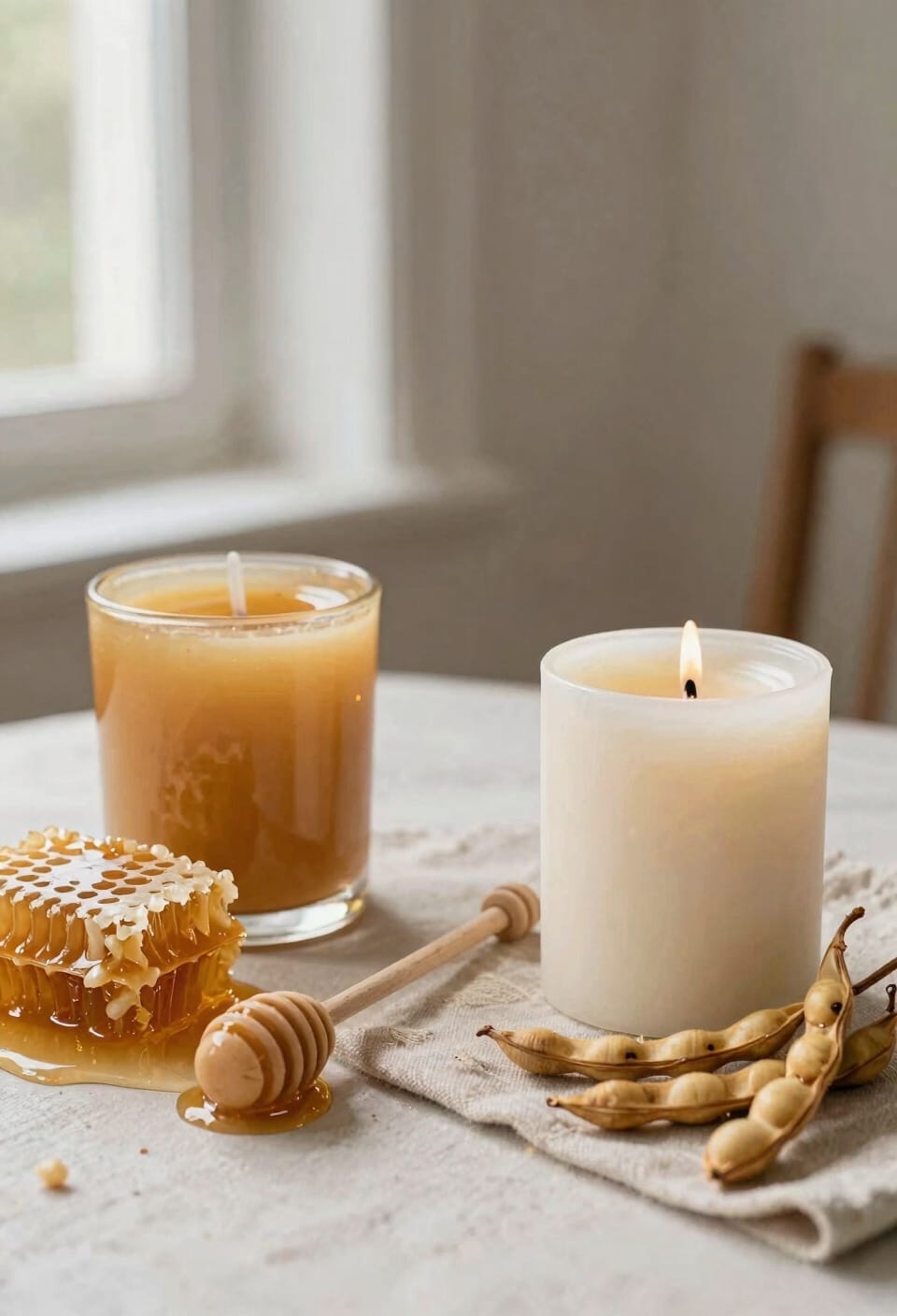
When you’re choosing between beeswax and soy, you’re not just picking a candle—you’re making a choice about what gets extracted from the earth (or the hive) to fuel your cozy evenings, and that matters more than most of us think about while we’re lighting up.
Here’s the thing: soy’s renewable and biodegradable, but large-scale soy farming drives deforestation and habitat loss. Beeswax, meanwhile, supports bee welfare and pollination ecosystems—a natural byproduct that doesn’t require cropland. Both are non-toxic and biodegrade cleanly.
The catch? Supply transparency varies wildly. You’ll want to research your candle maker’s sourcing and carbon footprint before committing. Neither option’s perfect, but beeswax edges ahead environmentally if bee welfare matters to you. For vegans, soy’s the only choice.
Recommended Products

Natural Beeswax: Our beeswax pillar candles are carefully crafted from natural pure beeswax, offering a natural and sustainable lighting solution. Enjoy the warmth, golden glow and the subtle, natural honey scent that only real beeswax can provide.

NATURAL BEESWAX & COTTON WICK: Made with beeswax and a cotton wick for a warm, natural look. No added fragrance; the natural color and light beeswax scent may vary slightly from batch to batch

Pure Beeswax Candles: Our beeswax candles are crafted from 100% natural, triple-filtered beeswax, free from pollen and impurities. When burned, they are smokeless and dripless, releasing negative ions that help purify the air by neutralizing airborne pollutants
Frequently Asked Questions
Are Beeswax Candles Suitable for People With Allergies?
Yes, I’d recommend beeswax candles if you’ve got allergies. They’re hypoallergenic and won’t trigger respiratory irritation like other candle types might. Their natural properties make them ideal for allergy sufferers.
Why Does Beeswax Produce a Brighter Flame Than Soy Candles?
I’ll tell you why beeswax creates that luminous glow you’re drawn to. Its denser natural wax composition and higher melting point produce a warmer, brighter flame through superior light chemistry than soy’s cooler burn.
Is Beeswax Considered Vegan-Friendly for Ethical Consumers?
No, I wouldn’t consider beeswax vegan-friendly because it’s a bee byproduct. If animal welfare concerns you, I’d recommend soy candles as a vegan alternative that aligns with ethical values.
How Do Melting Points Affect the Overall Candle Performance?
Like a thermostat controlling your home, melting points govern candle performance. Higher beeswax temperatures (62-69°C) reduce wax viscosity, slowing burn rate and extending duration, while soy’s lower point (45-60°C) accelerates consumption.
Which Candle Type Is Easier to Clean up After Burning?
Soy candles are easier to clean up after burning. They burn cooler, so you’ll find wick trimming simpler and soot removal minimal. I’d recommend soy if cleanup convenience matters to you.
Conclusion
Look, here’s the irony: the “perfect” candle doesn’t exist, but you’re closer to finding it than you think. I’ve burned through enough disappointing wicks to know that beeswax and soy each win in different rooms of your life. Pick based on what matters most to you—longevity, scent throw, air quality, or ethics. You can’t go wrong; you’ll just go differently.