As an Amazon Associate, we earn from qualifying purchases. Some links on this site are affiliate links at no extra cost to you. Our recommendations are based on thorough research and editorial judgment.

Candle Wick Types Compared: Cotton, Wood & More

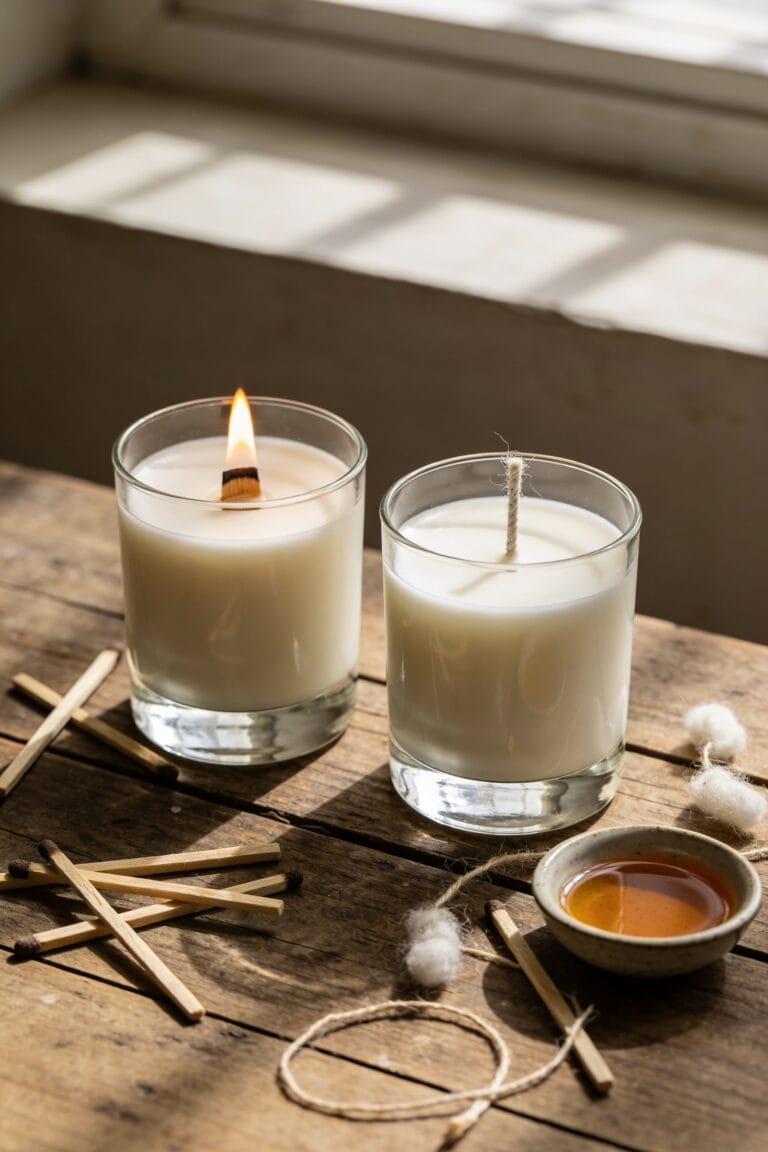
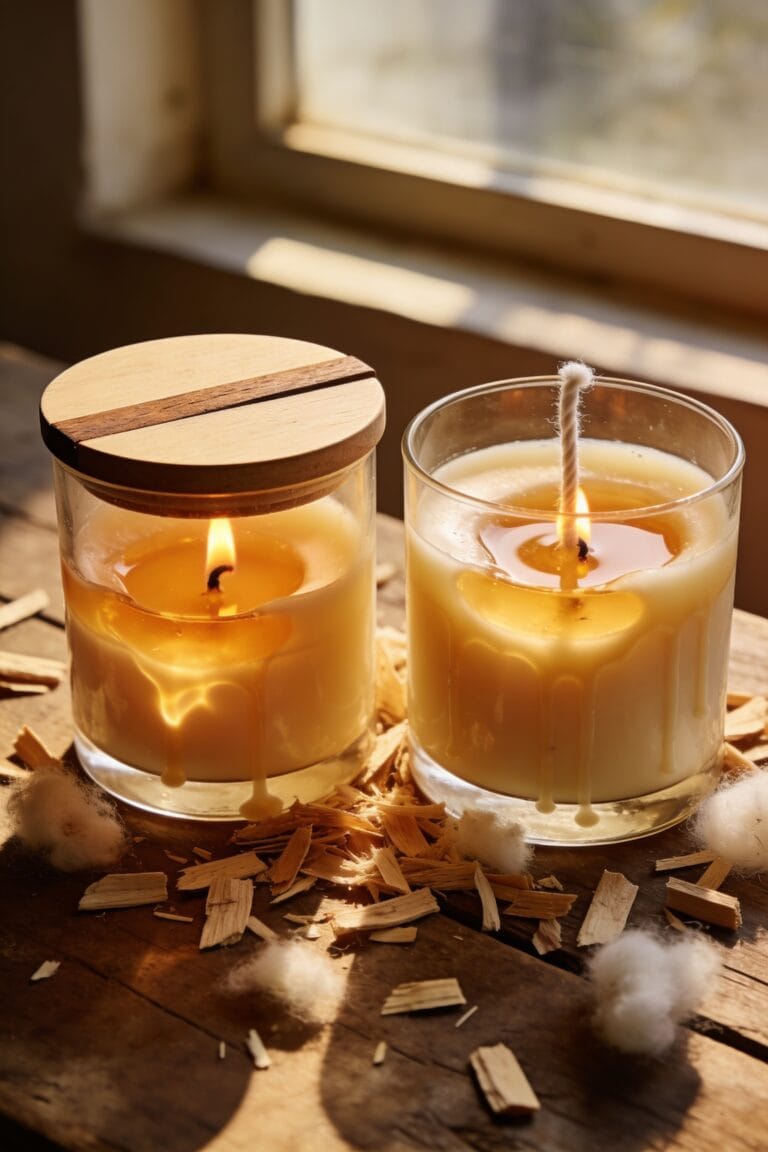
Cotton wicks burn cleaner with minimal soot when properly trimmed, while wooden wicks produce zero toxic residue but require specialized maintenance. Cotton offers longer burn times and steady fragrance, perfect if you want simplicity. Wooden wicks disperse scent 35% more potently and create that cozy crackling ambiance, though they demand precision upkeep. Your choice depends on whether you prioritize longevity and ease or faster scent throw and aesthetic appeal. The details on how to maximize either option are worth exploring further.
Key Takeaways
- Cotton wicks burn slower with minimal soot, requiring simple trimming maintenance for optimal performance and longevity.
- Wooden wicks create wider meltpools, dispersing fragrance 35% more potently while producing a crackling ambiance.
- Cotton wicks provide steady, prolonged aroma without overwhelming scent; ideal for larger areas with multiple wicks.
- Wooden wicks burn hotter and more evenly, preventing tunneling but requiring specialized trimmer tools for maintenance.
- Choose cotton for ease and longevity; select wooden wicks for faster fragrance throw and aesthetic crackling effect.
Do Cotton or Wooden Wicks Burn Cleaner?
If you’ve ever noticed black residue creeping up the inside of your candle jar, you’ve witnessed what happens when a wick isn’t doing its job properly—and I’ve definitely been there, wondering if I’d somehow bought a defective candle or was just terrible at this.
Here’s the thing: wooden wicks burn cleaner overall. They produce minimal soot and zero toxic residue, so your jar stays pristine. Cotton wicks, though? They’re prone to mushrooming and carbon buildup, especially without proper trimming. I’ve done residue testing myself, and the difference is noticeable. That said, properly trimmed cotton wicks in soy wax candles eliminate soot formation entirely. The real culprit isn’t always the wick type—it’s maintenance. Trim cotton to 1/8 inch, and you’ll see dramatically cleaner burns.
Recommended Products

MASSIVE 8" × 14" LUXURY CANDLE – 300 OZ OF NATURAL COCONUT SOY WAX Make a statement with this Classic Big Ass Candle—our largest candle. This luxury candle delivers bold presence, elegant style, and room-filling fragrance. Perfect as a centerpiece for living rooms, great rooms, and upscale spaces.

UNIQUELY HANDMADE: Perfect for a relaxing ambiance! Each scented candle is crafted from real wood, providing a unique and sustainable touch. Heart shape elevates aesthetic!

Wax Weight: 3,632 g/ 128.12 oz
Which Wick Type Throws Fragrance Better?
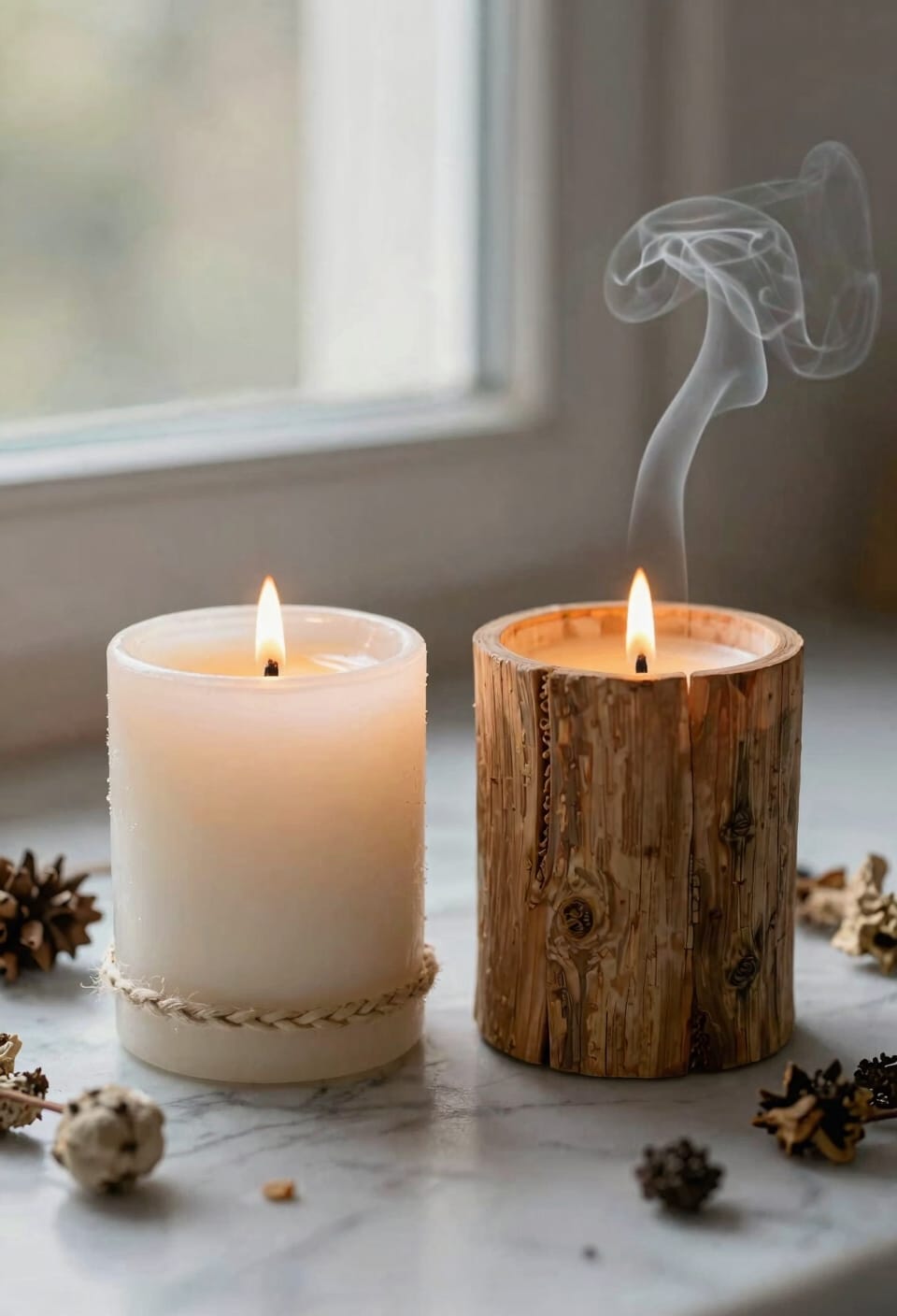
Now that we’ve got the soot situation figured out, let’s talk about what probably matters most to you: how well your candle actually smells throughout the room. Here’s the thing: wooden wicks create a wider meltpool faster than cotton, which means better scent diffusion right from the start. That broader pool disperses fragrance more evenly, and wooden wicks can push up to 35% more fragrance potency into your space—seriously noticeable in larger rooms. Cotton wicks offer steady, prolonged aroma without overwhelming you, which some people prefer. For room coverage in open areas, you might want multi-wick cotton setups instead. Honestly, it depends on whether you want aggressive scent throw or something gentler. Either way, proper trimming matters for performance.
Recommended Products

EDITION Hotels exclusive - bring home the one-of-a-kind EDITION experience with the signature scent loved by EDITION hotels guests around the world.

SIGNATURE FRAGRANCE – MAYFAIR: Bergamot, lime, jasmine, tuberose, sandalwood & cedar create a soothing floral-wood scent, uplifting fragrance that quickly fills large spaces. Noticeable yet never overpowering for daily ambiance

CENTERING, TRANQUIL FRAGRANCE EXPERIENCE - Take in the green tea's subtle yet clarifying note and let it guide you into a state of peace and balance. Soft lotus petals calm the mind while sandalwood and bergamot create a refreshing yet grounding aromatic experience.
Burn Time: How Cotton and Wooden Wicks Compare

When you’re choosing between cotton and wooden wicks, burn time becomes one of those practical considerations that’ll either make you happy or frustrated three weeks in. Here’s the thing: single wick longevity differs markedly between these two. Cotton wicks consume wax slower, meaning your candle lasts longer overall—especially with a single wick setup. Wooden wicks burn slower and more evenly, which prevents tunneling, but their heat output comparison reveals they actually burn hotter, potentially shortening total burn time despite that even melt pool. Thicker wicks accelerate burn speed regardless of type. So if longevity matters most to you, cotton edges out wood. But if you want that even burn without babysitting your candle, wooden wicks deliver something special worth the trade-off.
Recommended Products

Minimal Smoke, Maximum Charm - Breathe easy with clean-burning, clean tech foton candle that set the mood. Our candles are designed for a pure, enchanting glow that enhances your space without the smoke.

The information below is per-pack only

40 ounces and 110 hours of burn time
The Maintenance Difference: What’s Really Involved
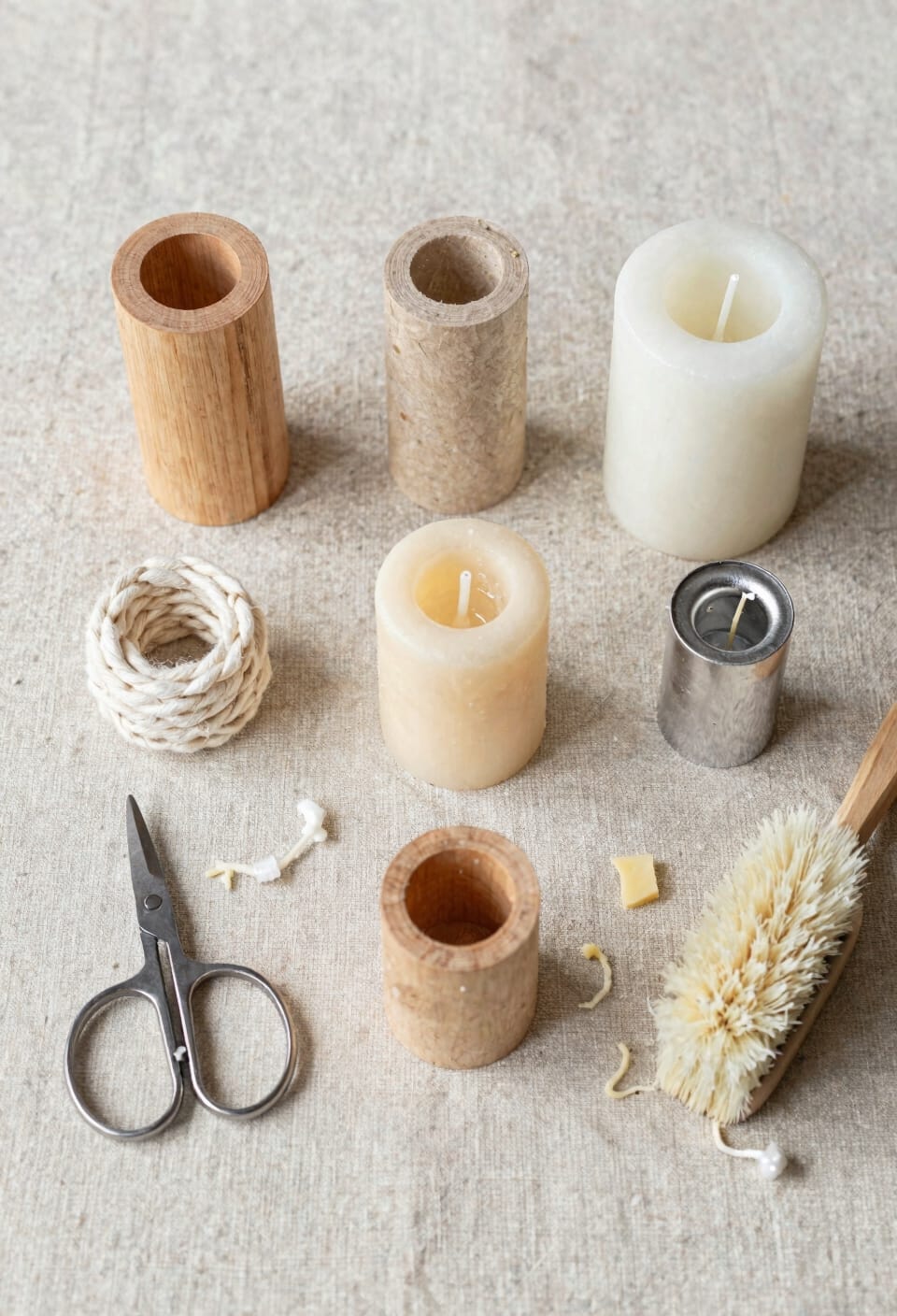
Maintenance is where these two wicks start showing you their true colors—and I don’t mean that poetically. Cotton wicks? They’re straightforward. You grab regular scissors, trim to 1/8 inch before each burn, and you’re done. Trimming frequency keeps carbon buildup at bay. Wooden wicks demand more tool upkeep—you’ll need a specialized wooden trimmer to cleanly remove that carbon cap, and honestly, improper trimming can make relighting a nightmare. Here’s the thing: cotton offers low-maintenance simplicity if you’re willing to stay on top of basic trimming. Wooden wicks reward patience with ambiance but require precision and dedicated equipment. Your choice really comes down to this: do you want ease, or are you after that fireplace experience badly enough to invest in proper tool upkeep?
Recommended Products

Perfectly trims wicks to maintain optimal candle burn

Comes in individual boxes of two! Stainless Steel; Size: 6.77 x 2.44 Inch

【10 Pcs Wick Trimmer Bulk】 With 10 candle wick trimmers included, this set is perfect for businesses, candle makers, or households with multiple candles. The bulk quantity ensures you always have a spare on hand, whether for different rooms and workshops. The consistent performance across all units makes them reliable for professional use, eliminating the need for frequent replacements.
Which Wick Should You Choose?

Choosing between cotton and wooden wicks comes down to what you’re actually willing to do—and what you value most in that quiet moment when you light a candle. If you’ve got scent preferences leaning toward steady, prolonged aroma without overwhelming your space, cotton’s your friend. It burns slower, extends your candle’s life, and requires nothing more than basic scissor trimming. Now, wooden wicks? They’re perfect if your room size demands faster fragrance dispersal. They throw up to 35% more scent and create that crackling ambiance you can’t get elsewhere. But you’ll need a specialized trimmer and don’t mind the maintenance ritual. Honestly, choose cotton for ease, wood for experience.
Recommended Products

ECO-16 wicks are coreless, cotton flat braid wick with paper filament throughout, providing increased rigidity and strength. Their self-trimming and clean burning characteristics minimize mushrooming, soot, and smoke. ECO wicks are suitable to be used in tealight, votive, pillar, and container candles. ECO wicks typically work best in soy waxes and lower melt point paraffin waxes.

Zinc core wicks are cotton braid with an inner zinc core. They are suitable to be used in tealight, votive, pillar, and container candles. The zinc core structure provides maximum rigidity and strength to keep the wick straight in melted wax. The potential for mushrooming resulting from carbon buildup can be minimized by using the proper wick size and keeping the wick trimmed. Zinc core wicks are cooler burning

Make your own 4"-6" candles
Frequently Asked Questions
What Materials Are Cotton and Wooden Wicks Actually Made From?
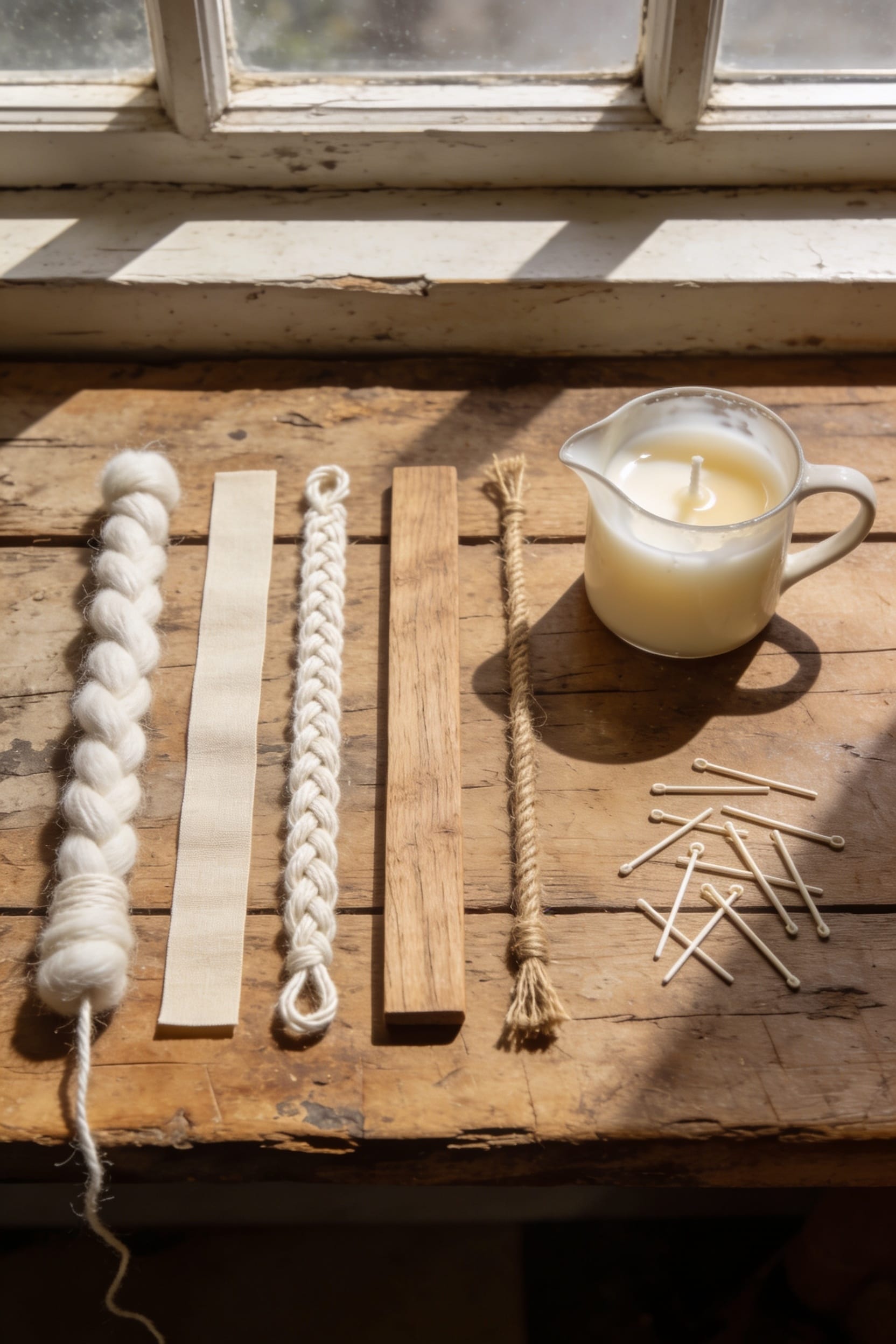
I’ll tell you cotton wicks use braided natural cotton dipped in wax, while wooden wicks feature thin balsa wood slabs. Some cotton designs incorporate a cellulose paper core with hemp braid for structure and burn consistency.
Why Do Wooden Wicks Produce a Crackling Sound Like Fireplaces?
Like nature’s percussion section, wooden wicks crackle because moisture trapped in the wood pulp resonates when heated. I’ve found that airflow dynamics create pockets of steam, producing those delightful fireplace-like pops and snaps.
How Often Should I Trim My Candle Wick Between Burns?
I’d trim your wick before each burn for peak performance. For cotton, aim for 1/8 inch trim length to prevent carbon buildup. Burn frequency doesn’t change this—maintain that trim length consistently between every use.
Can I Use Regular Scissors to Trim Wooden Wicks Properly?
I’d recommend against using regular scissors for wooden wick maintenance. You’ll need specialized cutting tools designed for safe, precise trimming to properly remove carbon buildup and achieve the correct trim length for peak wick performance.
Do Wooden Wicks Work Better in Larger Rooms Than Cotton Wicks?
Yes, I’d choose wooden wicks for larger rooms. They’re faster burn rate creates a wider melt pool, which throws fragrance up to 35% more effectively. You’ll notice better scent coverage throughout bigger room sizes compared to cotton.
Conclusion
Look, I’ll be honest—I’ve wasted plenty of money on duds before figuring this out. Here’s what matters: studies show wooden wicks can increase fragrance throw by up to 35% compared to standard cotton ones. But your best candle isn’t about picking one “winner.” It’s about matching the wick to your wax, understanding what you actually want from a burn, and not overthinking it. You’ve got this.