As an Amazon Associate, we earn from qualifying purchases. Some links on this site are affiliate links at no extra cost to you. Our recommendations are based on thorough research and editorial judgment.

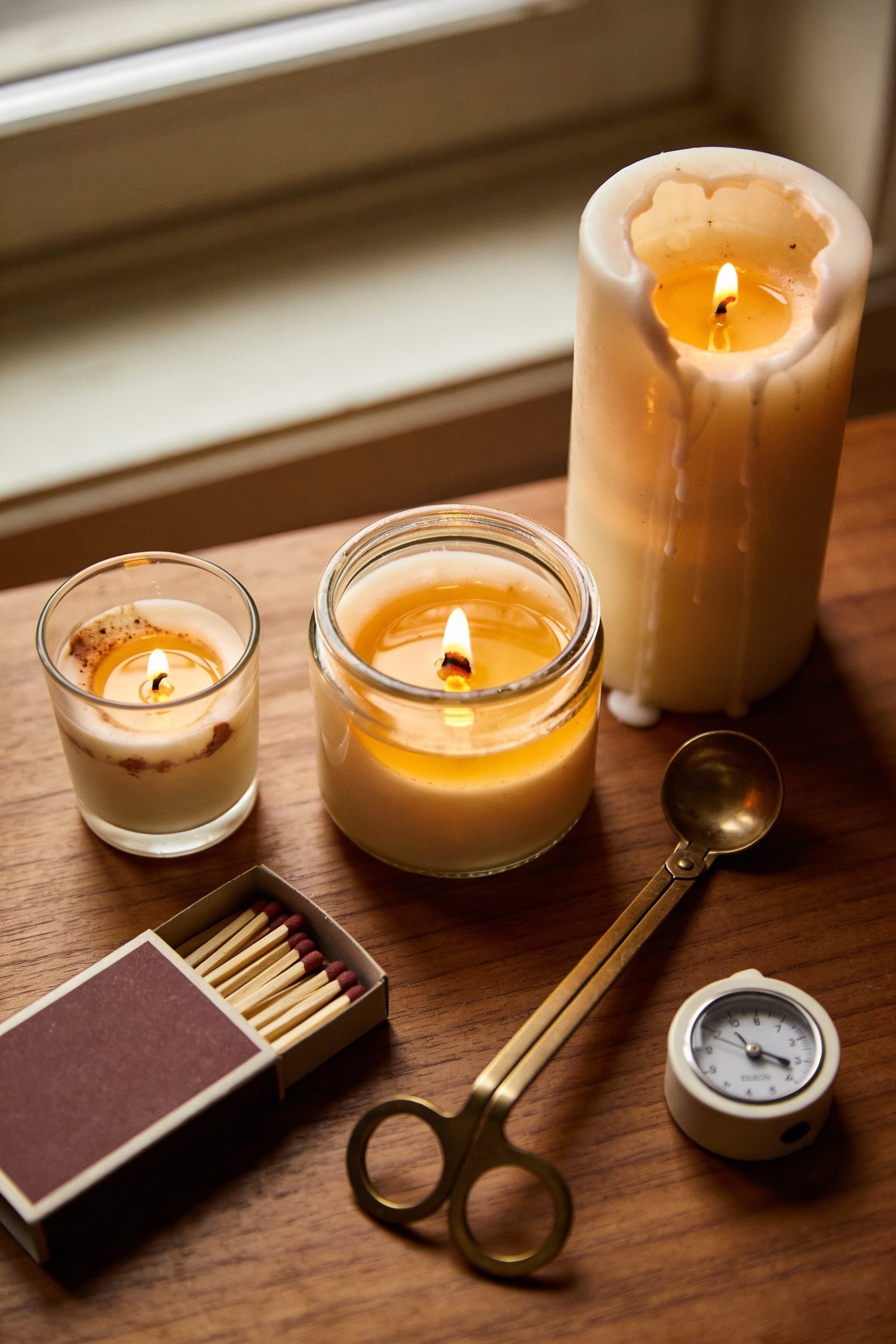
How Long Should You Burn a Candle? Rules by Size

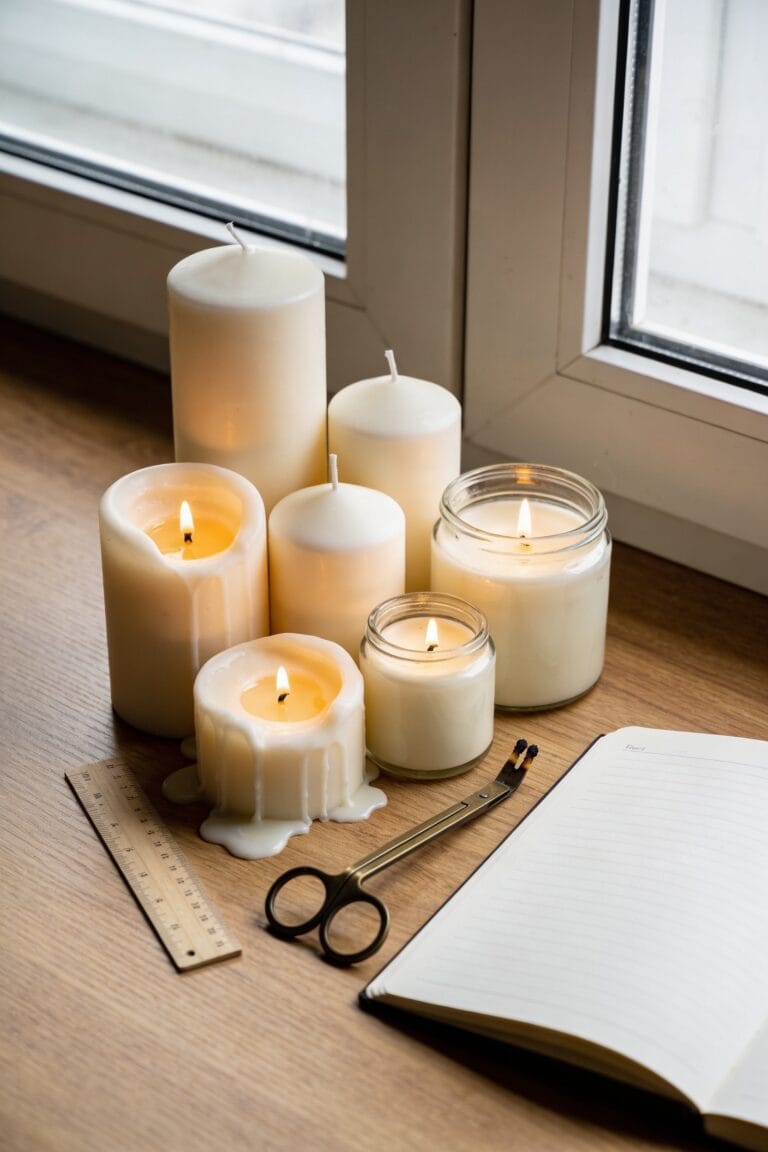
the one-hour-per-inch rule is your starting point. A two-inch candle? Two hours. Three inches? Three hours. But size matters more than you’d think—small candles need one to two hours for a full melt pool, medium ones need two to three, and large candles (four inches plus) demand three to four hours to avoid tunneling. Trim that wick to an eighth inch before every burn, and you’ll actually hit those burn times. The math gets interesting once you factor in wax type and container size.
Key Takeaways
- Small candles under 2.5 inches should burn 1–2 hours per session for a full melt pool.
- Medium candles around 3 inches require 2–3 hours per burn to achieve optimal melt pool and scent throw.
- Large candles 4 inches or bigger need 3–4 hours per session to reach edge-to-edge melting.
- Use the one-hour-per-inch rule: burn your candle for hours equal to its diameter in inches.
- Trim wicks to 1/8 inch before each lighting to maintain proper burn time and prevent tunneling.
Your First Burn: Why It Matters Most
When you light a candle for the first time, you’re fundamentally setting the tone for everything that follows—and I’m not being poetic about it. That initial burn creates a memory imprint in your wax. If you don’t let the melt pool reach the edges, you’re trapped with tunneling for the candle’s entire lifespan. I’ve learned this the hard way.
Here’s what matters: burn your candle for 3-4 hours on that first lighting. Let the wax melt completely from edge to edge. This prevents that hollow channel from forming down the middle. You’ll also avoid glass discoloration and get the full scent throw you paid for. Skip this step, and you’re basically throwing money away while watching your candle underperform. Your future burns depend entirely on getting this right.
The 1-Hour-Per-Inch Rule: Start Here
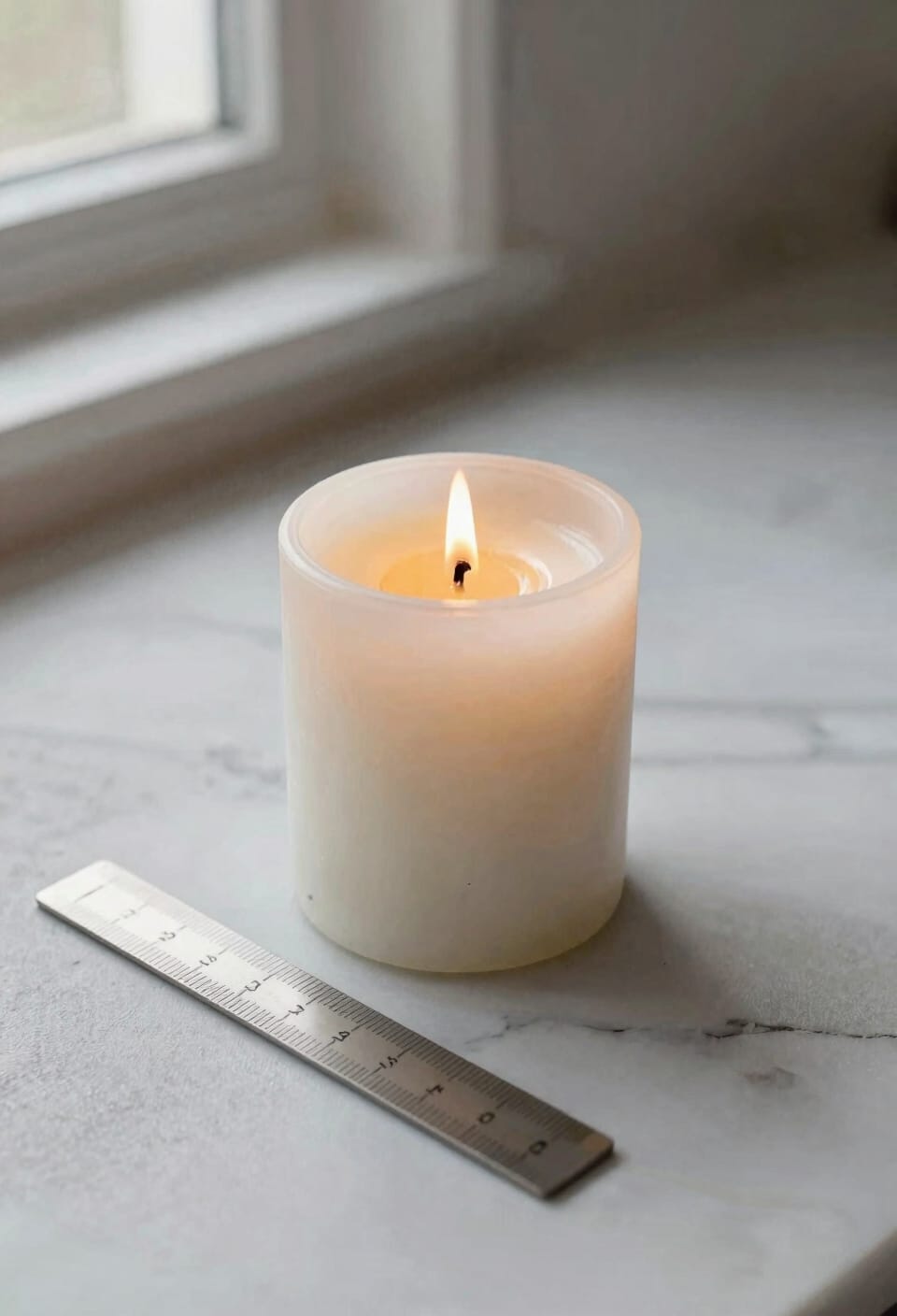
If you’ve got a candle sitting in front of you right now and you’re wondering how long to actually burn the thing, I’ve got good news: there’s a simple rule that’ll get you 90% of the way there. It’s called the one-hour-per-inch rule, and here’s how it works: measure your candle’s diameter in inches, then burn it for that many hours per session. A two-inch candle? Two hours. Three inches? Three hours. This approach guarantees an even melt pool and prevents tunneling, which tanks your candle’s performance. Keep in mind that ambient temperature and candle safety matter too—burn in a stable environment away from drafts. Trim your wick to one-eighth inch beforehand. It’s not perfect science, but it’s genuinely your best starting point.
Small Candles Under 2.5 Inches: Burn Times Explained
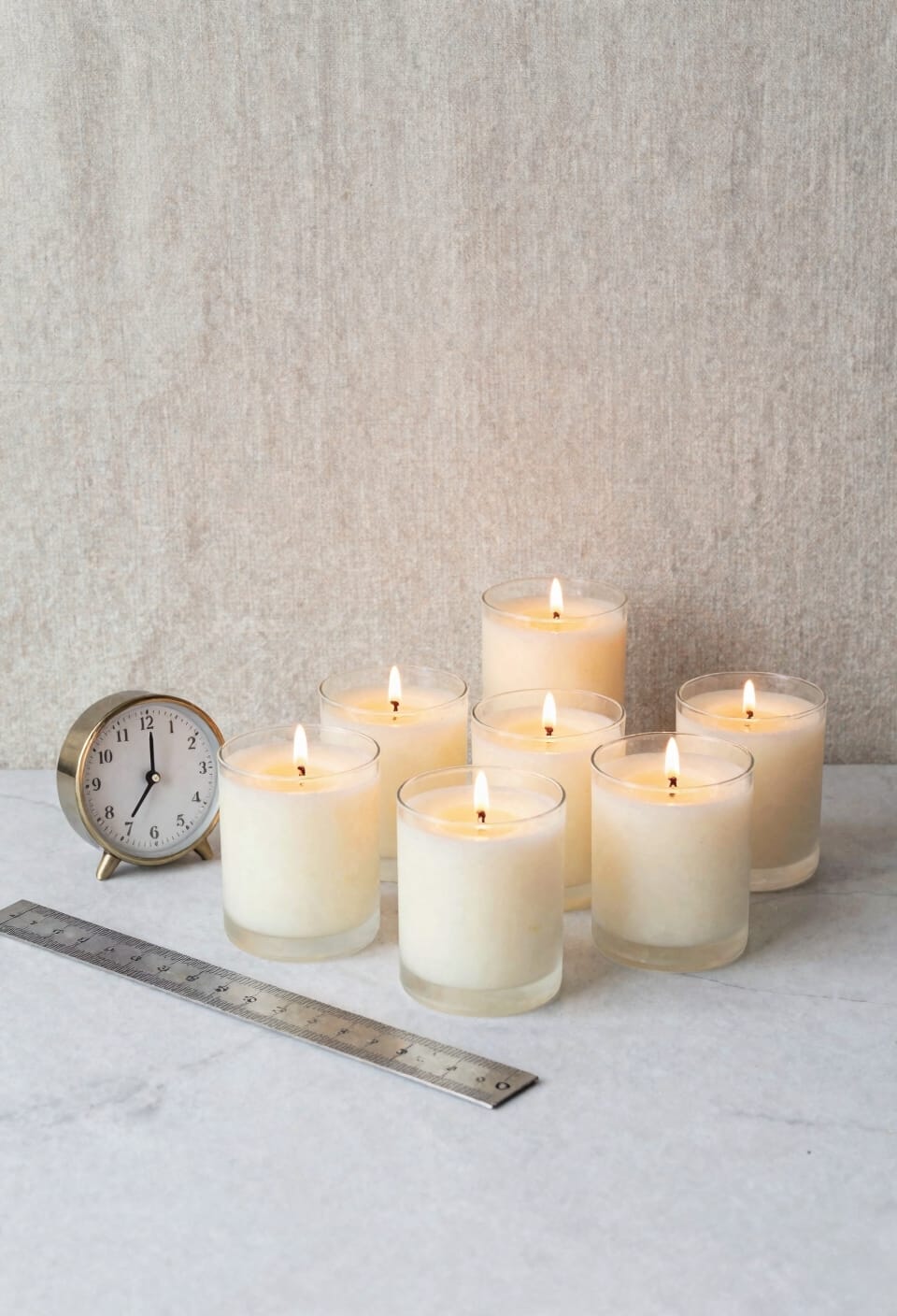
Small candles under 2.5 inches are where most of us start—they’re affordable, they fit anywhere, and they feel low-stakes enough that we don’t sweat it if the burn goes sideways. Here’s the thing: these little guys reach a full melt pool in just 1-2 hours, which means you’re not waiting around to see results. That’s actually perfect for testing scent throw before committing to larger sizes. The trade-off? Travel safety and portability work in your favor, but burn time caps out around 5-15 hours depending on the candle type. Tea lights hit the lower end, votives climb higher. Trim that wick to 1/8 inch, light it for your full 1-2 hour window, and you’ll nail the performance every time.
Recommended Products

Size: 28 x 38 x 13-1/2" D

This uniquely designed wrought iron votive and candle stand from Sudbury Brass is carefully crafted from all metal components. Designed for glass candles and insert glass. Candles and globes sold separately.

Medium Candles Around 3 Inches: Finding the Sweet Spot

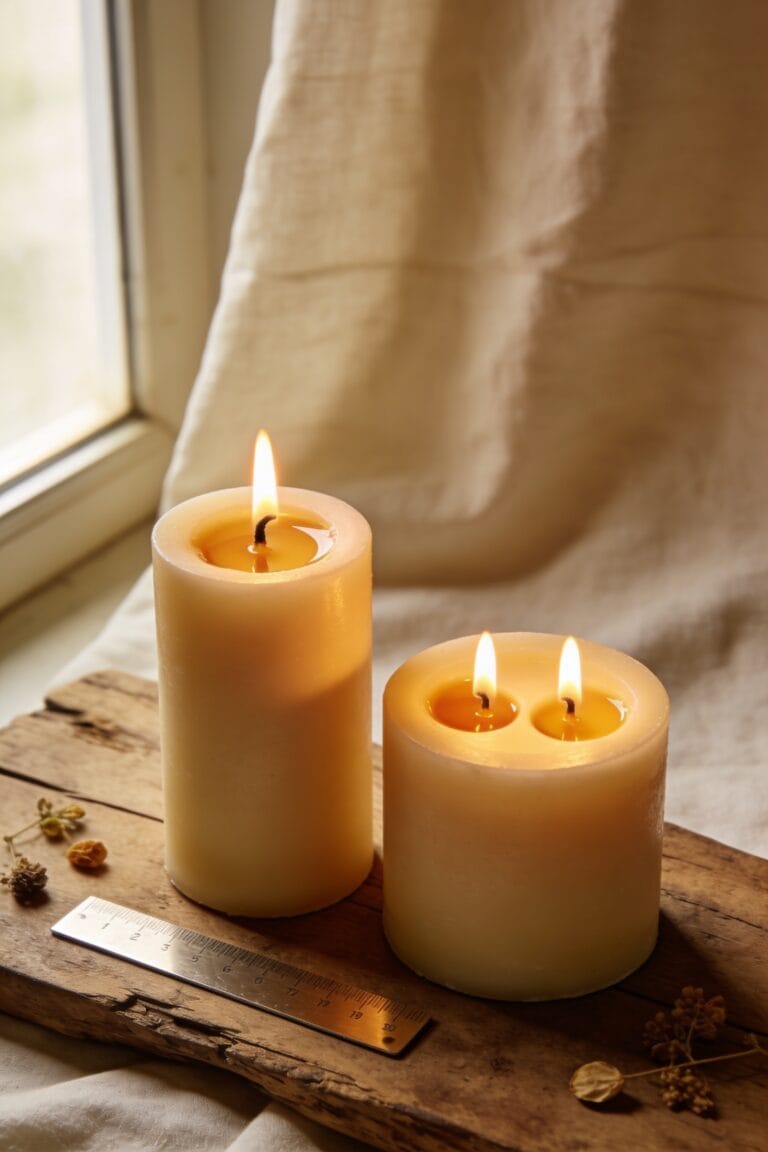
Once you’ve figured out the small candle game, medium candles around 3 inches become your testing ground for something closer to real-world burning—longer sessions, better scent throw, and enough wax that you’re not replacing them every week. Here’s the sweet spot: burn these for 2-3 hours per session. That’s your magic window. Go longer and you risk tunneling; shorter and you won’t get that full melt pool edge-to-edge, which tanks your scent throw. Room placement matters too—a 3-inch candle performs best in medium-sized spaces, roughly 200-300 square feet. Put it too far away and you’ll wonder why it smells like nothing. Position it where air naturally circulates without drafts blowing out your flame.
Large Candles 4+ Inches: Full Melt Pool Requirements
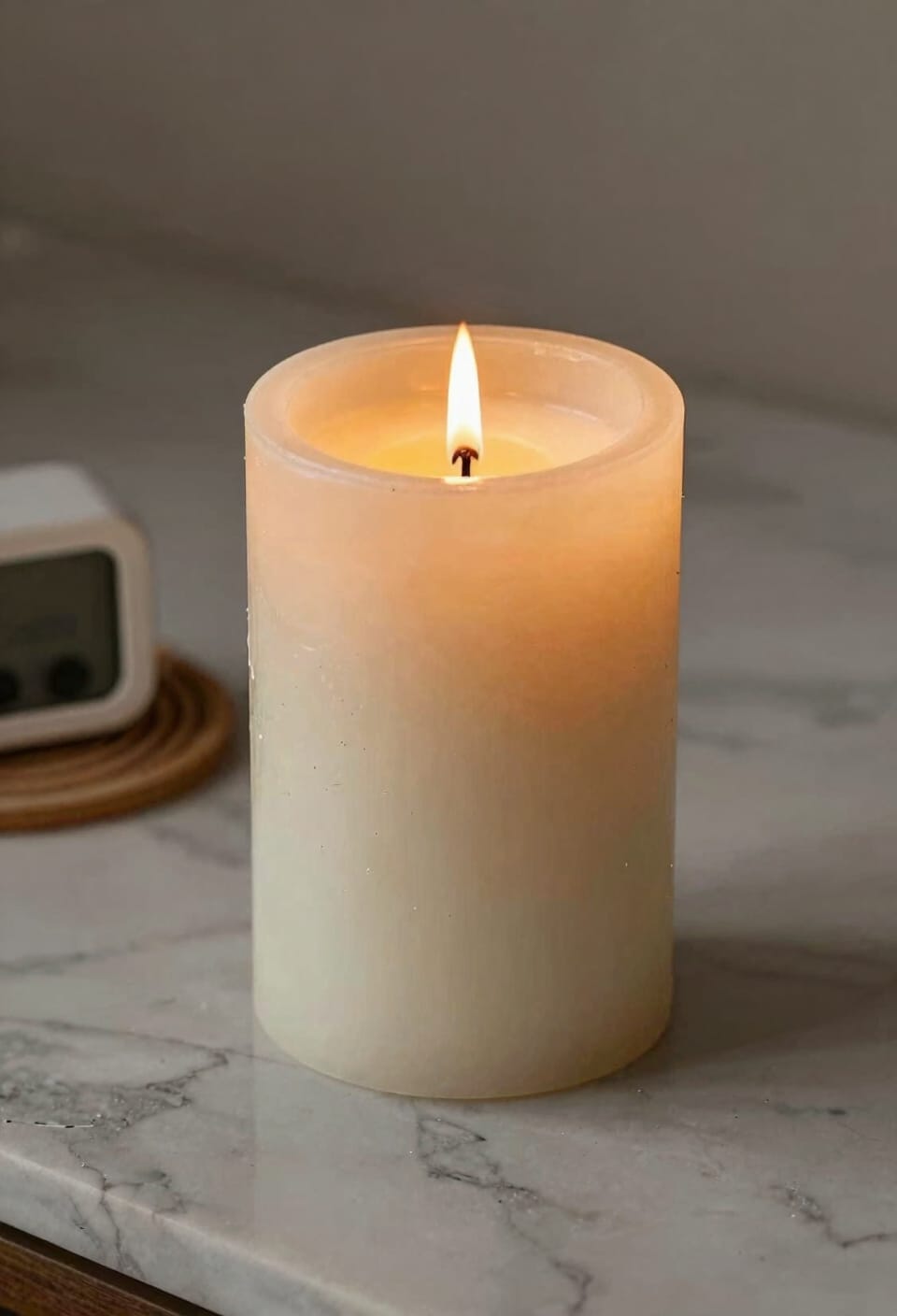
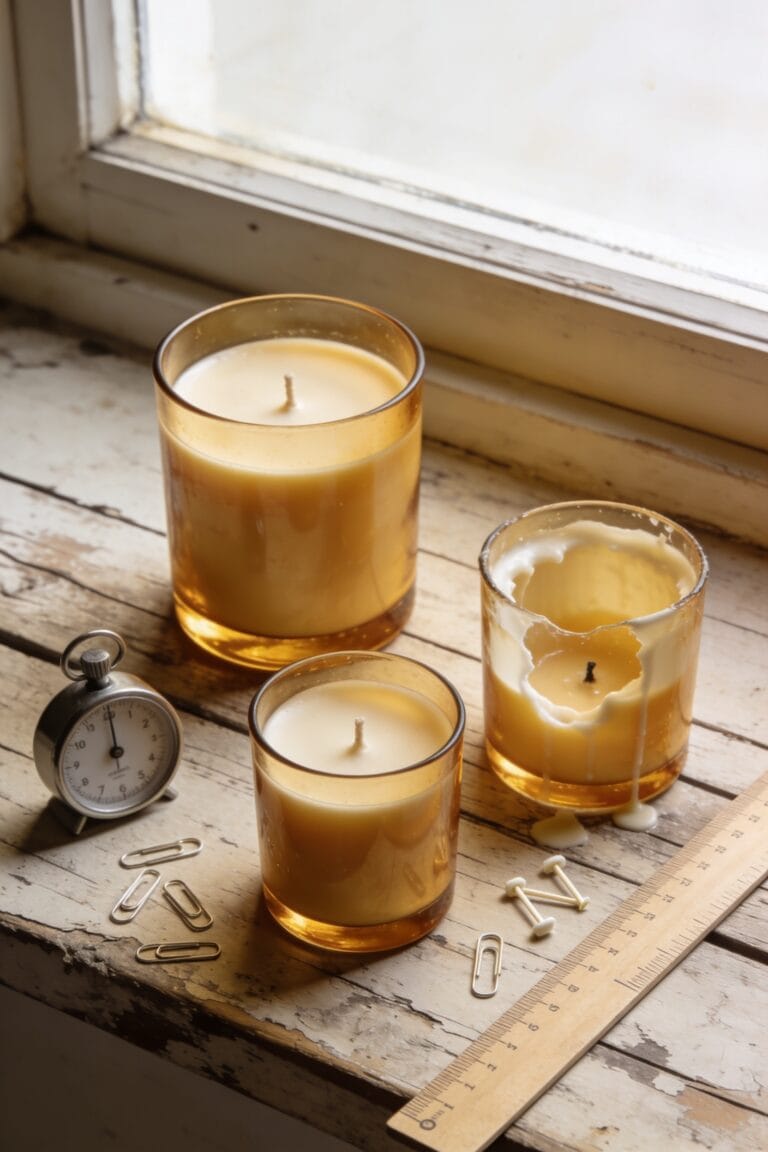
When you graduate to candles 4 inches or wider, you’re entering territory where patience becomes your best friend—because these larger vessels need 3-4 hours per burn session to create a full melt pool that reaches edge-to-edge. Here’s why this matters: without proper edge pooling, you’ll trap unburned wax around the sides, and that’s when tunneling happens. I’ve watched it destroy expensive candles.
The rule’s simple—roughly one hour per inch of diameter. So a 4-inch candle? Four hours minimum. That initial burn is critical; it sets the tone for every session afterward. Heat distribution across a wider surface takes genuine time. Rush it, and you’re basically guaranteeing wasted wax. Commit to those longer burns, and you’ll actually get the performance your investment deserves.
Recommended Products

BLANK 4" x 2" MAILING LABELS - printable 10-up rectangle labels - roaded corners for easy peeling - customizable - for inkjet & laser printers

CRYSTAL CLEAR LABELS: Add an elegant touch to your product or packaging labels with this set of 20,000 (4" x 1") completely transparent labels. Perfect for most projects where a "no label" look is desired. Not Waterproof.

SCENT - Chamomile Lavender features lavender with warm & enveloping bergamot. Calming chamomile melts into a heart of eucalyptus to create a feeling of well-being. Smoky patchouli is enhanced by hints of sage & rosemary for a quiet, relaxing finish.
Wick Size: The Variable That Breaks the 1-Hour Rule
Now, here’s where things get interesting—because all that math about one hour per inch of diameter? It completely falls apart if your wick’s wrong. I’ve learned this the hard way. A too-small wick struggles to create a full melt pool, which means you’re burning longer than the rule suggests just to get even wax consumption. Flip that around with an oversized wick, and flame chemistry goes haywire—you’re getting massive heat output and shortened burn times. Wick materials matter too. Quality matters more than you’d think. Trim your wick to 1/8 to 1/4 inch before lighting, and remember: thicker wicks burn more wax faster. Your diameter rule is a starting point, but wick size? That’s what actually controls whether you’re getting the performance you paid for.
Recommended Products
This is a genuine OEM (Original Equipment Manufacturer) part
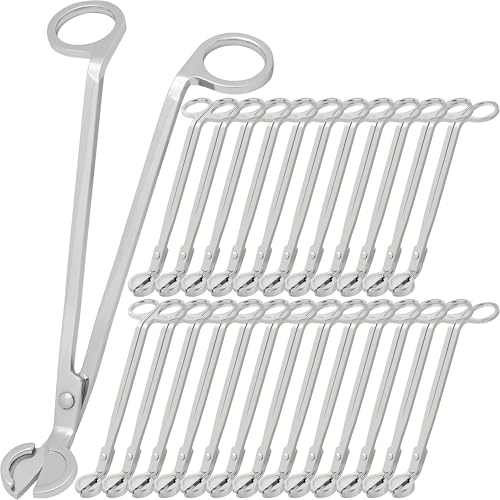
Pick Your Favorite Finish: No matter your interior design preference, we have a wick trimmer tailored for you. Choose from Black, Gold, Rose Gold, Silver, Brushed Gold, and Brushed Copper to complement your candles, decor, and gifting style

Soy Wax Burn Times: Do the Math
If you’ve been shopping for soy candles, you’ve probably noticed they’re positioned as the premium option—and they kind of are, at least when it comes to burn time. Here’s the soy math: soy wax burns at roughly 7 hours per ounce. That’s your baseline for ounce metrics across most brands.
An 8-ounce soy candle? You’re looking at around 56 hours of burn time. A 12-ounce container stretches into the 80-plus-hour range. Now, that assumes your wick’s sized right and you’re actually burning it properly—which we’ll get to. The math works because soy’s denser than paraffin, so it releases fragrance slower and lasts longer. Obviously, quality varies between makers, but that 7-hour-per-ounce formula gives you a solid starting point for comparison shopping.
Recommended Products

Elegant Rose Design: Handcrafted rose shaped soy wax candles topped with real dried flowers — perfect for weddings and romantic events.


Professional Wax Melter for Candle Making or Soap Making, Melter 3 Gallon Stainless Tank, Extra Deep for Your Larger Batches Of Candles or Soap, This Has Been Designed From Customers Requests and is Unlike Other Competitors.
Container Candles: Burn Time Benchmarks by Size
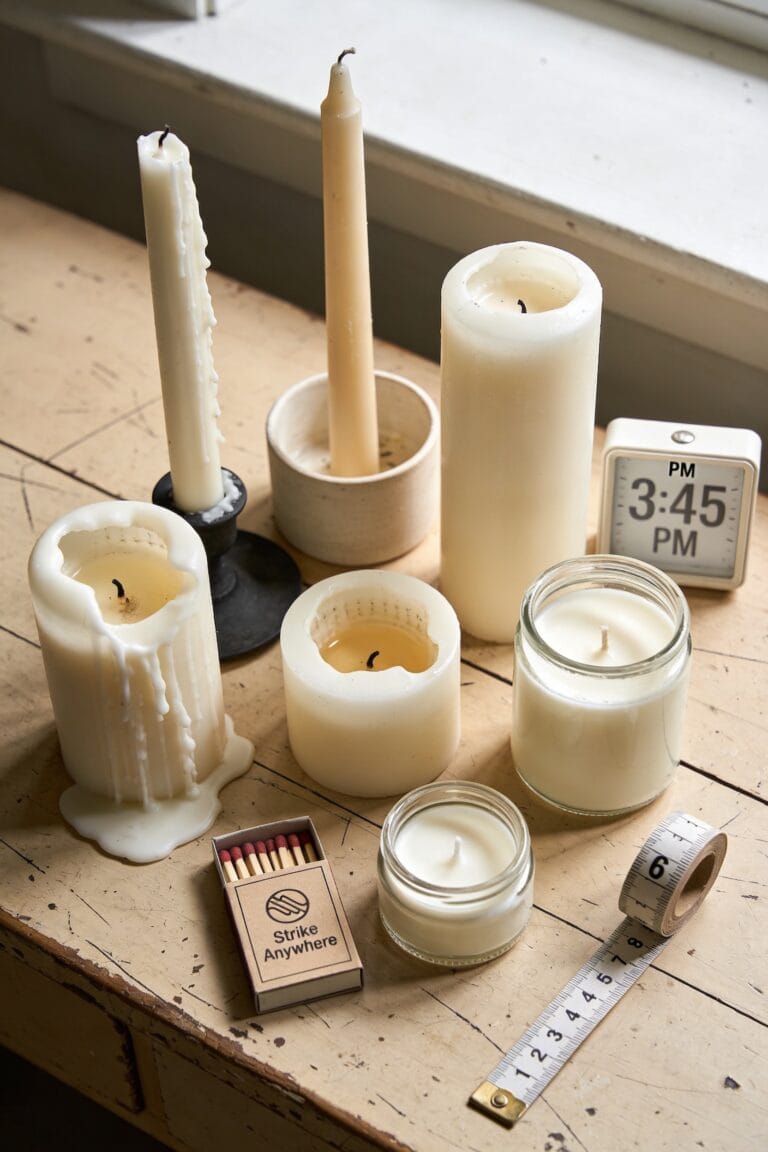
Container candles are where most of us actually burn our wax, so let’s talk real numbers—because there’s a massive difference between what you get in a 6-ounce vessel and a massive 50-ounce one, and I’d rather you know what you’re paying for upfront. A 6-ounce container gives you 35+ hours, which sounds decent until you realize that’s basically one burn per week for seven months. Jump to 8.5 ounces and you’re hitting 50+ hours. The real player? A 50-ounce candle delivers 200+ hours—that’s scent diffusion across your whole space for months. Quality glass finish matters too; it affects how heat distributes and how evenly that wax pool melts. Bigger containers reward patience with better, longer-lasting fragrance performance.
Recommended Products

BRAND: Ucanpack | SIZE: 3x3x10 Inches | PACK: 500 Pcs

MULTIPLE USES: Fairy gardens, flower arrangements, succulent containers, unique decorative accent in vases, dishes, candle holders, planters, aquariums, terrariums and air plants inside; also ideal for ponds, water features, fountains, pots and pathways outside and potted plants

[Up to 5,000 sq ft Coverage] Even scent distribution for open layouts in homes, offices, or studios with quiet operation.
Test Your Candle’s Actual Burn Hours
You’ve got the container sizes down, but here’s where most people get blindsided: those burn-time estimates on the label? They’re often optimistic. I’d test yours yourself. Grab a candle, light it for 2–3 hour intervals, and weigh what’s left after each session. If you burn 1 ounce in 2.5 hours, you’re looking at roughly 30 hours total. Simple math. This matters because actual burn times depend on your wick quality, room temperature, and scent throw intensity—hotter-burning fragrances sometimes eat wax faster. Before testing, run through a safety checklist: trim that wick to 1/8 inch, keep the candle away from drafts, and never leave it unattended. Then burn smart and track what you learn.
Wick Trimming: The Daily Habit That Extends Burn Life
Trimming your wick before every burn—I mean every single time you light that candle—sounds like a tiny habit, but it’s the difference between a candle that lasts 60 hours and one that burns itself out in 40. Here’s the thing: wick maintenance directly controls your flame’s behavior and heat output. A wick trimmed to 1/8 to 1/4 inch gives you flame control, preventing those mushroom-topped disasters that blacken your container and waste wax. A neglected wick? It’ll tunnel, create excess soot, and burn through your candle like it’s got somewhere to be. You’re basically deciding whether your investment performs or disappoints. Grab nail clippers, trim before lighting, and watch your burn time actually match what you paid for.
Frequently Asked Questions
Can I Burn a Three-Wick Candle Longer Than Single-Wick Candles of Similar Size?
I’d recommend burning three-wick candles longer since their multiple flames distribute heat evenly. You’ll need more frequent wick trimming though. Proper wick placement guarantees they’ll outlast similar single-wick candles markedly.
What’s the Difference in Burn Time Between Soy and Paraffin Wax Candles?
I’ll tell you that soy wax burns slower than paraffin, giving you better soy longevity—roughly 7 hours per ounce. Paraffin burns faster and produces more paraffin soot, reducing its lifespan and clean-burning quality compared to soy candles.
How Do I Know if My Candle’s Wick Is Too Small or Too Large?
I’d check your wick diameter and flame height to gauge sizing. A small wick struggles creating a full melt pool and needs longer burns. An oversized wick produces excessively tall flames, requiring shorter, monitored burn sessions for safety.
Should I Extinguish My Candle Before the Melt Pool Reaches the Edges?
No, I’d encourage you to keep that flame burning like a patient gardener. Let your melt pool reach the edges for ideal wick maintenance and scent diffusion throughout your space.
Does Candle Color or Fragrance Type Affect How Long It Burns?
I’ve found that candle aesthetics and scent marketing don’t markedly impact burn time. What matters is wax type, wick size, and diameter. Color dyes and fragrance oils burn similarly, so your candle’s longevity depends on composition, not appearance or scent.
Conclusion
You’ve got this. Trim your wicks, honor that first burn like it’s recorded on stone tablet, and watch your melt pool like it owes you money. The rules matter—they’re not candle gatekeeping, they’re just physics keeping your investment from pooling into a disappointing puddle. Follow through, and you’ll actually enjoy what you’re burning instead of resenting the cash you dropped.