As an Amazon Associate, we earn from qualifying purchases. Some links on this site are affiliate links at no extra cost to you. Our recommendations are based on thorough research and editorial judgment.

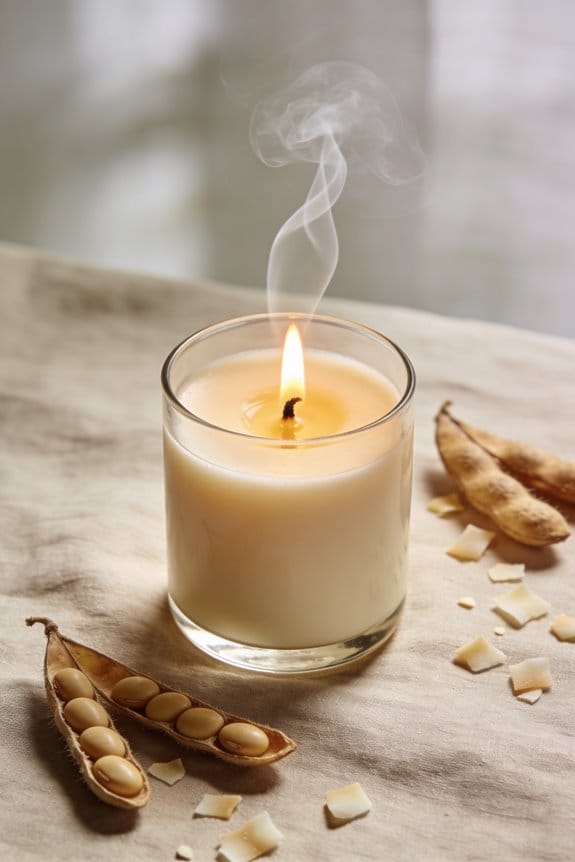
Are Soy Candles Really Better? The Truth Explained

You’ve probably lit a soy candle thinking you’re making the smarter choice, only to watch it burn down way faster than advertised or fill your room with barely any scent.
Or maybe you’ve noticed the price tag and wondered if you’re actually getting what you’re paying for.
Here’s the thing: soy candles can be genuinely better — they burn longer, create less soot, and hold fragrance way better than regular candles. But “natural” is basically a buzzword that companies throw around, and honestly, a lot of soy candles are secretly mixed with cheaper stuff and loaded with hidden additives.
So what actually makes a candle worth buying?
Key Takeaways
- Soy candles burn 30–50% longer than paraffin, offering better value despite 20–40% higher upfront costs.
- Soy produces up to 90% less soot and lacks harmful carcinogens like benzene, improving indoor air quality.
- Soy’s lower melting point allows better fragrance absorption, delivering stronger and more consistent scent throw.
- Quality matters more than wax type — poor wick sizing and additives can undermine soy’s natural advantages.
- Frequent users benefit most from soy; casual burners may find either wax type equally satisfactory.
Soy vs. Paraffin: Why the Material Matters
When you’re standing in front of a candle display and you see that price tag on the soy option, it’s natural to wonder if it’s really worth the extra cash. Here’s the thing — the material you’re burning actually matters more than most people realize.
Soy wax comes from renewable soybeans and burns cooler and slower at the molecular level, while paraffin derives from petroleum byproducts. That wax chemistry difference means soy candles produce up to 90% less soot, hold fragrance oil better due to their lower melting point, and last 30–50% longer. You’re not just paying for a label — you’re investing in cleaner air, stronger scent throw, and actual value over time.
Why Soy Candles Burn Longer (and What That Means for Your Wallet)
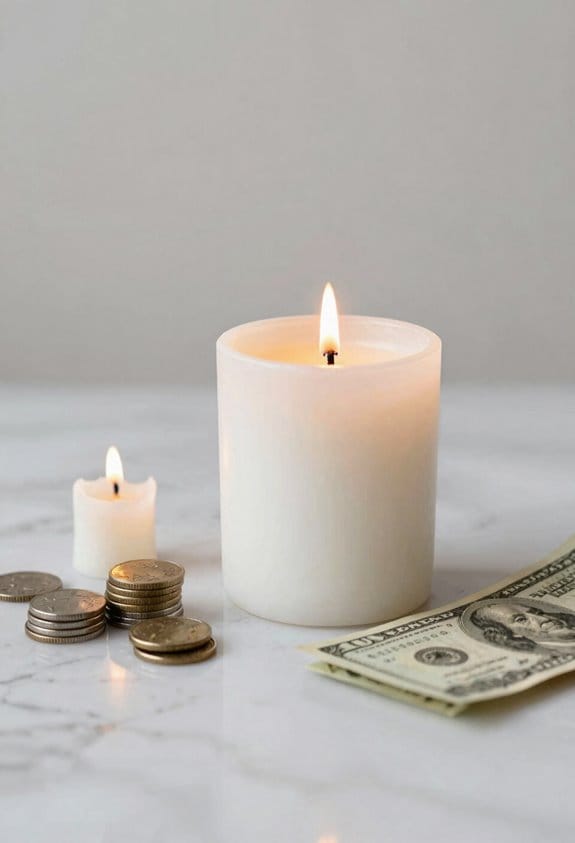
Here’s where that price difference starts paying for itself. Soy wax burns 30–50% longer than paraffin, meaning a standard 17-ounce soy candle lasts 70–90 hours compared to paraffin’s 40–60. That’s genuine wax economy in action. The lower melting point creates a cooler, slower burn — you’re not watching your money literally go up in smoke.
Sure, you’ll spend more upfront. But that longer lifespan means fewer candles to buy throughout the year. When you calculate the cost-per-burn-hour, soy becomes the smarter choice. You’re getting extended fragrance release too, so the scent stays consistent across that entire longer lifespan.
The Real Health Impact: Soot, Toxins, and Indoor Air Quality
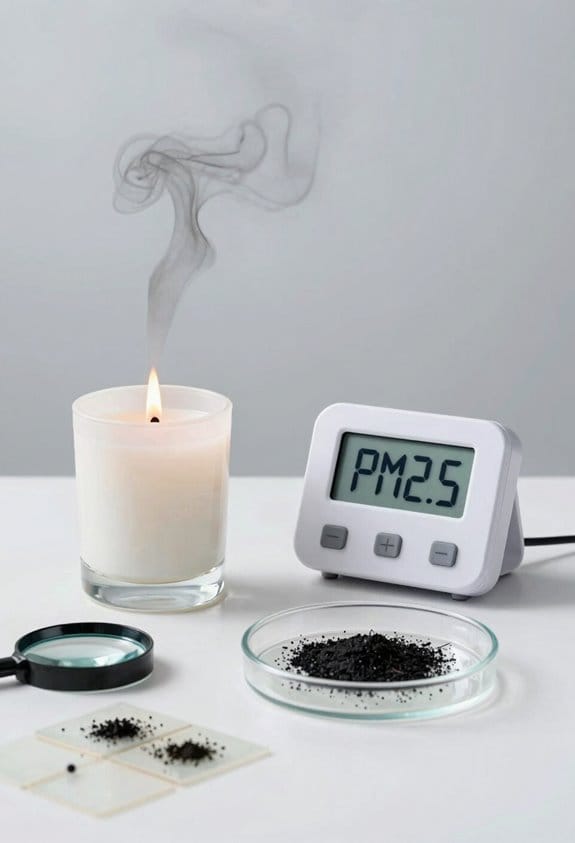
Because soy candles burn cleaner with up to 90% less soot than paraffin, you’re not just picking a scent or burn time — you’re picking the air quality in your home. Paraffin releases harmful carcinogens and toxic petro-carbon soot that builds up on your walls and ceiling over time.
Soy wax doesn’t contain benzene and toluene, those nasty chemicals in traditional candles that pump up indoor VOCs. If you’ve got kids or pets around, that actually matters. You’re cutting down on respiratory problems and indoor pollution just by switching wax types.
That black soot from paraffin isn’t just ugly stains on your walls — it’s settling into your lungs. Soy candles keep your air fresher without that buildup, so you get a cleaner burn and a genuinely healthier home environment.
Do Soy Candles Actually Smell Stronger?
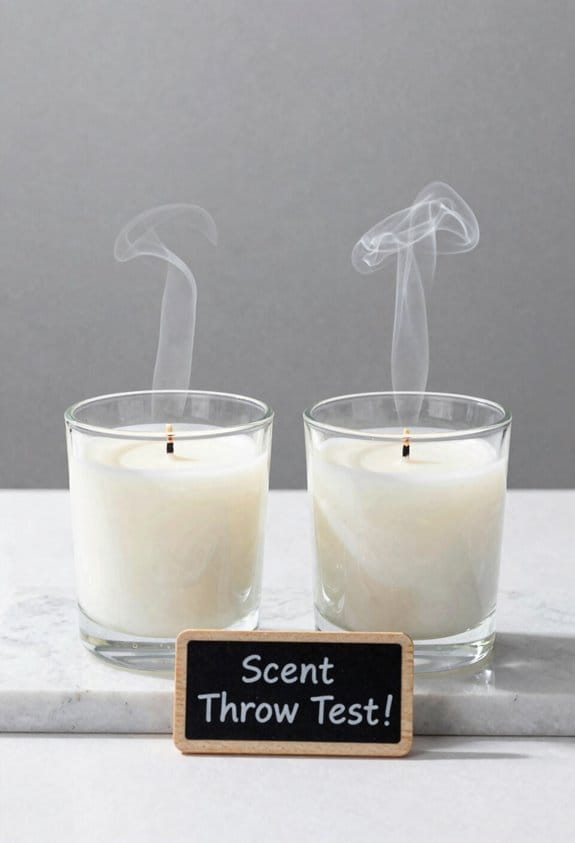
Ever notice how one candle scents your entire living room while another barely does anything? It comes down to how the wax works. Soy wax has a lower melting point, which means it soaks up more fragrance oil than paraffin. When it burns, you get a stronger, steadier smell that spreads more evenly — no crazy-strong bursts followed by nothing, just consistent scent throughout.
That said, wax type isn’t everything. A cheap, poorly made soy candle won’t beat a quality paraffin one. What really counts is wick quality, your room size, and how well the candle is constructed overall. All things being equal though? Soy wins.
The Environmental Case: Renewable vs. Fossil Fuels
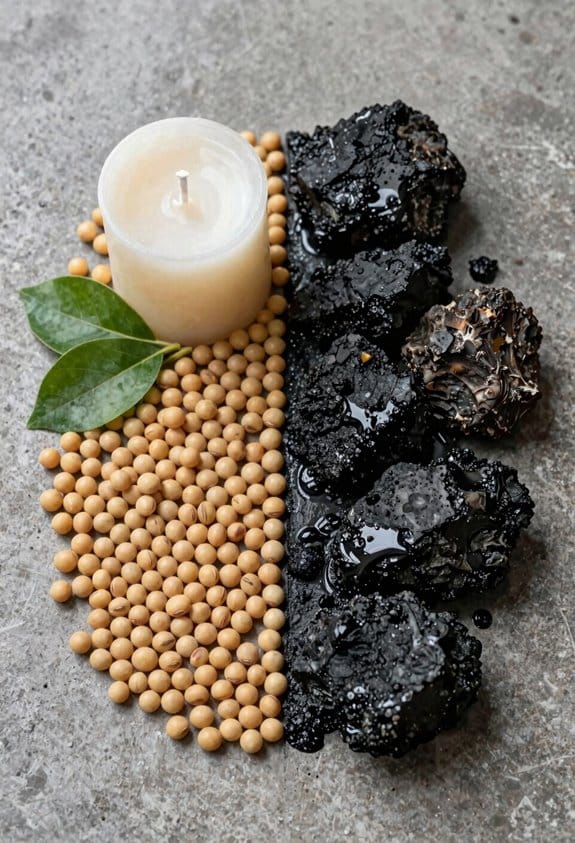
When you’re standing in a candle aisle, you’re basically choosing between two completely different supply chains — one that’ll be around in fifty years and one that won’t. Soy wax comes from renewable soybeans, and those crops support carbon sequestration while farmers practice crop rotation, keeping soil healthy and productive.
Paraffin is petroleum — a finite resource we’re actively depleting. The environmental math is straightforward: a plant-based candle has a dramatically lower carbon footprint than petroleum byproducts. When you burn soy, you’re not just getting cleaner air at home; you’re reducing reliance on non-renewable resources and funding sustainable agriculture instead of fossil fuel extraction.
Is the Price Premium Worth It? Honest Cost-Benefit Analysis
Here’s where it gets interesting: you’re paying more upfront for a soy candle, but that premium starts making sense the moment you realize your paraffin candle burned down in three weeks while your soy one is still going strong two months later.
A standard 17 oz soy candle runs 70–90 hours compared to paraffin’s 40–60. When you calculate the per-use cost, soy becomes cheaper. You’ll spend more initially — maybe ten bucks instead of five — but burn that candle 80 hours versus 50 and you’re getting clearly better value. Factor in fewer replacements, no redecorating your walls with soot, and the health benefits, and that price premium dissolves fast.
Soy Candles Aren’t Perfect: What the Industry Won’t Tell You
Before you stock up on soy candles thinking you’ve found the perfect solution, here’s the honest truth: most soy candles contain hidden additives — stearic acid, hardeners, and fragrance chemicals — that aren’t exactly “natural.”
Soy wax prices also fluctuate based on crop yields and market demand, which means manufacturers sometimes cut corners on quality to maintain profits. Some brands blend soy with paraffin anyway, defeating the whole purpose. And not all soy candles burn cleaner — if the wick is poor quality, you could end up with tunneling, uneven melting, and wasted wax regardless of what the label says.
How to Identify High-Quality Soy Candles
Check the wick first. Quality candles use properly sized wicks that create an even flame without mushrooming or producing excess soot. When you’re reading reviews, look for people mentioning burn performance specifically — that tells you more than any marketing copy.
The container matters more than you think. Thick glass won’t crack from heat, and a flat bottom keeps things stable. Cheap containers are a red flag.
Read the ingredient list. Pure soy is ideal, but soy blends work fine — just make sure the brand is honest about the ratios. A 70/30 soy-paraffin blend from a transparent maker beats pure soy from someone hiding ingredients.
Hunt for fragrance percentages. Honest makers share this number. Transparency is your best signal that a maker actually tested their product before selling it.
Should You Make the Switch to Soy?
Switching to soy makes genuine sense if you’re serious about value. You’ll burn 30–50% longer, which means fewer replacements and more consistent fragrance throw throughout the season. Whether you’re cycling through seasonal scents or maintaining year-round favorites, soy delivers better performance without the toxic residue.
The initial cost stings, but you’re actually spending less overall. Add in cleaner air, hypoallergenic properties, and a lower environmental footprint? That’s not just smarter — it’s worth it. The one caveat: if you barely light candles, paraffin’s cheaper price upfront might suit you just as well. But for anyone burning candles regularly, soy pays for itself.
The Best Soy Candle Brands and Where to Buy Them
Start with smaller makers who list fragrance percentages and burn times right up front — transparency tells you they’re not just banking on a pretty jar. Etsy’s top-rated sellers and specialty retailers like Paddywax are solid bets for quality soy options. Subscription boxes like Frostbeard Studio do the heavy lifting if you’d rather not research each brand yourself.
When reading reviews, skip past “smells nice” and hunt for comments about actual burn time and fragrance strength. Those details beat guessing every time. And if you can, sample before committing to a full candle — your nose is different from everyone else’s.
Frequently Asked Questions
Can soy candles trigger allergies or asthma despite being hypoallergenic?
Soy candles are generally hypoallergenic, but individual reactions vary. Usually it’s not the soy itself that causes problems — it’s the fragrance oils or additives mixed in. If you’re sensitive, start with unscented or lightly scented soy candles and test in a small space before committing.
How do soy candles perform in cold temperatures?
Better than paraffin, actually. In cold weather, soy candles burn slower and more steadily, which means a more reliable flame all winter. Paraffin gets brittle and can crack in freezing conditions, burning inconsistently. Soy stays firmer and lasts longer when temperatures drop.
What is the shelf life of soy candles?
About 1–2 years if stored properly. Keep them cool and dark — a closet or drawer between 60–70°F is ideal. Heat and direct sunlight are the enemies: they cause the wax to discolor and fragrance oils to break down much faster.
Are soy candles safe around pets and small children?
They’re the safer choice overall — non-toxic, low soot, and free of benzene and other chemicals found in paraffin. That said, even soy candles aren’t 100% risk-free. Keep them in spots where little hands and paws can’t reach, and never leave an open flame unattended.
How does humidity affect soy candle performance?
Humidity throws off the burn balance. Moisture in the air can cause wick mushrooming, weaker scent throw, and uneven melting that leads to tunneling. In humid conditions, keep candles in drier rooms away from bathrooms and kitchens. Trim your wick to a quarter inch and let the wax pool completely before relighting.
Conclusion
Here’s the ironic truth: you’ve probably wasted money on expensive soy candles that performed worse than cheap paraffin ones. Soy isn’t a magic fix — it’s just one piece of the puzzle. What actually matters is wick quality, fragrance load, and container design. You don’t need to spend more; you need to shop smarter. Your nose — and your wallet — will thank you.