As an Amazon Associate, we earn from qualifying purchases. Some links on this site are affiliate links at no extra cost to you. Our recommendations are based on thorough research and editorial judgment.

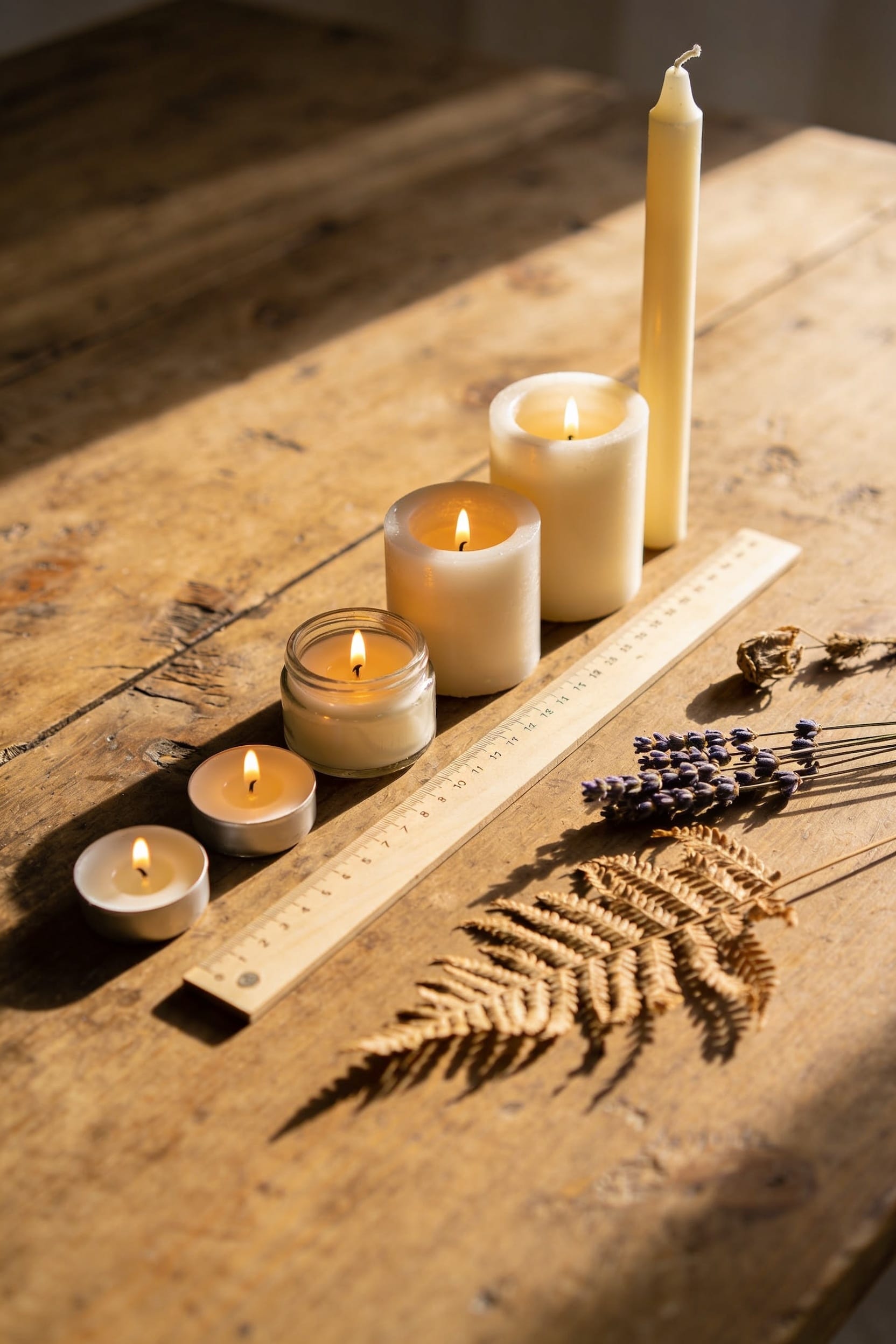
Candle Size Guide: Which Size Is Right for Your Space?

All right, here’s the thing: match your candle size to your square footage, not just what looks pretty on the shelf. Small spaces like bathrooms need 2–4 oz candles or you’ll gag; medium rooms work with 7–11 oz single-wicks; large living rooms demand multi-wick or multiple smaller candles strategically placed. I’ve learned the hard way that one oversized candle often underperforms compared to two smaller ones positioned where air naturally circulates. Start conservative, test one candle, then adjust—it’s the only way you’ll nail it.
Key Takeaways
- Match candle capacity to room square footage: 2–4 oz for small spaces, 7–11 oz for medium spaces, 17+ oz for large spaces.
- Small bathrooms and entryways risk scent fatigue with oversized candles; downsize to 3 oz votives to prevent overpowering fragrance.
- Large open-concept rooms require multi-wick candles or multiple smaller candles strategically placed for even scent distribution across zones.
- Test one candle first, then adjust conservatively with additional candles; multiple smaller candles often outperform single oversized candles.
- Avoid placing candles in dead zones; position on open surfaces where air circulates naturally for optimal scent throw.
Pick the Right Candle Size for Your Room
Picking the right candle size for your room might sound like overthinking it, but I’ve learned the hard way that it’s actually the foundation of not wasting money on candles that either disappear into the ether or turn your space into a fragrance fog. The wax concentration and how well your burn pool develops directly determine whether you’re getting value. A 3-ounce candle in your bedroom? It’ll burn out before the scent even reaches the back wall. A 20-ounce three-wick in your bathroom? You’ll be choking on fragrance. Match size to square footage, and you’ll actually smell what you paid for instead of hunting for a candle that’s somehow both invisible and overwhelming.
Small Spaces: Bathrooms, Entryways, and Home Offices
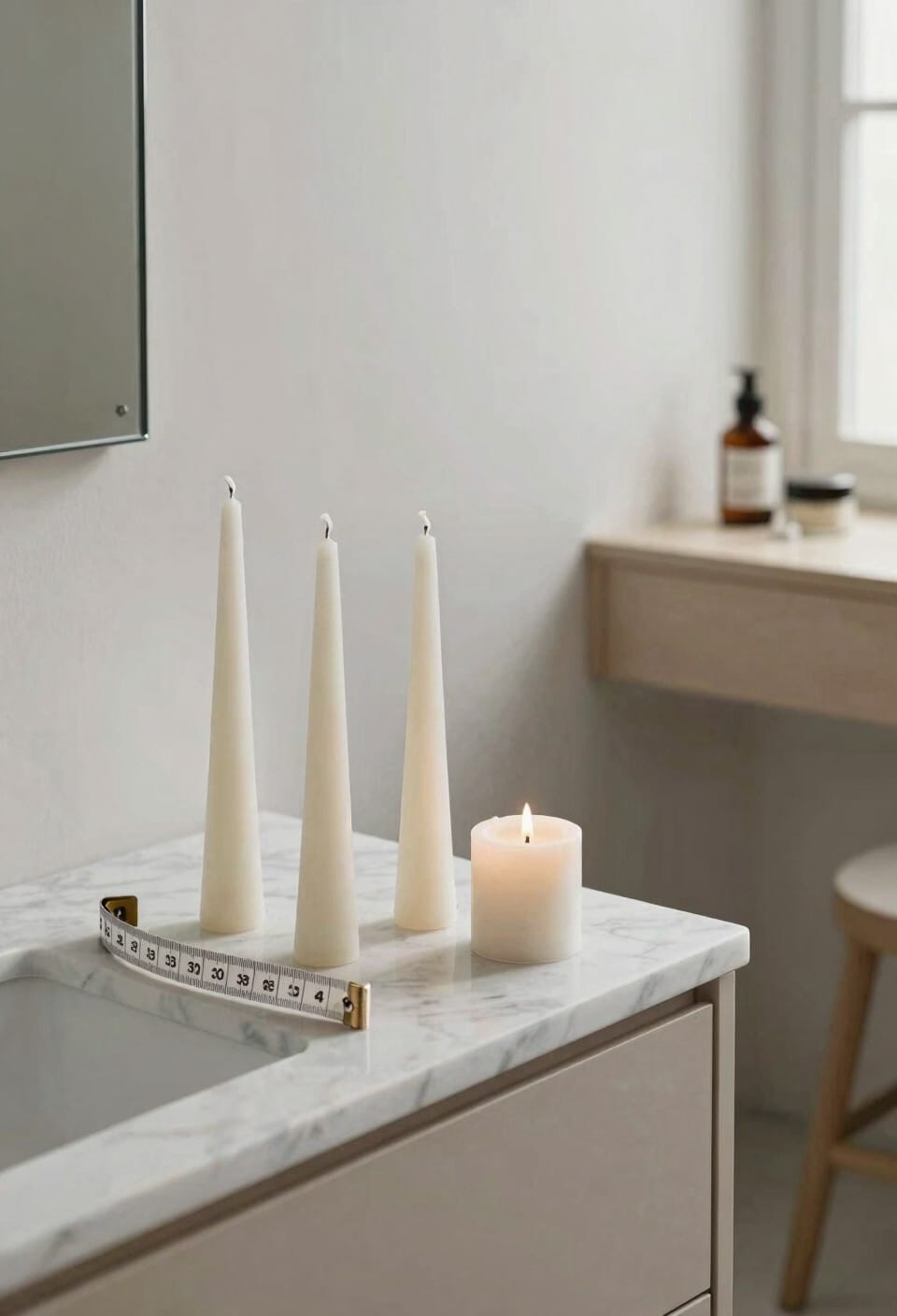
Now that you’ve got the big picture down, let’s talk about the spaces where most of us actually spend our quiet moments—bathrooms, entryways, and home offices. I’d recommend sticking with 2-4 oz candles here. Single-wick varieties give you subtle fragrance without overpowering these intimate areas, and mini 3 oz candles burn up to 18 hours, making them perfect for sampling scents or layering complementary fragrances.
Compact candleholders work best on limited surfaces. Make sure you’ve got decent ventilation tips in mind—bathrooms especially benefit from that. Votive candles suit cozy nooks beautifully, offering balanced scent throw without aggression. For quick relighting methods, keep matches nearby rather than fumbling with lighters. Use scent safe materials like quality glass holders to prevent heat damage on your surfaces.
Recommended Products

Genuine Ore Mountain handicrafts from Seiffen and the surrounding region

Versatile Votive Holders - These etched glass cylinders are sweet as votive holders or even as as vases for small floral arrangements
Medium Spaces: Bedrooms, Kitchens, and Dining Areas
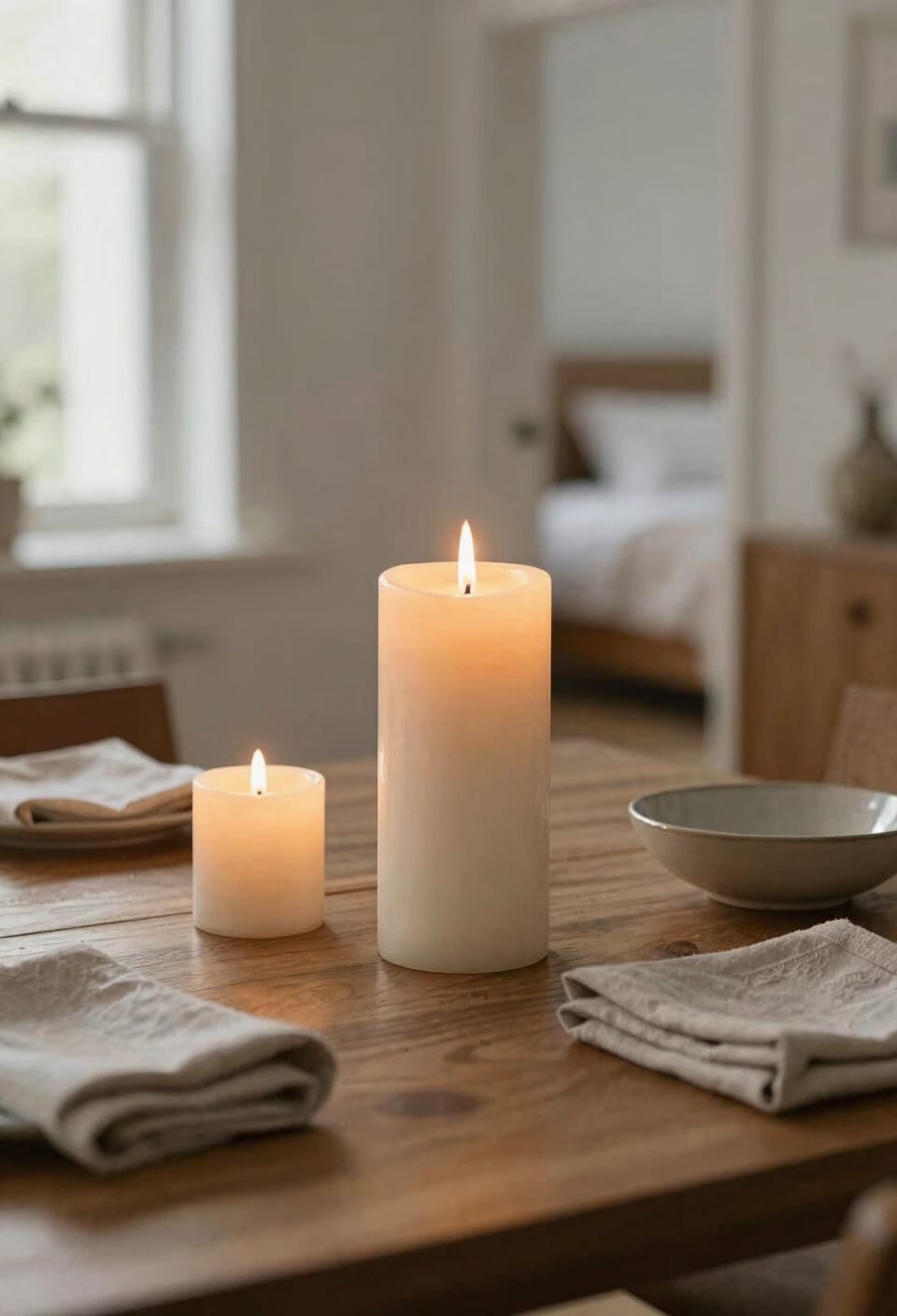
When you’re furnishing bedrooms, kitchens, and dining areas with fragrance, you’re working with rooms that actually get lived in—spaces where people linger long enough to really notice a scent, or get annoyed by one that’s too strong. I’d recommend 7-11 oz single-wick candles here. An 11 oz candle gives you balanced scent concentration without overwhelming anyone cooking dinner or trying to sleep. Furniture placement matters too—stick your candle on a nightstand or kitchen counter where air naturally circulates, not tucked behind a sofa where fragrance gets trapped. Ten-ounce signature candles work daily in these spaces, offering enough throw to reach across a room without becoming cloying. You’re after noticeable, not aggressive.
Recommended Products

FRAGRANCE: Discover your signature scent among our 13 rugged, masculine fragrances, crafted with all-natural, non-toxic oils. Whether you crave the woodsy embrace, the smoky allure, the musky charm, or the fresh vibes, Fury Bros. has the perfect candle waiting for you.

SCENT LAST PICKED PUMPKIN – SEASONAL & SPICED – A warm autumnal blend of pumpkin skin and pulp, grounded by earthy wet soil, birch wood, and layered with cashmere woods, cedarwood, and tonka bean.

Archipelago Botanicals Bergamot Tobacco Boxed Candle. Transform any room with the crisp scent of Italian bergamot and tobacco flower.
Layer Candles in Medium Spaces for Enhanced Fragrance
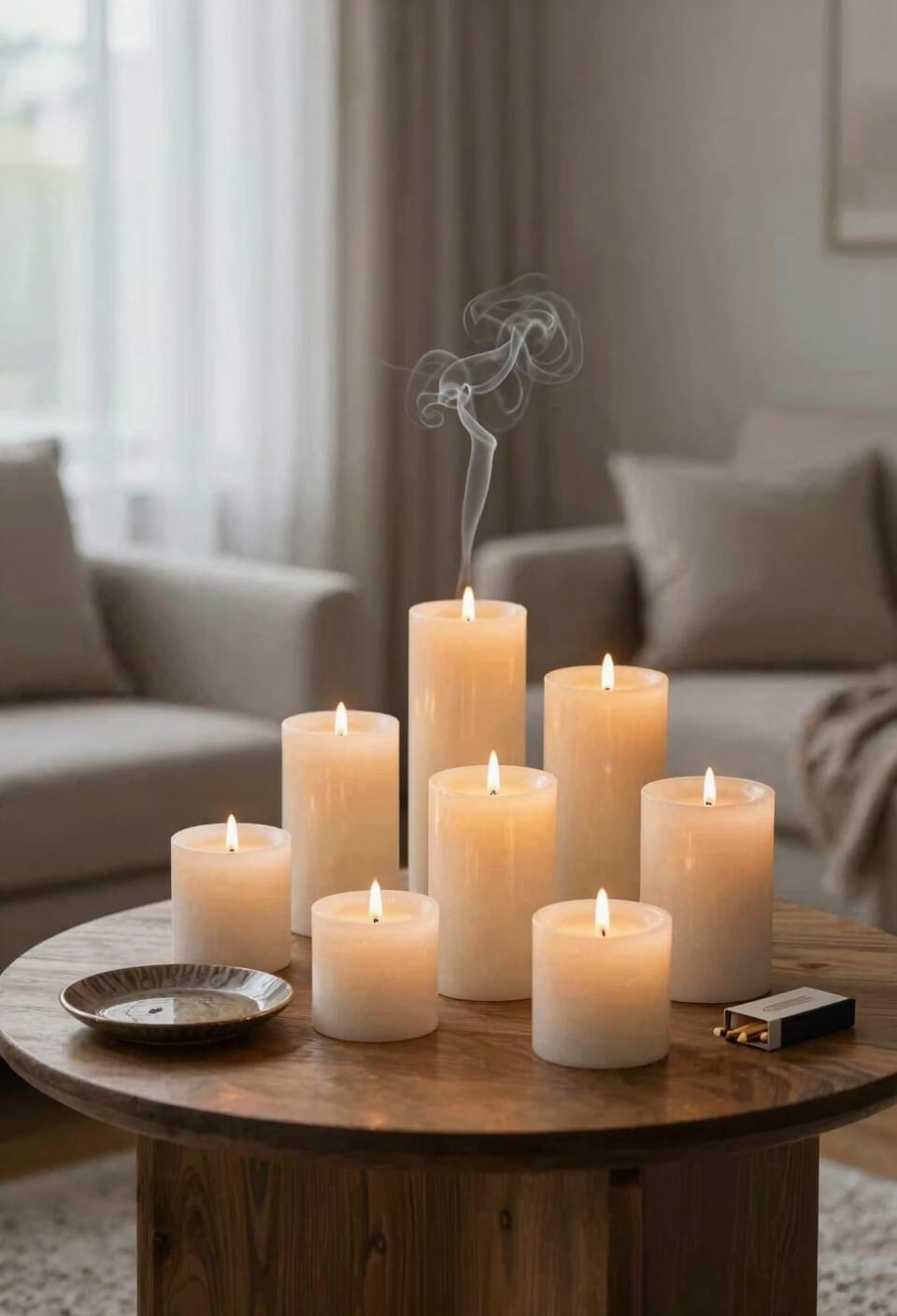
Once you’ve nailed the right size candle for your bedroom or kitchen, you’ve got another tool in your arsenal: layering. I’m talking about scent sequencing—burning two complementary candles together to create something richer than either alone. Think pairing a vanilla-based candle with something slightly woodsy. They won’t fight each other; instead, they’ll build depth.
Layer pairing works best in medium spaces where air circulation helps scents meld without overwhelming you. Start with your primary candle, then introduce a secondary one with a compatible fragrance profile. The key? Make sure both candles have similar scent throws so one doesn’t completely drown out the other. You’re creating a fragrance experience, not a competing mess. It’s honestly the easiest way to customize your space without buying entirely new candles.
Large Spaces: Living Rooms and Open Concepts
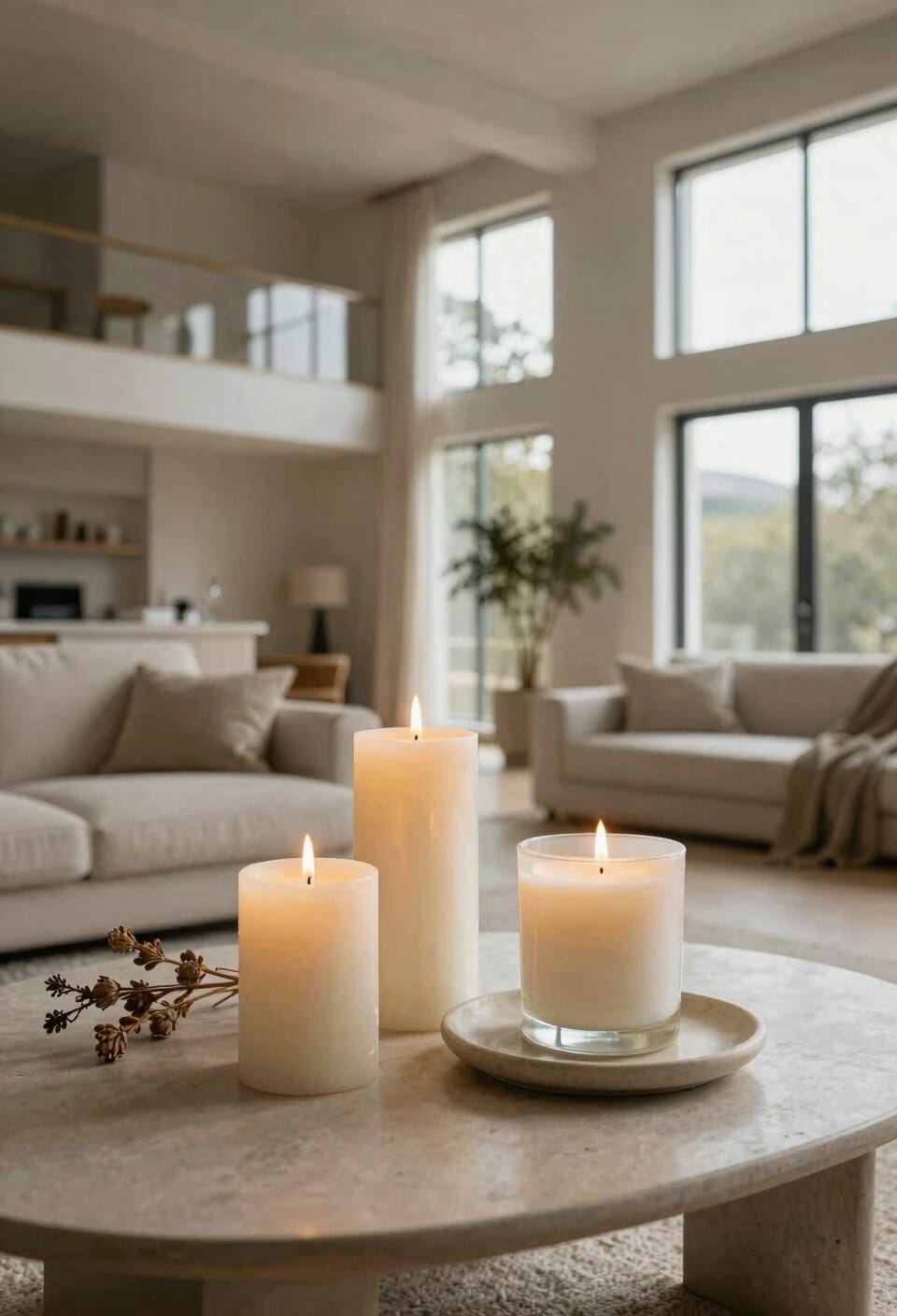
If you’ve got a living room that stretches across half your house or an open-concept kitchen-dining area that seems to swallow fragrance whole, here’s the thing: a single 11 oz candle isn’t going to cut it. You need multi-wick candles—think 3-wick options at 17 oz or larger—to distribute scent evenly across all that space. Open plan acoustics mean sound travels, and so does fragrance, but you’ve got dead zones where scent pooling happens behind furniture. I’d suggest pairing candles strategically: one near your fireplace pairing naturally with your room’s focal point, another on a side table. Multiple smaller candles beat one oversized option for balanced coverage. Trust me, I’ve learned this the expensive way.
Recommended Products

GENUINE LEVEL5 | If quality, performance, and reliability of your finishing tools matters, choose LEVEL5 brand tools.

GENUINE LEVEL5 | If quality, performance, and reliability of your finishing tools matters, choose LEVEL5 brand tools.

GENUINE LEVEL5 | If quality, performance, and reliability of your finishing tools matters, choose LEVEL5 brand tools.
Single-Wick vs. Multi-Wick Candles: Which Performs Better?
Because you’re standing in the candle aisle staring at single-wick versus multi-wick options, I’m guessing you’ve noticed the price difference and you’re wondering if it actually matters. Here’s the thing: wick count directly impacts scent diffusion. A single-wick candle melts a smaller wax pool, releasing fragrance gradually—perfect for medium rooms where you want presence without assault. Multi-wick candles? They melt more surface area, pushing scent further and faster. For large living rooms and open concepts, that robust distribution matters. You’re not just paying for extra wicks; you’re paying for actual coverage. That said, two strategically placed single-wick candles often outperform one three-wick in spreading fragrance evenly across sprawling spaces. Choose based on your room layout, not just budget.
Recommended Products


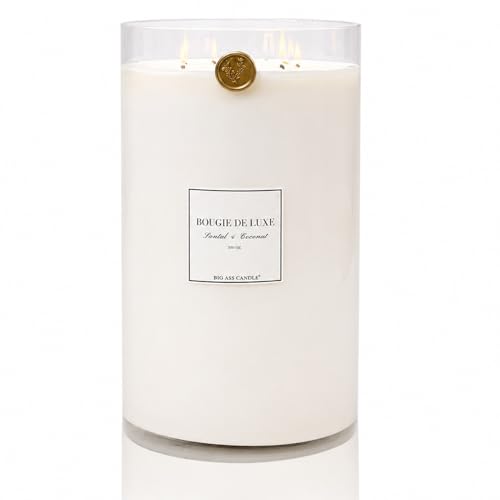
MASSIVE 8" × 14" LUXURY CANDLE – 300 OZ OF NATURAL COCONUT SOY WAX Make a statement with this Classic Big Ass Candle—our largest candle. This luxury candle delivers bold presence, elegant style, and room-filling fragrance. Perfect as a centerpiece for living rooms, great rooms, and upscale spaces.
Position Pillar Candles for Maximum Impact
Now that you’ve got the right candle size and wick count sorted, placement becomes your secret weapon for actually smelling that fragrance you paid for. I’ve learned this the hard way—stunning pillar candles hidden behind furniture do absolutely nothing for you.
Think strategically. Position pillars on open surfaces where air naturally circulates: console tables, mantels, or kitchen islands work beautifully. Staggered heights create dramatic focalpoints while improving scent distribution across different zones. A large pillar on your coffee table fills the living room differently than one tucked in a corner.
Avoid dead zones behind sofas or blocked alcoves where fragrance gets trapped. Central placement matters more than you’d think. Your ceiling height and room layout determine whether you need one statement piece or multiple candles working together for even coverage.
Why Ceiling Height and Room Layout Matter
When you’ve got the perfect candle in the perfect size, it’s tempting to think you’re done—but here’s where a lot of people’s scent strategies fall apart. Your ceiling height dramatically affects how fragrance disperses through a room. High ceilings create more airspace, requiring larger candles or multiple flames for proper ceiling diffusion. Low ceilings trap scent faster, sometimes too effectively—what felt perfect becomes overwhelming. Layout flow matters equally. An open-concept kitchen demands different placement than a compartmentalized bedroom. Position candles centrally in open layouts to avoid fragrance pooling behind furniture or walls. In segmented spaces, you might need one candle per zone. I’ve learned the hard way that a gorgeous 3-wick pillar fails miserably in a vaulted room but absolutely nails a cozy alcove.
Avoid Common Candle Sizing Mistakes
Even with ceiling height and layout dialed in, most people still make one of three fundamental sizing mistakes—and they’re easy to make because candle packaging doesn’t always scream the right answer. The first: wrong scale. You’ll grab a 3-wick monster for your bathroom, then wonder why you’re getting headaches. The second: clashing scents. Layering two strong candles in adjacent rooms creates fragrant chaos instead of complementary depth. Third mistake? Underestimating open layouts. You think one 11 oz candle covers your kitchen-living room combo, but the scent dies before it reaches the couch. I’ve done all three. The fix is simple: measure your space mentally, test one candle first, then adjust up or sideways with a second if needed. Start conservative.
Recommended Products

The OS12500 is the most powerful portable ozone generator and is perfect for deodorizing and eliminating odors in extra- large spaces such as locker rooms, banquet halls, hotel suits, apartments, offices, restaurants, and commercial properties. It will eliminate even the most severe odors caused by tobacco, smoke, pets, water and flood damage and more

PRODUCT: Hosley 12" High Resin Incense Burner Wolf.

Medieval Style & Walnut Veneer: This modern minimalist round coffee table features a classic medieval design blended with sleek walnut veneer, adding a touch of timeless elegance to any living space. Crafted entirely from high-quality durable wood, it ensures long-lasting stability—combining aesthetic charm with reliable performance
Troubleshoot: Fix Candle Size Problems by Room Type
If you’ve already picked out your candles but they’re not delivering—the scent’s too weak in your bedroom, or your bathroom smells like a perfume factory—don’t blame yourself just yet. Room type matters more than you’d think. Your 7 oz candle might work perfectly in a bedroom but vanish in an open kitchen. Conversely, that same size overwhelms a small bathroom, causing scent fatigue fast. Start by downsizing in compact spaces—swap to a 3 oz mini or votive. For larger rooms, bump up to double-wick candles or place two smaller ones strategically. Watch for wax tunneling too; it kills scent throw regardless of candle size. Match your candle’s capacity to your room’s actual square footage, and you’ll finally nail that Goldilocks zone.
Frequently Asked Questions
How Long Does a Specific Candle Size Typically Burn Before Needing Replacement?
I’ll tell you that a candle’s average lifespan depends on its size. Mini 3 oz candles burn up to 18 hours, while larger 14-20 oz candles last markedly longer. Your replacement frequency depends on daily usage and room size needs.
Can I Use Candle Size Recommendations for Scented Wax Melts or Diffusers?
I’d wondered if candle sizing rules applied universally. They don’t quite—wax melts require different considerations. You’ll need to adjust for wax compatibility and fragrance layering, as scent throw differs. Refill options vary too, making direct translations imprecise.
What’s the Ideal Burn Time Between Lighting Sessions for Different Candle Sizes?
I recommend ideal intervals of 4-6 hours between lighting sessions for most candles. This allows proper wick maintenance, preventing mushrooming and ensuring consistent burn quality. Larger candles tolerate longer burns, while smaller ones need shorter sessions.
How Does Humidity or Seasonal Changes Affect Candle Size Performance Indoors?
I’ve noticed humidity and seasonal shifts directly impact your candle’s performance. Higher moisture weakens fragrance intensity, while cold temperatures slow wax melting. You’ll need consistent wick maintenance and possibly larger candles to compensate for environmental changes affecting scent throw.
Should I Adjust Candle Size Recommendations for Rooms With Low Ceilings?
Yes, I’d recommend sizing down for low ceilings. Shorter pillars maintain better visual scale and prevent fragrance from concentrating too heavily overhead. I’d choose 3-4 inch pillars instead of taller options to keep proportions balanced.
Conclusion
Now you’ve got all the tools to nail candle sizing in your space—don’t put all your eggs in one basket by choosing a single candle for every room. Start where you are, measure your space mentally, and adjust as you burn. You’ll quickly figure out what works. Trust me, getting this right transforms how you experience your home’s fragrance. Happy burning.