As an Amazon Associate, we earn from qualifying purchases. Some links on this site are affiliate links at no extra cost to you. Our recommendations are based on thorough research and editorial judgment.


Why Doesn’t My Candle Smell Strong? Causes & Fixes

All right, weak scent throw usually comes down to fragrance load—you need 6–10% for proper throw, and anything below that leaves you with barely a whisper. Temperature matters too: add your fragrance oil around 175°F so it binds evenly with the wax. But here’s the thing—your wick size, wax type, and even sensory adaptation can all muffle what should be a strong scent. The good news is each factor’s fixable, and we’ll walk through exactly how.
Key Takeaways
- Fragrance oil concentration below 6% weakens scent throw; aim for 6–10% for optimal performance.
- Undersized wicks prevent full wax melting, reducing fragrance molecule release across the candle surface.
- Soy wax naturally throws scent less effectively than paraffin or blended wax formulations.
- Sensory adaptation and competing room odors mask candle scent; eliminate distractions and take breaks.
- Add fragrance oil at 175°F; too-hot or too-cold temperatures prevent proper oil integration into wax.
Fragrance Oil Load: Why 6–10% Is the Sweet Spot
Now, here’s the thing—if your candle smells like almost nothing when it’s burning, the culprit is often sitting right in the wax itself: not enough fragrance oil. Most quality candles hit that sweet spot between 6–10% fragrance concentration, which gives you proper scent throw without problems. Below that range? You’re getting weak hot throw and disappointing fragrance retention. Go above it, and the oil separates from the wax, causing sweating and reduced performance. I’ve learned this the hard way with cheap mass-produced candles that skimp on quality oils and load. Uncut oils with fillers dilute everything further. The math is simple: adequate fragrance oil combined with solid oil compatibility creates a candle that actually smells strong when you light it. That’s the foundation everything else builds on.
Recommended Products

Transform any space with our invigorating essential oils! Whether you're seeking a lively home ambiance or a refreshing start to your day, our oils are ideal for enhancing your diffuser experience.
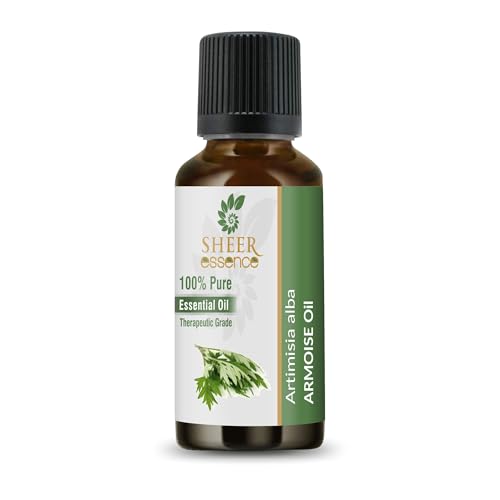
ARMOISE OIL: This sheer essence Armoise essential oil also known as Artemisia Alba Oil is undiluted and uncut therapeutic grade oil which is extracted naturally and it does not contain any added preservatives to protect there therapeutic properties.,

Transform any space with our invigorating essential oils! Whether you're seeking a lively home ambiance or a refreshing start to your day, our oils are ideal for enhancing your diffuser experience.
Temperature Matters: Adding Fragrance at the Right Heat

If you’ve nailed the fragrance load but your candle still smells weak when burning, the problem might be temperature—specifically, the heat at which you’re adding that fragrance oil to your wax. Heat your wax to about 185°F, then cool it to 175°F before pouring in the fragrance oil. This proper cooling window lets the oil bind evenly throughout the wax crystals instead of settling unevenly, which creates unscented dead spots. Too hot, and you’re risking fragrance degradation—those aromatic compounds literally burn off before they can do their job. Too cold, and the oil won’t integrate properly either. Get this temperature sweet spot right, and you’ll notice an immediate difference in how your candle performs once it’s lit.
Recommended Products

🥇 Voted #𝟭 𝗺𝗶𝗱-𝗽𝗿𝗶𝗰𝗲𝗱 𝘁𝗵𝗲𝗿𝗺𝗼𝗺𝗲𝘁𝗲𝗿 by America's Test Kitchen and Wirecutter and #𝟭 𝘁𝗵𝗲𝗿𝗺𝗼𝗺𝗲𝘁𝗲𝗿 by NBC News. Featured in major publications: WIRED, GQ, Gear Patrol, Men's Health, Bloomberg, Bon Appétit, New York Magazine, Business Insider, and much more.

Thermometers with Long Probe: you will receive 12 pieces of meat thermometers for grilling, designed in white, each measures about 9.2 inches in length, paired with 6 probe tip protectors, ample quantity to meet your daily use and replacement needs

[ Waterproof - IPX7 ] With the strong waterproof ability, it’s very suitable for measuring the temperature of liquids, such as water, milk, candles. When used in the kitchen, food, powder and oil stains are inevitable. The whole body can be rinsed under water. Easy to clean and maintain!
Your Wax Type Could Be Limiting Scent Throw
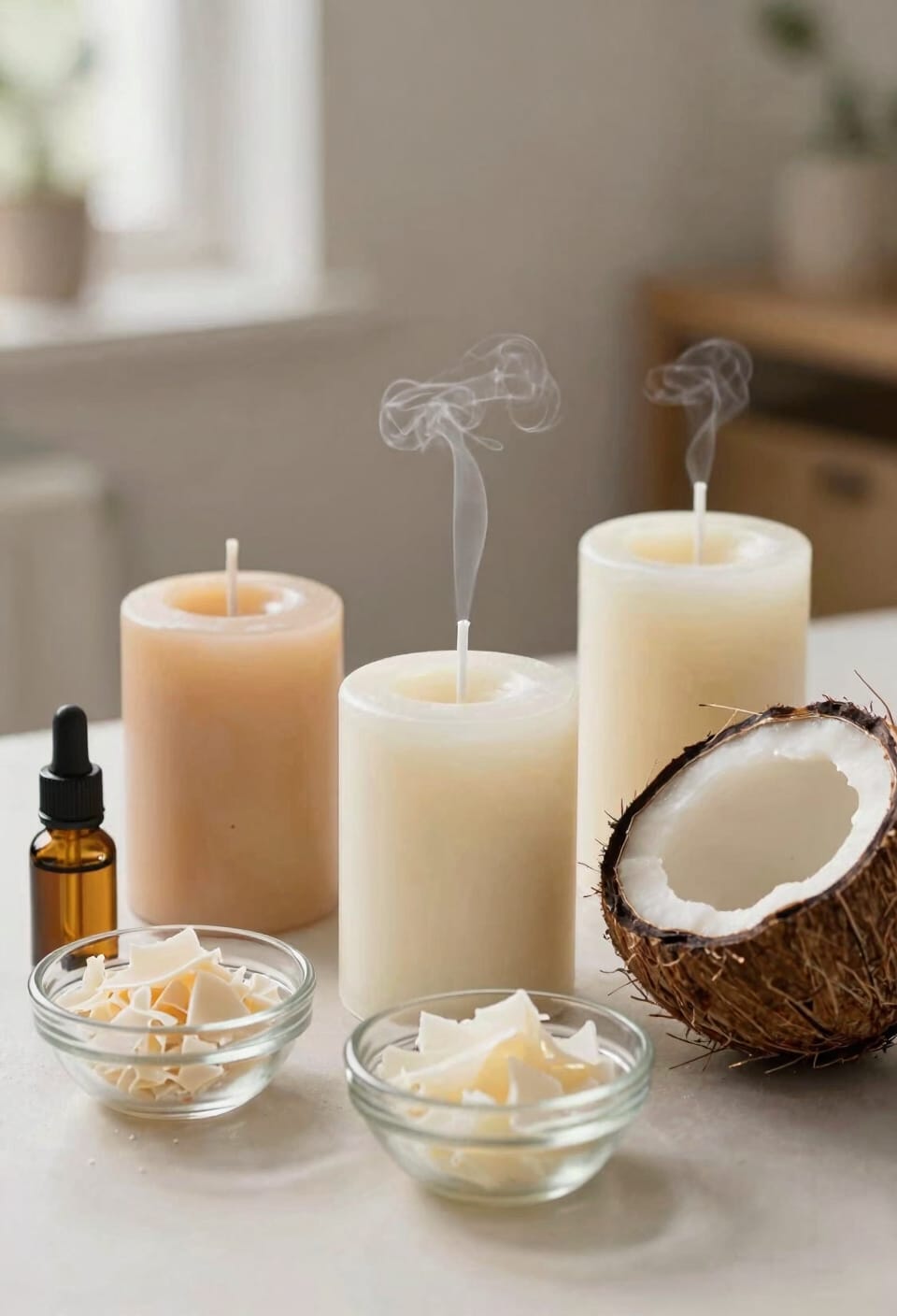
You can nail the temperature, load your fragrance oil at the perfect concentration, and still end up with a candle that barely scents your room—and that’s often because of what you’re pouring that oil into in the first place. Soy wax, while eco-friendly, just doesn’t throw scent like paraffin does. Paraffin releases fragrance quickly but unevenly, trapping molecules after those first burns. Low-cost paraffin in mass-market candles? It flattens out fast. Here’s what works: beeswax benefits include sustained, even throw when phthalate-free. Better yet, blended formulations combining quality waxes give you the best of everything—strong initial scent plus longevity. Your wax choice fundamentally shapes how far that fragrance actually travels.
Recommended Products

Professional Wax Melter for Candle Making or Soap Making, Melter 3 Gallon Stainless Tank, Extra Deep for Your Larger Batches Of Candles or Soap, This Has Been Designed From Customers Requests and is Unlike Other Competitors.

100% Pure Beeswax Candle: Hand-poured from naturally filtered beeswax for a rich, golden glow. These clean burning candles are free from paraffin, soy, and synthetic fragrances. Each 1-wick dripless pillar candle features natural cotton candle wicks and pure candle wax for a long-lasting burn and warm, cozy candle light.

Industrial 67 Lbs Capacity Wax Melting Pot Pro Package Model: Includes Large Spout, Lid, Pouring Pot, Stirring Spoon. Cutting-edge technology ensures rapid melting of soy wax, paraffin, coconut, and beeswax for efficiency. It's perfectly suitable for most Wax types and Melt & Pour soap bases. Its user-friendly temperature guage allows temperature adjustment from from low to high temperature which maintains roughly 100 - 350 degrees Fahrenheit.
How Wick Size Controls Your Scent Release
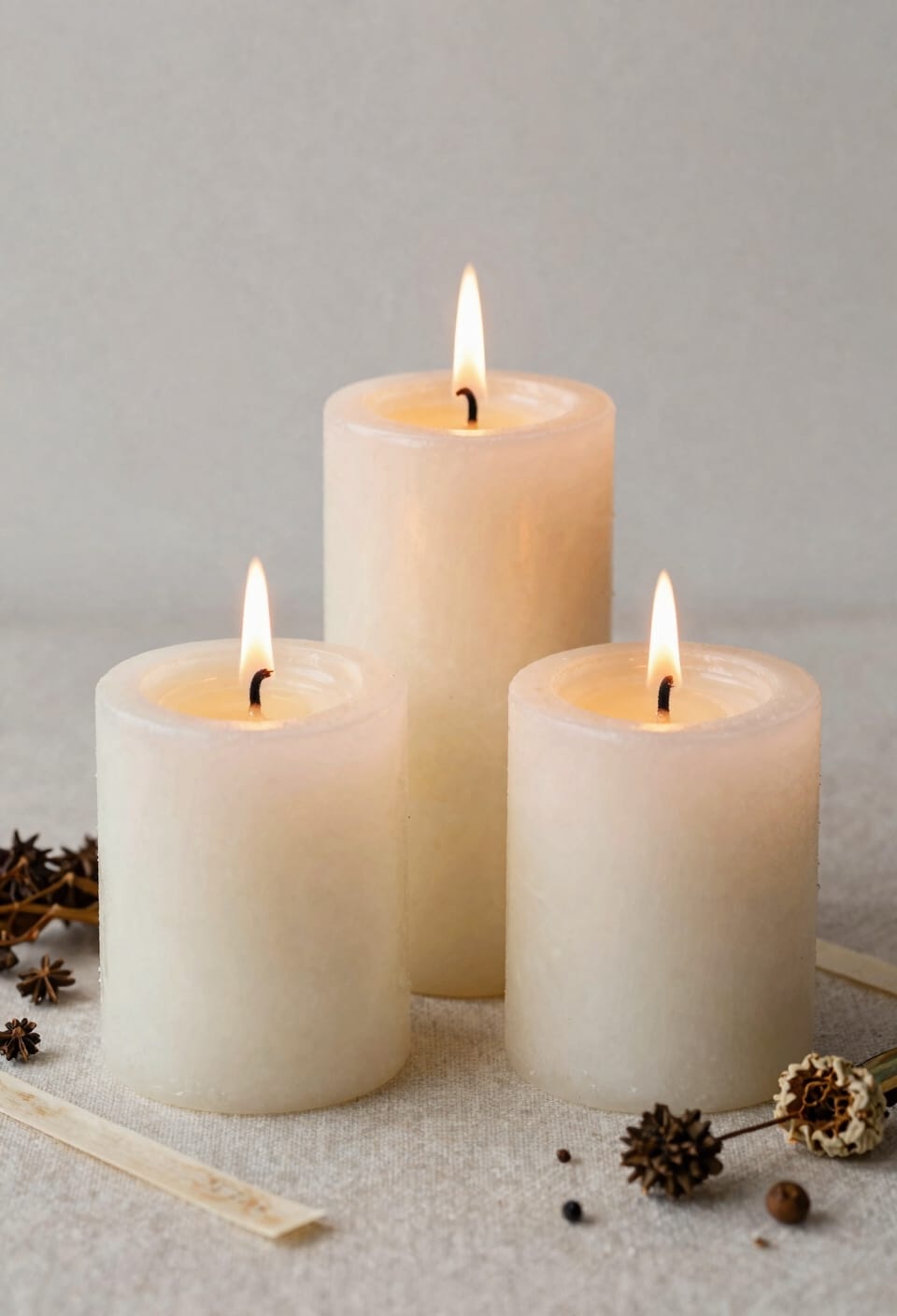
All right, here’s what I’ve learned the hard way: even the most beautifully formulated candle won’t deliver its scent if your wick’s undersized. An undersized wick simply can’t melt enough wax to release those fragrance molecules into the air. You need proper burn pooling—that full melted circle across the entire candle surface—to vaporize the base notes like vanilla and sandalwood that give a candle real staying power.
Here’s where wick maintenance matters. Trim yours to a quarter inch before each burn. This consistency guarantees even melting and steady scent throw. Different wick types—HTP, CD, Eco, or Premier—perform differently depending on your wax and fragrance load, so some experimentation might be necessary. But get this right, and you’ll finally smell what you paid for.
Recommended Products

The information below is per-pack only

SOY CANDLE MAKING KIT FOR ADULTS: Make your own candles with our candle making supplies kit: natural soy wax for candle making 50 lb bag, 500 cotton candle wicks for candle making, 500 candle wick stickers for candle making, 10 wick holders.

SIGNATURE FRAGRANCE – HIGHRISE: Red currant, velvet plum & amber come together in this sophisticated blend, an elegant, uplifting fragrance that quickly fills large spaces. Noticeable yet never overpowering for daily ambiance
Why Your Nose (and Your Room) Might Be Fooling You
Sometimes the candle’s actually performing fine, and competing smells in your room—cooking odors, pet scents, smoke, air fresheners, even your own lotion—are just overpowering whatever throw you’ve got going. That’s ambient masking, and it’s real.
There’s also sensory adaptation. You’ve been smelling your candle for twenty minutes? Your nose basically checked out. That doesn’t mean the scent disappeared; you’ve just acclimated to it. Step outside for five minutes, come back in, and suddenly you’ll catch it again.
Room size matters too. A small candle in a sprawling living room won’t stand a chance. You need proportional fragrance intensity for your space.
The fix? Eliminate competing odors when possible, give your nose breaks, and match candle size to room dimensions.
Frequently Asked Questions
How Long Should I Cure My Candle Before Burning It for the Best Scent?
I’d recommend curing your candle for at least 24-48 hours before burning it. This allows fragrance molecules to fully integrate into the wax crystals. Keep it at room temperature during curing for peak scent development and performance.
What’s the Difference Between Cold Throw and Hot Throw in Candles?
Cold throw’s what you smell when the candle’s unlit—fragrance released into the air naturally. Hot throw’s the scent you get when I’m burning it, as heat vaporizes the fragrance molecules for stronger diffusion throughout your room.
Why Is My Candle Sweating, and How Does It Affect Performance?
Your candle’s sweating occurs when fragrance oil separates from wax due to excessive load or heat exposure. This weakens scent throw and causes poor wax pooling and wick tunneling, reducing overall performance.
Can Synthetic Fragrance Oils Perform Differently Than Natural Oils When Heated?
Yes, synthetic oils underperform when heated. I’ve found they lack thermal stability and synthetic longevity—they break down under heat, giving strong cold throw but weak hot throw once you light them.
What Candle Size Works Best for Different Room Dimensions and Spaces?
I’d recommend matching your candle scale to room mapping—a small candle works for intimate spaces under 100 square feet, while medium candles suit average rooms, and larger three-wick candles effectively scent spacious areas exceeding 300 square feet.
Conclusion
Look, here’s what I’ve learned: studies show that scent throw can vary by up to 300% depending on those factors we covered. You’re not imagining weak candles—they’re genuinely underperforming. But now you know the actual levers to pull: fragrance load, temperature, wax choice, wick size, and honest nose-resets. Start with one variable, nail it, then adjust. You’ve got this.