As an Amazon Associate, we earn from qualifying purchases. Some links on this site are affiliate links at no extra cost to you. Our recommendations are based on thorough research and editorial judgment.

What Makes a Good Scented Candle? Expert Criteria

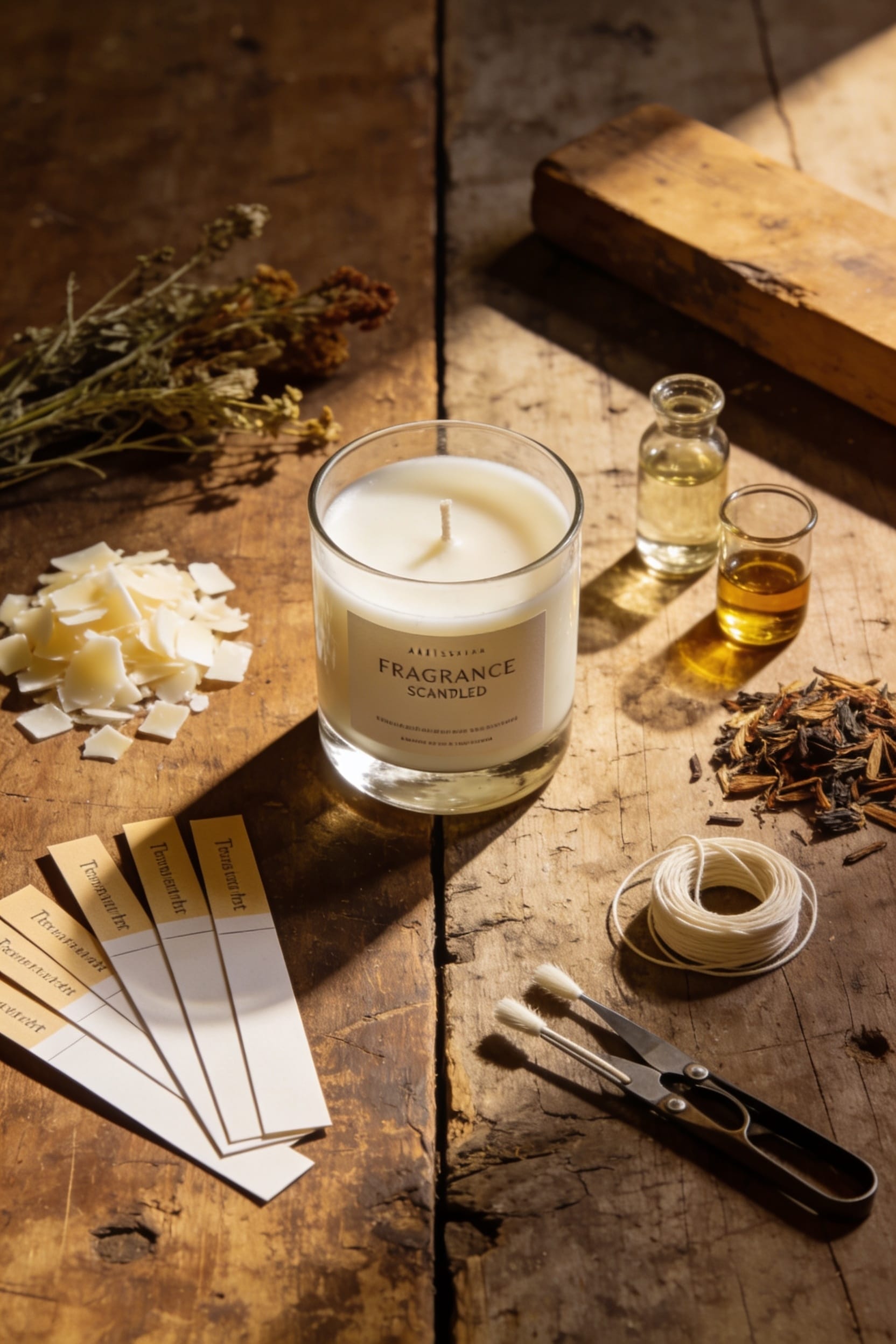
Look, a genuinely good scented candle hinges on four things: soy or beeswax (they’ll outlast paraffin every time), quality fragrance oils that are phthalate-free and properly cured, a cotton wick trimmed right, and an even burn pool with zero tunneling or soot. The wick size matters more than you’d think—too small and your scent barely reaches the next room, too large and you’re just burning money. Hand-poured candles from reputable makers typically nail these details because they actually care about what goes inside. Matching scent strength to your room size makes all the difference too.
Key Takeaways
- Quality wax like soy or beeswax burns longer and cleaner than paraffin with reduced soot production.
- Cotton wicks trimmed to quarter-inch burn steadily and deliver optimal fragrance diffusion without excess smoke.
- Phthalate-free formulations with high-quality essential oil blends provide superior scent throw and longevity.
- Even burn pools and absence of tunneling indicate proper candle construction and wick sizing.
- Hand-poured candles with adequate curing time develop full fragrance profiles matching room size needs.
Premium Wax: Why Soy and Beeswax Outlast Paraffin
Look, I’ll cut to the chase—if you’ve ever bought a cheap candle that burned through in three hours while barely scenting your room, you’ve met paraffin wax, and it probably disappointed you the same way it’s disappointed me more times than I care to admit. Soy and beeswax are different beasts entirely. They offer longer burntime, meaning your fragrance actually lingers instead of vanishing with the flame. Here’s what matters: soy and beeswax deliver cleaner combustion without the soot buildup that coats your walls and lungs. Beeswax burns longest and releases scent gradually. Soy’s more affordable while still outperforming paraffin markedly. You’re paying a bit more upfront, but you’re getting actual performance—not just wasted money and disappointment.
Recommended Products

100% Pure Beeswax Candle: Hand-poured from naturally filtered beeswax for a rich, golden glow. These clean burning candles are free from paraffin, soy, and synthetic fragrances. Each 1-wick dripless pillar candle features natural cotton candle wicks and pure candle wax for a long-lasting burn and warm, cozy candle light.

Industrial 67 Lbs Capacity Wax Melting Pot Pro Package Model: Includes Large Spout, Lid, Pouring Pot, Stirring Spoon. Cutting-edge technology ensures rapid melting of soy wax, paraffin, coconut, and beeswax for efficiency. It's perfectly suitable for most Wax types and Melt & Pour soap bases. Its user-friendly temperature guage allows temperature adjustment from from low to high temperature which maintains roughly 100 - 350 degrees Fahrenheit.

65 LBs Capacity Wax Melting Pot Pro Package Model: Includes Large Spout, Lid, Pouring Pot, Stirring Spoon. Cutting-edge technology ensures rapid melting of soy wax, paraffin, coconut, and beeswax for efficiency. While it can't be used for lye soap making due to aluminum's reactivity with lye, it's perfectly suitable for Melt & Pour soap bases. Its user-friendly temperature guage allows temperature adjustment from from low to high temperature which maintains roughly 100 - 350 degrees Fahrenheit.
Quality Fragrance: Reading Labels and Scent Structures

Now that you’ve got the right wax burning in your candle, it’s time to talk about what actually makes it smell good—and here’s where things get interesting, because not all fragrances are created equal, and honestly, I’ve learned this the hard way by bringing home plenty of candles that smelled amazing in the store and then turned into chemical disappointments the moment I lit them at home.
Label literacy matters here. Look for phthalate-free formulations and blends mixing natural essential oils with synthetics—that combination actually works better than either alone. Understanding note layering helps too. Top notes hit first and fade fast, while heart notes build the complexity, and base notes linger for hours after you’ve blown out the flame. Check if the label specifies fragrance concentration. Higher percentages with quality oils give you better scent throw without the chemical funk.
Recommended Products

Quality - We produce our Hyssop essential oil using pure, natural, and raw ingredients.
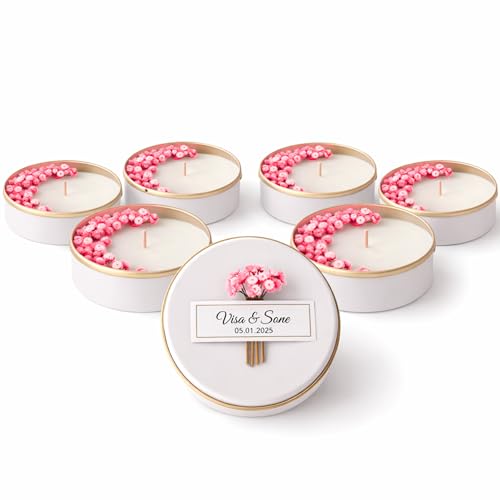
100% NATURAL SOY WAX : Hand-poured in small batches with natural soy wax and premium fragrance oils for a clean and long-lasting burn

HIGHEST QUALITY - Our candle fragrance MADE IN THE USA using pure, natural, and raw ingredients. All VINEVIDA products are vegan, free of phthalates, parabens, and other potentially dangerous chemicals.
Cotton Wicks vs. Wood: Why Wick Choice Defines Scent
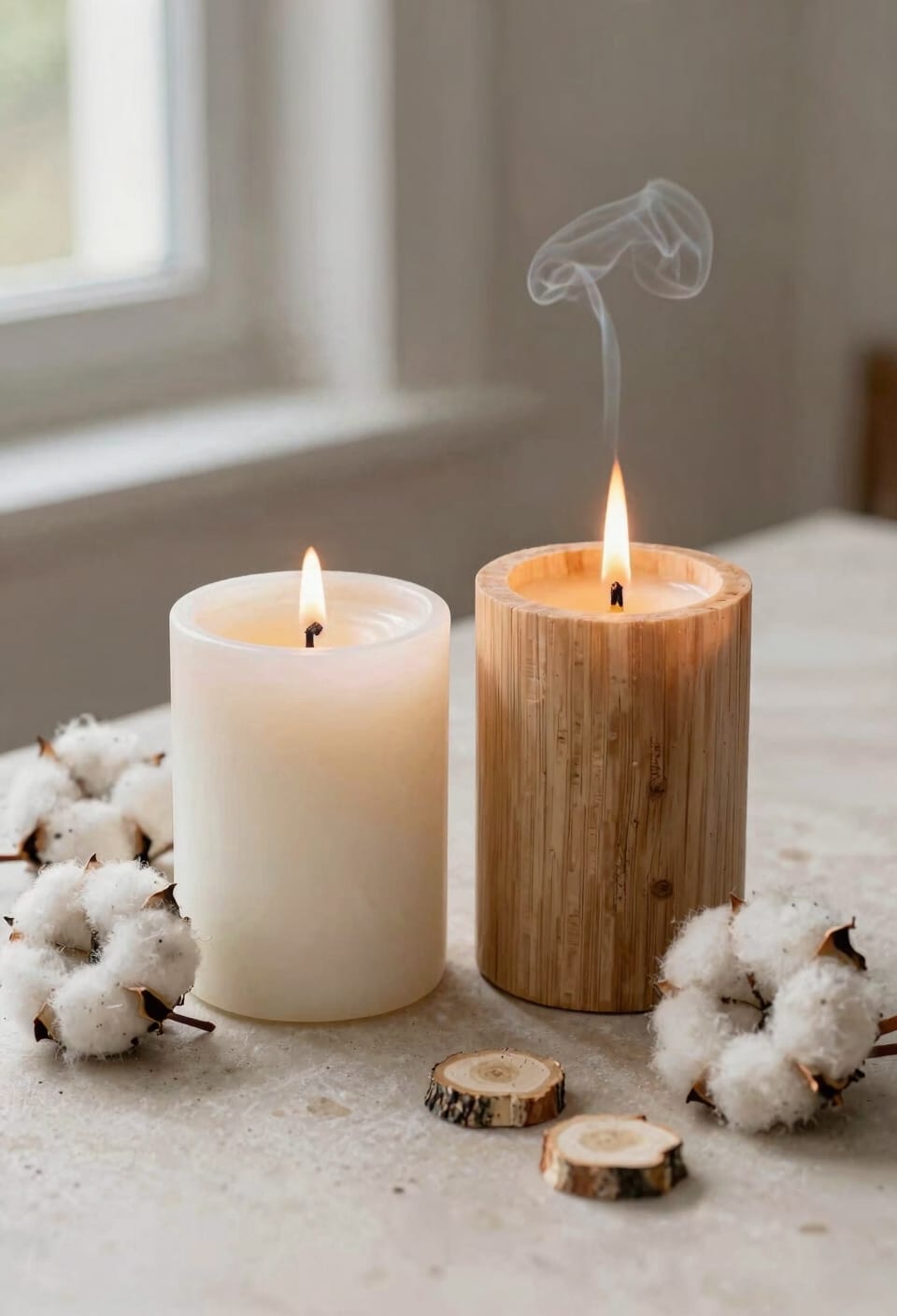
Once you’ve nailed down your fragrance, the wick you choose becomes the unsung hero that either makes or breaks your entire scent experience—and I’ve burned through enough mediocre candles to know that even the most beautifully layered fragrance can’t overcome a bad wick. Cotton wicks are your best bet. They burn cleanly and steadily, allowing proper fragrance diffusion without the heavy smoke that wood wicks produce. Cotton maintenance is straightforward: trim to quarter-inch before each burn. Wood wicks offer wooden aesthetics and crackle appeal, but they’re honestly terrible for scent throw. I’d skip them. A quality hand-woven Italian cotton wick guarantees longevity and optimal fragrance release. That steady, bright flame? That’s your signal you’ve made the right choice.
Recommended Products

BURNING TIME: 22cm (9 inches) SKINNY - approximately 1 hour; 22cm (9 inches) - approximately 1 - 1.5 hours; 27cm (11 inches) - approximately 1.5 - 2 hours; 32cm (13 inches) - approximately 2 hours; For maximum burn time place the candles in an area with minimal air movement. Avoid drafty areas such as near open windows, vents, or fans.

Safer Ambience for Everyday Moments: Our sand wax candle design with self-extinguishing sand candle wicks minimizes fire risk if tipped and prevents hot wax spills; ideal for homes with pets or kids that won’t renounce stylish décor, offered in White, Red, Nude, and Black for cozy luxury

DIMENSIONS: 22cm x 5-6mm SKINNY (9" by 7/32 inch); Height: 22 cm (9 inches), thickness at base: 0.21 inch (5-6mm): 22cm x 7mm (9" by 5/16 inch); Height: 22 cm (9 inches), thickness at base: 0.28 inch (7mm); 27cm x 7mm (11" by 5/16 inch); Height: 27 cm (11 inches), thickness at base: 0.28 inch (7mm); 32cm x 7mm (13" by 5/16 inch); Height: 32 cm (13 inches), thickness at base: 0.28 inch (7mm);
Spotting Even Burn: Red Flags to Catch Before Buying

Before you hand over your money, you’ve got to know what an even burn actually looks like—because a candle that tunnels or cracks is basically a slow-motion waste of your cash, and I’ve definitely learned this the hard way. Uneven tunneling happens when the wax melts only down the center, leaving thick walls untouched. That’s a sign the wick’s too small or the wax quality’s poor. Look for soot buildup around the container’s rim too—that black residue means incomplete combustion, usually from a wick that’s too thick or hasn’t been trimmed properly. A quality candle burns evenly across the entire surface, with minimal to zero soot. Check the container before buying if you can.
Does Hand-Poured Quality Justify the Price?

So here’s the thing about hand-poured candles—they’ll cost you more upfront, sometimes markedly more, but I’ve learned that the premium price actually tracks with real differences in how they perform. You’re paying for artisan provenance and craftsmanship that mass-produced candles skip entirely. Hand-poured quality means better wax selection, superior cotton wicks, and fragrance oils that actually meld properly during curing. That heavy feel in your hands? It’s genuine.
Limited editions from quality makers often justify their cost through superior scent throw and burn longevity. I’ve wasted plenty on cheap candles that tunnel or smell weak. The real question isn’t whether hand-poured costs more—it does. It’s whether you’ll actually burn through it completely and enjoy every hour. That’s where the value lives.
Recommended Products
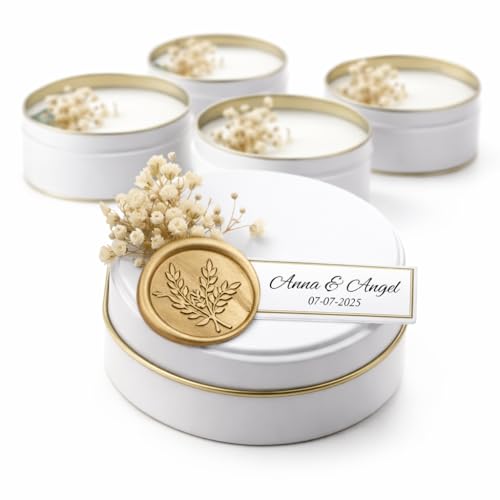
Elegant Wedding Candle Favors: Hand-poured soy candles with mini bouquets — perfect for weddings, showers, and engagement parties.

Westin Hotel Exclusive Design: Enhance your sleep space with the luxurious Hotel Duvet Cover, exclusively designed for Westin Hotels. Featuring a subtle organic pattern jacquard stitched into a white-on-white design, this duvet cover brings a touch of sophistication and elegance to any bedroom.

THE ORIGINAL AND STILL THE FINEST. 100% FRENCH ARTISANALLY CRAFTED. The Rigaud family created THE WORLD’S FIRST SCENTED CANDLE in the 1960’s. All Rigaud candles are poured, prepared and packed by hand. Cyprès is a part of Rigaud's Aromatic Fragrance Family which brings the freshness of the Mediterranean forests into your home. Introduced to the White House by Jacqueline Kennedy in 1960, this is a blend of lavender, the woody, crisp notes of pine needles, and the aroma of cedar wood. This fragrance is deceivingly mild--not at all overwhelming-but a lovely, elegant, fresh scent suitable for any room or occasion.
Matching Scent Throw to Your Room and Sensitivity
Now, here’s where a lot of people get tripped up: they’ll buy a candle with gorgeous scent throw ratings, bring it home, and wonder why their whole bedroom doesn’t smell like a flower garden after five minutes of burning. The truth? You’ve got to match scent throw to your actual room and your personal sensitivity.
I think of it as scent zoning. A strong throw works beautifully in open living spaces but’ll overwhelm a small bathroom. Medium throw‘s your sweet spot for bedrooms. Light throw? Perfect if you’re sensitive or burning multiple candles nearby.
Here’s what I’d suggest: start with medium throw, then adjust based on how you’re actually responding. Your nose knows better than any rating ever will.
Recommended Products

PREMIUM UNSCENTED AROMA BEADS FOR CUSTOM FRESHIES – High-quality aroma beads for car freshies engineered to absorb fragrance oils efficiently and cure smoothly. Create scented aroma beads, car freshie beads, and long-lasting air fresheners with consistent results and excellent scent retention.

EVERY PURCHASE SAVES PETS. Every purchase makes it possible for BISSELL to continue our support of BISSELL Pet Foundation and its mission of saving pets in need.

SOY CANDLE MAKING KIT FOR ADULTS: Make your own candles with our candle making supplies kit: natural soy wax for candle making 50 lb bag, 500 cotton candle wicks for candle making, 500 candle wick stickers for candle making, 10 wick holders.
Curing Time: Why Patience Transforms Candle Performance
When you crack open a brand-new candle and light it immediately, you’re basically skipping the most essential step—and I learned this the hard way after burning through enough disappointing candles to stock a small boutique. The curing chemistry that happens between wax and fragrance needs time to work its magic. I’m talking days, sometimes weeks. During this period, fragrance maturation transforms everything. The scent molecules bond properly with the wax, creating a more robust throw and deeper performance when you finally light it. Your candle’s heart and base notes won’t fully reveal themselves without adequate curing. Rush it, and you’ll get weak scent throw and uneven burning. Wait it out, and you’ve got something genuinely worth burning.
Frequently Asked Questions
How Do I Properly Trim My Candle Wick to Prevent Soot Buildup?
I recommend trimming your wick to 1/4 inch before each burn to prevent soot buildup. This wick maintenance guarantees a clean, steady flame and peak fragrance release while avoiding smoking and uneven burning issues.
What Container Materials Are Safest for Scented Candles?
I’d say glass jars are your safest bet—they’re heat-resistant and won’t crack under flame’s intensity. Ceramic vessels work beautifully too, offering similar protection. Both keep toxins at bay while letting your candle’s glow shine through elegantly.
How Long Should I Let a Candle Cure Before First Use?
I’d recommend letting your candle cure for 24-48 hours before first use. This curing timeframe allows the wax and fragrance to fully meld, ensuring peak fragrance diffusion and a stronger, more consistent scent throw throughout the candle’s life.
Can Phthalate-Free Scents Perform as Well as Traditional Fragrances?
Absolutely, phthalate-free fragrances perform powerfully. Through performance testing, I’ve found phthalate alternatives provide comparable scent throw and longevity. You’ll experience equally excellent fragrance quality without the harmful chemicals compromising your candle’s clean burn.
Why Does My Candle Tunnel, and How Can I Prevent It?
Your candle tunnels when the uneven meltpool forms because your wick’s off center or too small for the wax container. I’d recommend centering your wick properly and ensuring correct sizing to prevent tunneling.
Conclusion
You’ve learned what to seek: quality wax that burns clean, fragrance that’s honestly layered, wicks that stay centered and steady. You’ve learned what to avoid: tunneling flames, hollow promises, price tags that don’t match performance. You’ve learned the waiting game—curing matters, room size matters, your nose matters. Now you’re equipped. Go find your candle. The right one’s waiting.